Driven by strict global environmental regulations and rising energy costs, the aluminum foundry industry is accelerating the shift to low-carbon, energy-efficient and sustainable production. Conventional gas-fired aluminum melting furnaces have three critical bottlenecks: massive flue gas heat loss, substandard pollutant emissions and excessive metal burn-off, which severely hinder industrial upgrading.
Traditional furnaces discharge flue gas at over 600℃, causing huge energy waste and high fuel consumption per ton of aluminum. Incomplete combustion leads to NOₓ and particulate emissions failing EU and North American standards, bringing compliance risks. Uneven temperature fields also push metal burn-off to 2%–3%, raising raw material costs and lowering yield. The industry urgently needs thermal equipment upgrades to balance efficiency, energy saving and environmental compliance.
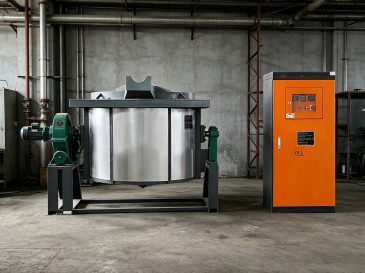
The regenerative gas-fired aluminum melting furnace is a professional thermal solution tailored for aluminum foundries, designed to fix core defects of traditional smelting equipment. Integrating advanced regenerative combustion, precision temperature control and low-emission technology, it applies to aluminum ingot remelting, alloy smelting and recycled scrap processing, serving as a key upgrade for green and efficient foundry production.
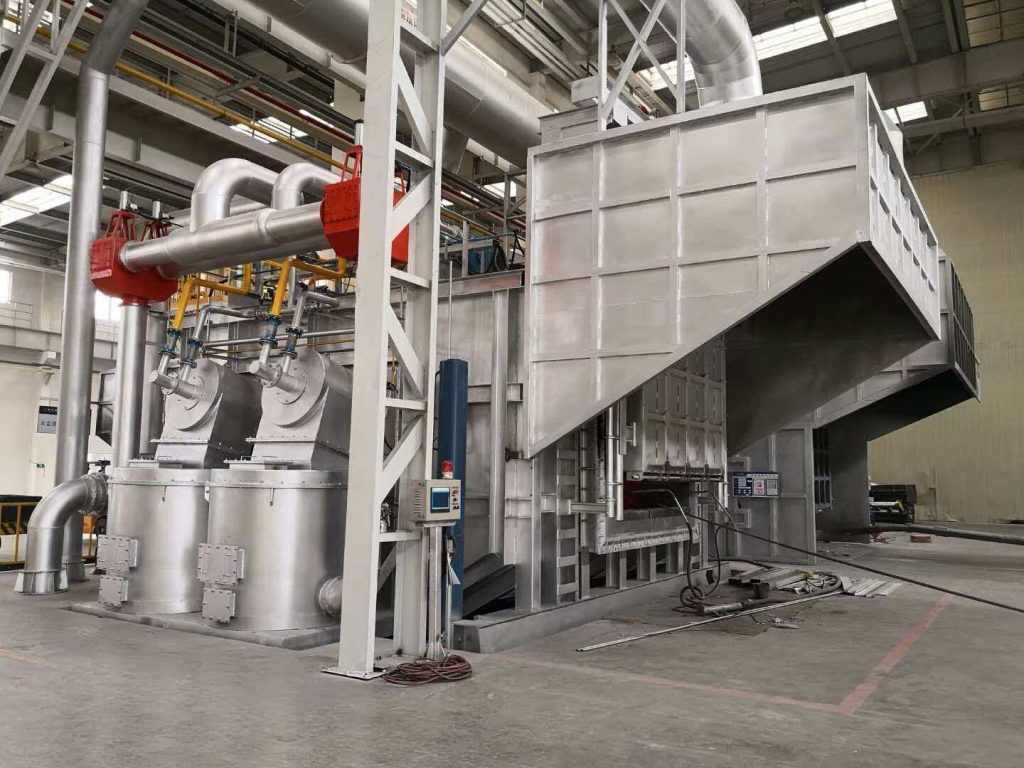
Centered on high-efficiency waste heat recovery, cyclic regenerative combustion and low-nitrogen combustion, this furnace delivers four core strengths: maximum flue gas heat utilization, ultra-high thermal efficiency, stable smelting and ultra-low emissions. Unlike conventional direct-fired furnaces, it recycles high-temperature flue gas heat to preheat combustion media, eliminating energy waste and setting a new benchmark for energy-efficient aluminum melting.
The regenerative combustion system is the furnace’s core, adopting a dual-bed cyclic heat storage-release mode to realize near-full waste heat utilization. It consists of two symmetric regenerator beds (high-temperature heat storage materials), a precision pneumatic reversing valve and a low-nitrogen burner, running a continuous four-stage cycle:
Neutral field test data shows the performance gap between this furnace and conventional direct-fired models, with measurable improvements in core thermal indicators:
| Performance Indicator | Conventional Furnace | Regenerative Furnace |
| Thermal Efficiency | 50%–55% | 75%–85% |
| Fuel Consumption (per ton Al) | 75–90 m³ natural gas | 45–60 m³ natural gas |
| Flue Gas Discharge Temp | 600℃–800℃ | 180℃–230℃ |
Test data confirms a 25%–35% fuel consumption reduction and over 60% flue gas heat loss drop, objectively verifying the system’s technical advantages without overstatement.
Stable operation relies on high-performance core components with specialized properties:
The furnace achieves high efficiency via full waste heat utilization and optimized combustion: it recovers over 90% of flue gas heat, preheating combustion media to 800℃–900℃ for complete burning. Thermal efficiency hits 75%–85%, 20–30 percentage points higher than traditional furnaces, with a stable 25%–35% fuel cut, no compromise to smelting speed or output.
Low emissions are realized via targeted pollutant control and optimized combustion. Staged low-nitrogen combustion lowers peak flame temperature to inhibit NOₓ, while full combustion minimizes particulates and unburned hydrocarbons. Test data: NOₓ ≤30 mg/m³, particulates ≤10 mg/m³, fully compliant with EU IED, North American EPA and global ultra-low emission standards, eliminating compliance risks.
Regenerative combustion forms a uniform temperature field with ±5℃ control accuracy, eliminating local overheating and aluminum oxidation segregation. This cuts metal burn-off to ≤0.8%–1.2% (vs. 2%–3% for traditional furnaces), reducing raw material loss and improving molten aluminum purity. It adapts to diverse feedstocks: pure aluminum ingots, wrought/cast alloys, recycled scrap, maintaining stable smelting quality.
The furnace features a reinforced structure with corrosion-resistant high-temperature refractories, extending service life to 8–10 years (2–3 years longer than conventional models). Equipped with an intelligent PLC system, it supports one-click startup, automatic temperature control, real-time monitoring and fault self-diagnosis. Simplified maintenance reduces downtime, and the robust design enables 24-hour continuous operation.
This furnace has flexible adaptability, covering full aluminum smelting scenarios for small, medium and large foundries:
Modular capacities (500kg–10 tons per furnace) fit small/medium batch production and large continuous smelting lines, applicable to sand casting, die casting, gravity casting and other subdivided fields.
We provide full-chain customized design and professional support to meet diverse process needs:
Full-lifecycle support includes on-site installation, operator training, 24/7 remote monitoring and timely after-sales troubleshooting for long-term stable operation.
The regenerative gas-fired aluminum melting furnace is a targeted upgrade for foundry thermal equipment, solving long-standing pain points of traditional furnaces and setting a new standard for energy saving, low emissions and stable smelting. It helps foundries cut costs, meet environmental norms and improve product quality, a core asset for sustainable production.
For foundries planning equipment upgrades, energy retrofits or recycled aluminum lines, this furnace offers a mature solution. Contact us for detailed parameters, customized plans and on-site test data support.
1.Purpose of the Guide In modern metal processing and recycling industries, the aluminum shell melting furnace plays a critical role…
1. Introduction In today’s highly competitive metal processing industry, the stainless steel melting furnace stands at the core of efficient…
Why Aluminum Scrap Is Ideal for Melting and Recycling Before selecting an aluminum scrap melting furnace, it is important to…
In modern metal processing, improving induction furnace efficiency is not just about increasing power or upgrading equipment. In real production…