In modern metal processing, improving induction furnace efficiency is not just about increasing power or upgrading equipment. In real production environments, efficiency is determined by how well time, energy, and process control are balanced.
Many operators focus on shortening melting time, assuming faster always means better. In reality, excessive speed or poor time control can lead to higher energy consumption, metal loss, and inconsistent product quality.
This is why experienced engineers pay closer attention to melting cycle management rather than just raw speed.
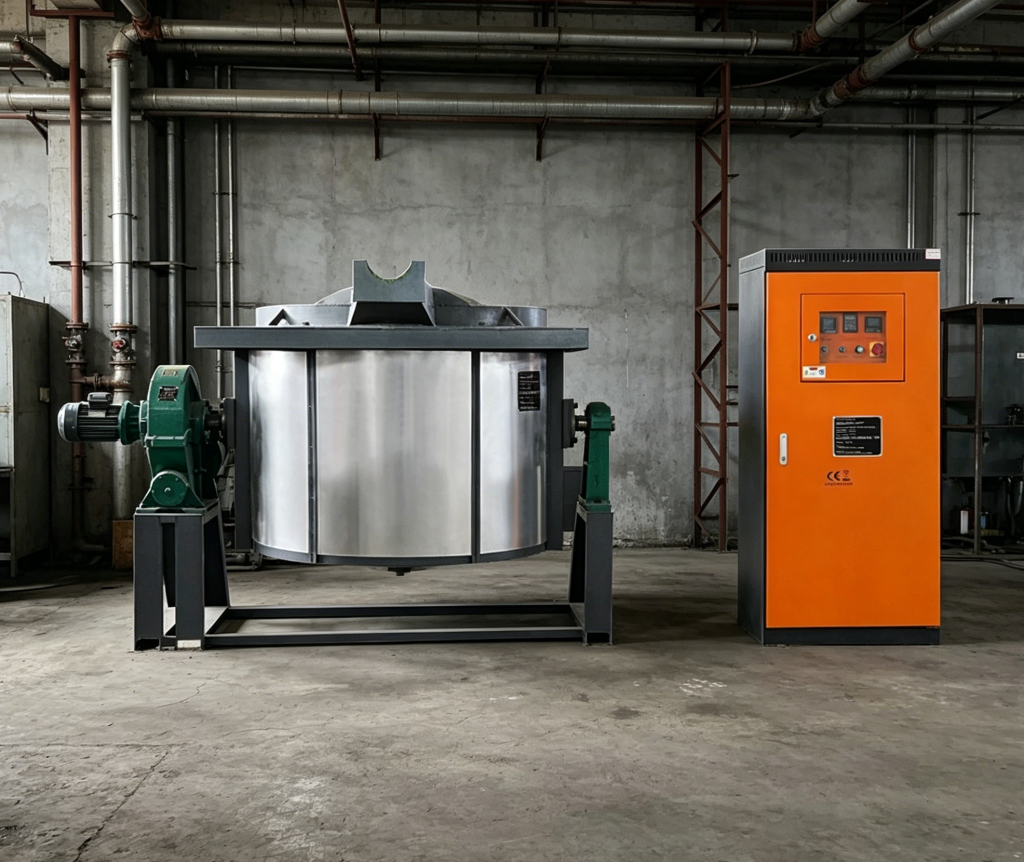
Several key factors directly influence furnace efficiency:
Among these, melting time control plays a critical role. It directly impacts not only energy consumption but also metallurgical quality and overall production output.
In practice, melting time is not just a technical parameter—it is a core operational variable.
Too long:
Too short:
So the goal is not simply to melt faster, but to achieve optimal time control across the entire cycle.
This naturally leads to a key operational question:
What is the appropriate duration for capacity time control?
Melting time refers to the total duration during which the charge remains in the melting furnace in both solid and liquid states, starting from the time the charge is loaded and heating begins until the molten metal is tapped.
The longer the melting time, the more severe the oxidation and gas absorption of the charge—particularly the molten aluminum—becomes, and the greater the tendency for ingots to develop coarse grain structures and cracks; at the same time, the productivity of the melting furnace decreases.
The longer the refined melt remains in the furnace, the greater the likelihood of re-contamination, compositional changes, and failure of grain refinement treatment.
Therefore, while ensuring sufficient time to complete the necessary process operations, the melting time should be minimized as much as possible.
Based on production practices in aluminum processing plants, the permissible residence times vary by furnace type, with the following general requirements:
| Furnace Type | Time Requirement |
|---|---|
| Flame furnaces | Total melting time per batch ≤ 12 hours; molten metal residence ≤ 5 hours |
| Resistance melting furnaces | Special alloys ≤ 5 hours; other alloys ≤ 7 hours |
| Holding furnaces | Special products ≤ 8 hours; general ingots ≤ 12 hours |
(1) Flame furnaces. The total melting time per batch must not exceed 12 hours, and the residence time of the molten metal must not exceed 5 hours.
(2) Resistance melting furnaces. The time from sampling to the start of tapping must not exceed 5 hours for special products and high-magnesium aluminum alloys; for other aluminum alloy products, it must not exceed 7 hours. In primary aluminum smelters, where molten primary aluminum is the primary charge, these melting time limits should be adhered to.
(3) Holding furnaces. The time from the completion of aluminum melt transfer to the start of the final casting run must not exceed 8 hours for special products and square ingots; for general round ingots, it must not exceed 12 hours.
When the smelting time exceeds the above limits, the following remedial measures should generally be taken:
Based on real production experience, improving induction furnace efficiency comes down to optimizing time and process control:
Improving induction furnace efficiency is not about pushing the furnace harder—it is about running it smarter.
In most cases, the real gains come from:
Understanding and managing the full melting cycle is what ultimately determines productivity, energy consumption, and product quality.
It depends on furnace capacity, metal type, and process requirements. In most industrial applications, a balanced cycle time ensures both efficiency and product quality.
No. Excessively short melting time can lead to incomplete melting, poor alloy uniformity, and quality issues. Efficiency comes from optimized—not minimized—time.
Longer melting times increase power consumption and heat loss. Proper cycle time control helps reduce unnecessary energy usage.
It can cause oxidation, gas absorption, contamination, and reduced productivity, especially in aluminum melting processes.
If you are looking to improve your induction furnace efficiency, reduce energy consumption, or optimize your melting process, our engineering team can help.
We provide customized solutions for:
Feel free to contact us for technical support, equipment recommendations, or process optimization advice.

What Is the Stainless Steel Melting Point? The stainless steel melting point refers to the temperature range at which stainless…
Improving casting quality is one of the most common challenges in metal casting and aluminum casting production. Whether you are…
Introduction Selecting the right furnace capacity is not just a sizing exercise—it directly affects production efficiency, metal quality, energy consumption,…
A Complete Guide to Efficient Aluminum Production Industrial aluminum melting furnaces are essential equipment in modern aluminum casting and recycling…