Improving casting quality is one of the most common challenges in metal casting and aluminum casting production. Whether you are producing aluminum, steel, or other alloys, defects such as porosity, inclusions, and surface imperfections can significantly affect final product performance.
If you are concerned about aluminum casting defects, the key is not a single adjustment—but a combination of process control, melt treatment, and stable operation management.
This guide focuses on practical, production-level methods that actually work in real foundry environments, especially for aluminum casting processes.
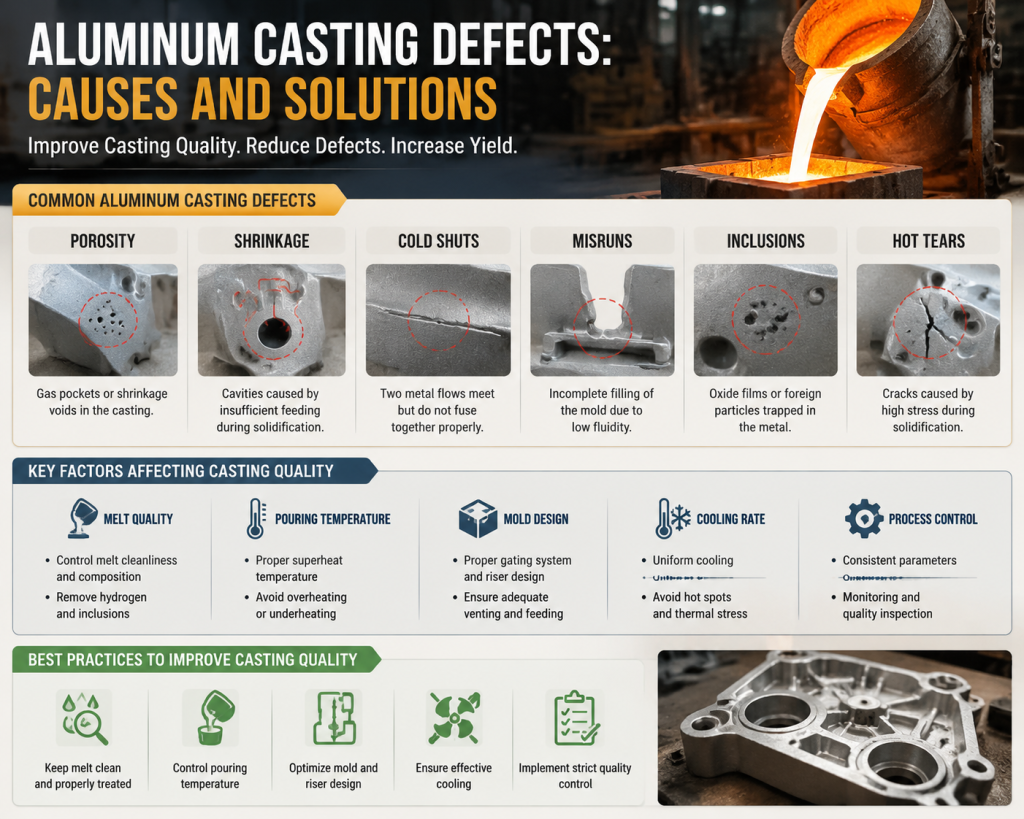
Before improving casting quality, it is essential to understand what causes defects in aluminum casting.
The main influencing factors include:
| Factor | Common Issues | Resulting Defects |
|---|---|---|
| Melt quality | Oxides, gas content | Porosity, inclusions |
| Temperature control | Overheating or fluctuation | Cracks, shrinkage |
| Flow stability | Turbulence | Oxide entrapment |
| Cooling conditions | Uneven cooling | Structural defects |
Improving casting quality starts with controlling these variables systematically.
Stable production conditions are the foundation of consistent aluminum casting quality.
Before beginning production operations, all tools must be baked and dried in accordance with regulations; remove any standing water from the area surrounding the production site. Maintain a clean and orderly production area and practice safe and orderly production.
Moisture and contamination are major sources of aluminum casting defects. Even small amounts of water can introduce hydrogen into molten metal, leading to internal porosity.
Foundry operations involve high temperatures. Before starting a shift, you must put on all required personal protective equipment, including work clothes, safety helmets, protective gloves, and safety goggles as specified. Work shoes must be high-top, heat-resistant boots, and pant legs must cover the top of the boots; under no circumstances should pant legs be tucked into the boots.
Standardized operation is not just about safety—it directly impacts consistency and aluminum casting quality.
Temperature control is one of the most critical steps in improving aluminum casting.
Check whether the temperature of the holding furnace meets the casting requirements. Different products have varying requirements for secondary refining and grain refinement; therefore, verify that the ladle refining and grain refinement equipment meets production requirements. If they do not, adjustments must be made promptly to ensure the casting quality meets specifications.
Key considerations:
Refining and grain control determine the internal structure of the casting.
During production operations, all process parameters must be maintained at stable levels in accordance with process regulations, including those for secondary refining and grain refinement outside the furnace.
Proper refining helps:
The flow behavior of molten metal has a direct impact on aluminum casting defects.
The flow rate of molten aluminum must be controlled to remain steady; excessive fluctuations must be avoided. The oxide film on the surface of the molten metal should be kept intact, and the surface should be disturbed as little as possible. Operating tools must be placed in a safe location to prevent burns.
Unstable flow leads to turbulence, which can trap oxide films inside the metal and create internal defects.
Cooling is a critical but often underestimated factor in aluminum casting quality control.
Currently, water is used as the cooling medium in casting production. Since different products have varying water pressure requirements, check whether the water pressure meets specifications before use.
Improper cooling conditions may cause:
Skimmed aluminum dross should be gently placed into the dross container to prevent hot dross from flying out and causing burns.
Improper handling can contaminate molten metal and reduce casting quality.
At the end of the production shift, clean the operating tools and sweep the production area. Collect the aluminum dross and transport it to the designated storage area; do not mix it with dross removed from the melting furnace, so that it can be returned to the aluminum electrolysis cells.
Consistent housekeeping ensures stable production conditions for the next cycle.
| Area | Key Action |
|---|---|
| Melt quality | Improve refining and degassing |
| Temperature | Maintain stability |
| Flow control | Avoid turbulence |
| Tools | Keep dry and preheated |
| Cooling | Control water pressure |
| Operation | Standardize procedures |
If you want to understand aluminum casting defects, the answer lies in systematic process control rather than isolated fixes.
From melt preparation to pouring and cooling, every step must remain stable and controlled. Only when the entire process is consistent can casting quality become predictable and reliable.
Q1: What is the most effective way to reduce aluminum casting defects?
Maintaining stable process parameters—especially temperature and flow—is the most effective method.
Q2: Why does molten metal cleanliness matter?
Impurities and gases in the melt lead to porosity and weaken the final casting.
Q3: How does flow affect casting defects?
Turbulent flow introduces oxide films into the metal, creating internal defects.
Q4: Can cooling conditions affect casting quality?
Yes. Improper cooling leads to cracks, stress, and structural issues.
Q5: Is equipment the key factor in casting quality?
Equipment is important, but process control and operation discipline are equally critical.
If you are currently facing challenges in aluminum casting defects—such as porosity, inclusions, or unstable production—it may not only be a process issue, but also related to equipment performance and system design.
With extensive experience in metal melting and casting equipment, we support foundries worldwide with:
Whether you are upgrading your existing production line or planning a new casting project, our team can provide practical recommendations based on your actual production conditions.
Feel free to contact us to discuss your requirements and explore how to reduce aluminum casting defects in a more stable and efficient way.
In modern metal processing, improving induction furnace efficiency is not just about increasing power or upgrading equipment. In real production…
A Complete Guide to Efficient Aluminum Production Industrial aluminum melting furnaces are essential equipment in modern aluminum casting and recycling…
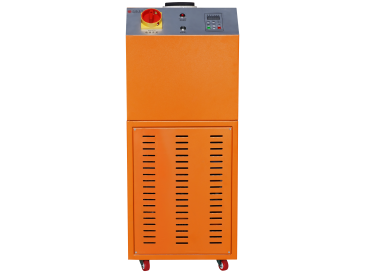
Smelting and purifying metals such as platinum, porpezite, rhodite, gold, etc. Through the Crucible. Can also be used for the…
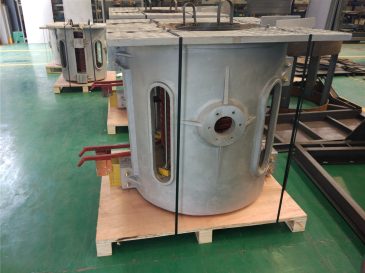
Why Aluminum Scrap Is Ideal for Melting and Recycling Before selecting an aluminum scrap melting furnace, it is important to…