The stainless steel melting point refers to the temperature range at which stainless steel transitions from solid to liquid. Unlike pure metals, stainless steel is an alloy, so it does not have a single fixed melting point.
Instead, it melts over a range that depends on its chemical composition and specific grade. This is one of the key reasons why different types of stainless steel behave differently under high temperatures.
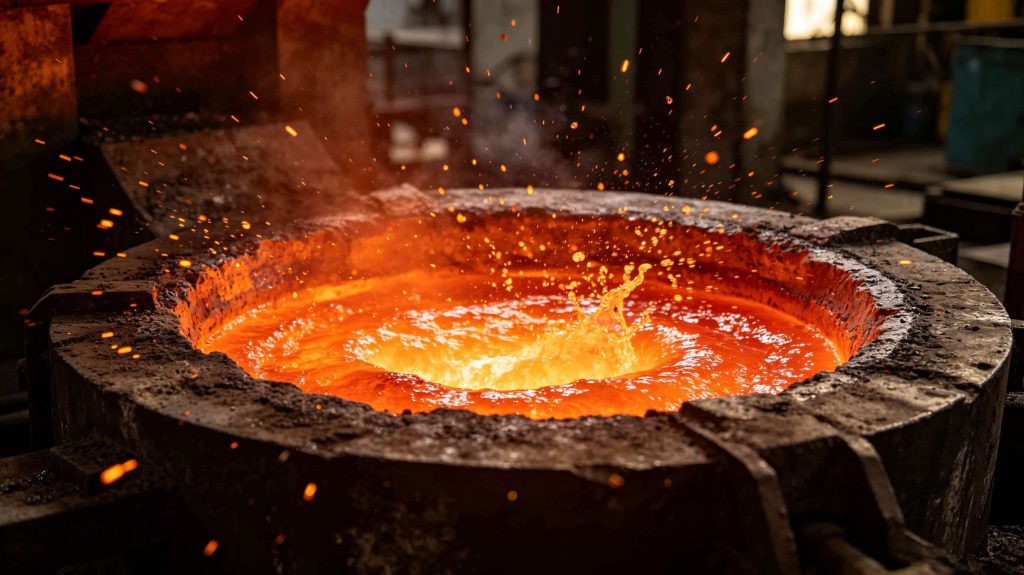
In general, the stainless steel melting point falls between 1325°C and 1530°C. Most commonly used industrial grades are typically within the 1375°C to 1450°C range.
This relatively high melting range is one of the main reasons stainless steel is widely used in high-temperature environments.
For comparison:
This shows why stainless steel is often chosen for applications involving heat, pressure, or harsh working conditions.
Although we often refer to a general range, different stainless steel grades have slightly different melting points:
These differences are mainly caused by variations in alloying elements such as chromium, nickel, and molybdenum.
The reason stainless steel does not have a single melting point is due to its alloy nature.
It contains multiple elements, including:
Each element affects the melting behavior slightly. As a result, stainless steel gradually softens and melts over a temperature range instead of changing state at one exact point.
Several factors influence the stainless steel melting point, including:
Higher nickel or molybdenum content can slightly adjust the melting range.
Different grades are designed for different environments, which affects thermal behavior.
Ferritic stainless steels generally have higher melting points than martensitic types.
Small variations in manufacturing or impurities can cause minor shifts, usually within about 50°C.
Understanding the stainless steel melting point is important in several technical fields:
Even though stainless steel has a high melting range, correct usage still depends on understanding these thermal limits.
The stainless steel melting point generally ranges from 1325°C to 1530°C, with most common grades concentrated between 1375°C and 1450°C.
Because stainless steel is an alloy, its melting point is not fixed but depends on composition, grade, and structure. This is what gives stainless steel its flexibility and wide industrial application in high-temperature environments.
1. Introduction Steel melting is a critical process in foundries, requiring precise temperature control, consistent power, and reliable equipment. Modern…
In modern metal processing, improving induction furnace efficiency is not just about increasing power or upgrading equipment. In real production…
Introduction In modern metal recycling, the scrap aluminum melting furnace plays a critical role in converting waste aluminum into reusable…
I. Introduction: The Role of Aluminum Shell Melting Furnaces in Modern Metal Processing 1.1 Growing Demand for Efficient Metal Melting…