With the rapid expansion of industries such as automotive manufacturing, electrical equipment, construction, and renewable energy, global demand for aluminum and other non-ferrous metals continues to increase. According to industry reports, global aluminum consumption has surpassed 70 million tons per year, and recycled aluminum now accounts for a growing share of total production due to its energy-saving benefits.
In this context, metal producers are under increasing pressure to adopt melting equipment that offers high efficiency, stable performance, and lower energy consumption. Among the available technologies, the induction melting furnace has become one of the most widely used solutions for melting aluminum and other non-ferrous metals.
The structural design of the furnace plays a critical role in operational performance. Modern foundries are paying closer attention not only to power supply efficiency but also to furnace body structure, cooling systems, and maintenance accessibility.
An aluminum shell melting furnace is a type of medium-frequency induction furnace in which the outer structural shell is made from aluminum rather than steel. Inside the shell, the furnace consists of an induction coil, refractory lining, insulation materials, and a water-cooling system.
Compared with traditional steel shell induction furnaces, aluminum shell furnaces are typically lighter in weight and easier to install, making them particularly suitable for small and medium-scale foundries.
These furnaces are commonly used in industries such as aluminum scrap recycling, copper and brass melting, non-ferrous alloy production, and laboratory metal processing.
Understanding how an aluminum shell furnace works helps operators and plant managers optimize production performance. Knowledge of the furnace's operating principles can:
For companies investing in new melting equipment, a clear understanding of furnace operation is essential for maximizing return on investment.
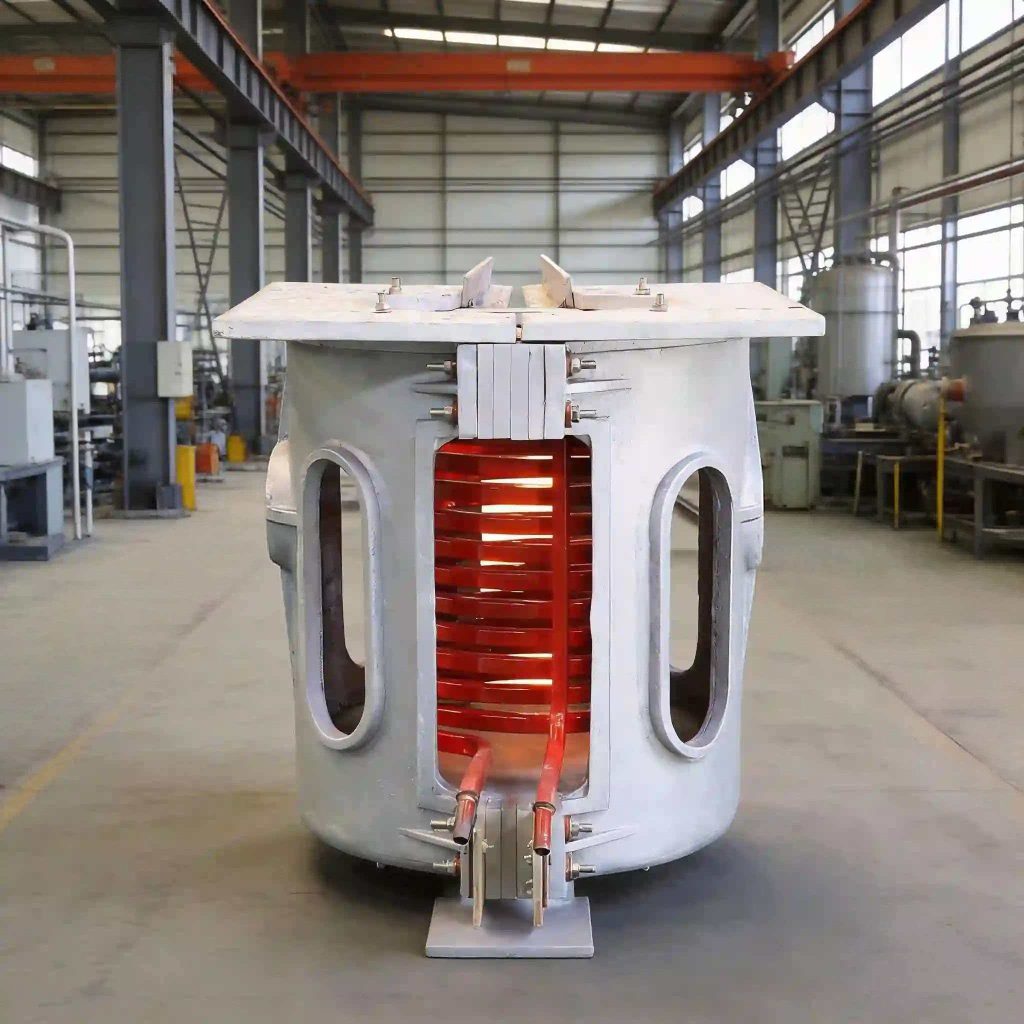
Although designs vary slightly between manufacturers, most aluminum shell induction furnaces consist of several core components.
The outer shell provides the main structural support for the furnace body. In this design, aluminum plates or cast aluminum components form the external structure.
The aluminum shell offers several advantages:
Because aluminum is lighter than steel, this design allows the furnace to be installed more easily in workshops with limited infrastructure.
The induction coil is the core heating component of the furnace. It is typically made from high-conductivity copper tubing through which cooling water continuously circulates.
When connected to the power supply, the coil generates a strong alternating magnetic field around the crucible area. This magnetic field is responsible for transferring energy to the metal charge.
The design of the coil—including the number of turns, spacing, and cooling efficiency—directly influences the performance of the medium frequency induction furnace system.
Inside the furnace, a refractory lining separates the molten metal from the coil and furnace shell. This lining must withstand extremely high temperatures and thermal shock.
Common refractory materials include:
A properly designed lining not only protects furnace components but also improves heat retention and extends the service life of the induction furnace crucible lining.
Efficient cooling is essential for safe furnace operation. The induction coil and some structural components are cooled using a closed-loop water cooling system.
This system performs several critical functions:
Many modern furnaces also include sensors that monitor water temperature, flow rate, and pressure to prevent cooling failures.
The power supply unit converts standard electrical power into medium-frequency electrical energy suitable for induction heating.
Typical induction furnace power supplies operate in the 500 Hz to 10 kHz frequency range, depending on furnace capacity and application. The power system includes components such as:
Together, these components form the medium frequency power supply for induction furnace, enabling efficient energy transfer to the metal charge.
The working principle of an aluminum shell furnace is based on electromagnetic induction heating.
When alternating current flows through the copper induction coil, it generates a rapidly changing magnetic field around the furnace chamber. According to electromagnetic induction laws, this magnetic field induces electric currents inside any conductive material placed within the field.
These currents are known as eddy currents.
As the eddy currents flow through the metal charge, the electrical resistance of the metal converts electrical energy into heat. This phenomenon is called Joule heating.
This process is the fundamental mechanism behind induction heating technology in metal melting.
As eddy currents continue to circulate within the metal charge, the temperature of the metal gradually increases.
The heating process usually follows several stages:
Because the heat is generated directly within the metal itself, induction furnaces provide very high thermal efficiency, often exceeding 70–85% energy efficiency depending on system design.
In addition to heating, the electromagnetic field inside the furnace also produces a natural stirring effect in the molten metal.
This phenomenon is called electromagnetic stirring.
The circulating electromagnetic forces cause the molten metal to move continuously within the crucible. This movement helps:
As a result, induction furnaces often produce higher quality metal compared with some traditional fuel-fired melting methods.
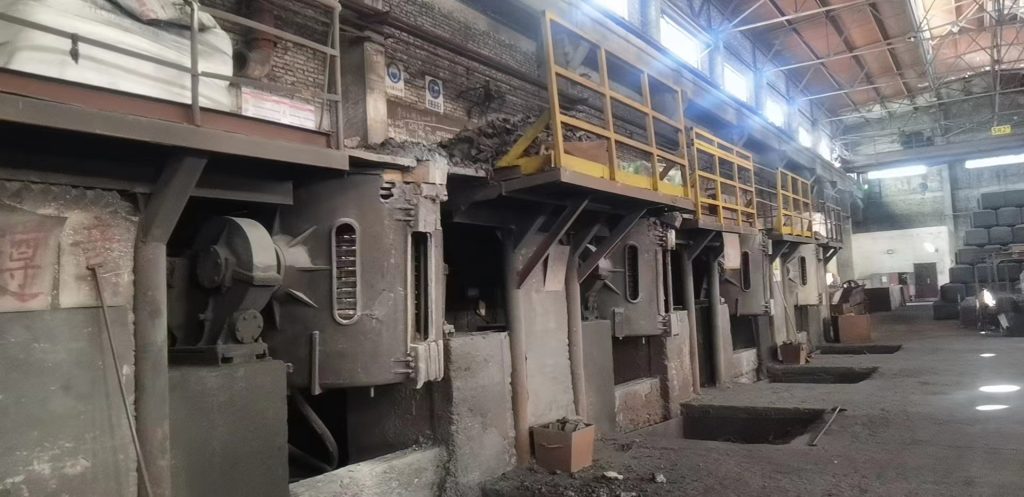
The melting process begins by loading the furnace with raw materials. These materials may include:
Proper charging practices are important to maintain stable furnace operation and maximize melting efficiency.
Once the furnace is charged, the power supply system is activated. Alternating current begins flowing through the induction coil, generating the magnetic field required for heating.
The metal charge gradually absorbs energy and begins to heat up.
During the melting stage, operators monitor furnace temperature and power input carefully. Temperature control ensures that the metal reaches the desired melting point without overheating.
Modern furnaces often integrate induction furnace temperature control systems that allow operators to precisely regulate the melting process.
As the metal melts, impurities and oxidation products may accumulate on the surface of the molten metal, forming slag.
Operators periodically remove this slag to maintain metal purity and improve casting quality.
After the melting process is complete and the desired temperature is reached, the molten metal is poured from the furnace.
Many furnaces use a hydraulic tilting mechanism to discharge the molten metal safely into ladles or directly into downstream equipment such as continuous casting machines for metal production.
The aluminum shell design significantly reduces the structural weight of the furnace. This makes transportation, installation, and relocation easier compared with traditional steel shell furnaces.
Aluminum shell furnaces generally have a simpler structural design, which often leads to lower manufacturing costs and reduced initial investment for small and medium foundries.
These furnaces are available in a wide range of capacities, from tens of kilograms to several tons, making them suitable for many types of metal processing operations.
Because of their simplified mechanical structure, aluminum shell furnaces are easier to maintain. Components such as refractory linings, coils, and insulation materials can typically be serviced or replaced with less downtime.
Aluminum shell induction furnaces are widely used in many areas of the metal processing industry.
These furnaces are commonly used for secondary aluminum recycling, where aluminum scrap is remelted and reused in new products.
Foundries producing copper, brass, bronze, and aluminum alloys often rely on non-ferrous metal induction melting furnaces for reliable and efficient melting.
Because of their relatively low cost and flexible capacity, aluminum shell furnaces are ideal for small and medium casting facilities.
Some research institutions and specialty alloy producers also use small aluminum shell furnaces for experimental metal processing.
Several factors can influence the performance and service life of an aluminum shell melting furnace:
Regular inspection and preventive maintenance are essential for ensuring long-term reliability.
Both aluminum shell and steel shell furnaces are widely used in the industry, but they differ in several key aspects.
| Feature | Aluminum Shell Furnace | Steel Shell Furnace |
|---|---|---|
| Structural Weight | Lightweight | Heavier |
| Installation | Easier installation | Requires stronger foundation |
| Cost | Lower initial cost | Higher initial investment |
| Durability | Suitable for small to medium operations | Better for large heavy-duty production |
Selecting the right furnace depends on production scale, operating conditions, and investment budget.
An aluminum shell melting furnace operates using electromagnetic induction to convert electrical energy into heat. This heat is generated directly inside the metal charge through eddy currents, allowing the metal to melt quickly and efficiently.
Choosing the right furnace design is critical for achieving optimal production performance. Factors such as capacity, power supply configuration, cooling systems, and refractory design all influence melting efficiency and equipment lifespan.
As metal processing industries continue to evolve, induction furnace technology is also advancing. Future developments are expected to focus on:
Companies seeking reliable melting solutions should carefully evaluate furnace design and supplier expertise.
Looking for a reliable aluminum shell melting furnace for your metal processing needs? Contact us to learn more about professional induction furnace solutions and customized melting systems.
I. Introduction: The Role of Continuous Rolling in Modern Metal Processing In modern metallurgical production, efficiency, consistency, and automation have…
I. Introduction: Why Choosing the Right Aluminum Shell Melting Furnace Matters As demand for aluminum products continues to grow across…
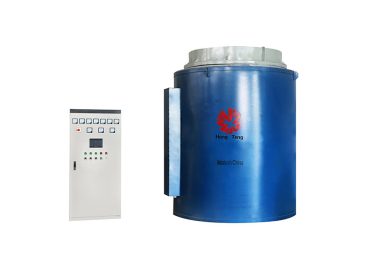
A Vertical Heat Treatment Solution Combining Structural Stability, Thermal Efficiency, and Process Reliability In industrial heat treatment, annealing is not…
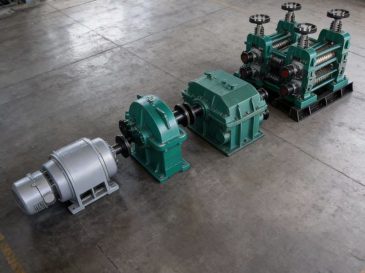
I. Introduction 1.1 Overview of Hongteng Rebar Rolling Mill Hongteng Rebar Rolling Mill specializes in the research, development, production, and…