In industrial heat treatment, annealing is not simply a heating process—it is a critical stage that directly affects material structure, surface condition, dimensional stability, and downstream processing performance.
For long, heavy, or vertically sensitive workpieces, conventional horizontal furnaces often introduce deformation risks, uneven heating, or surface quality issues.
The pit-type annealing furnace is specifically developed to address these challenges.
With its pit-shaped structure, composite refractory insulation, and reliable resistance heating system, it provides a stable, clean, and deformation-free annealing environment for a wide range of metal components.
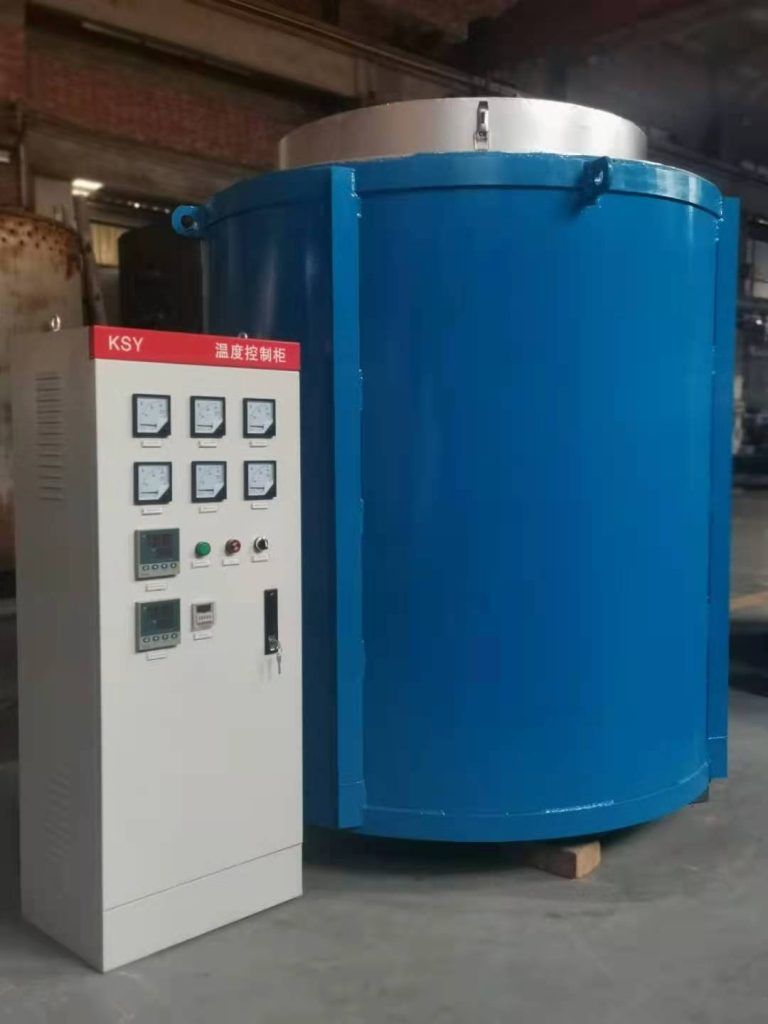
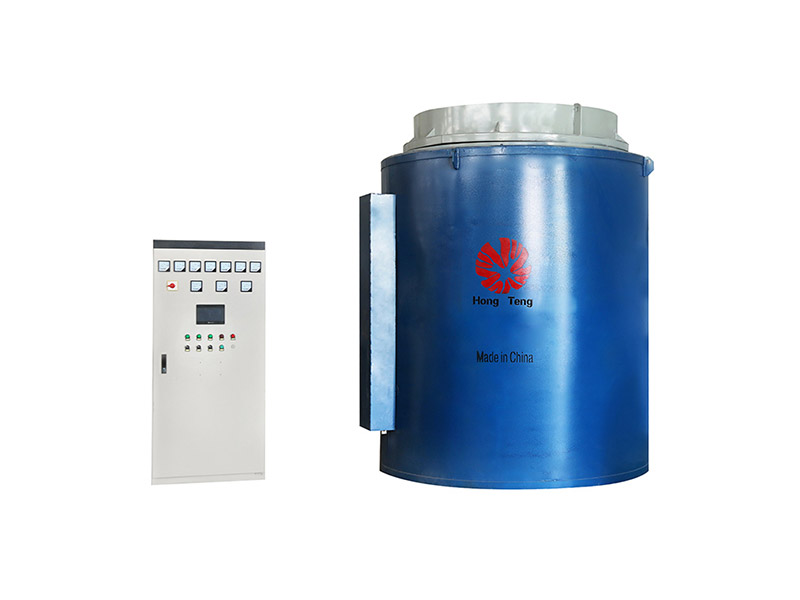
The furnace body adopts a fully welded structure composed of steel sections and steel plates, providing high mechanical strength and long-term structural stability under repeated thermal cycles.
The pit-type shell allows the furnace chamber to extend vertically below floor level, making it particularly suitable for long workpieces that must be heated in a suspended or vertical position.
The furnace cover is manually operated, ensuring simple operation and mechanical reliability.
It is welded into a circular steel structure, which enhances overall rigidity and sealing uniformity.
The central section of the furnace cover is constructed entirely of extruded refractory aluminum silicate fiber blankets, a design choice that significantly improves:
This structure minimizes heat loss and helps maintain a stable internal furnace atmosphere.
The furnace lining uses a composite insulation system, combining:
This insulation configuration allows the furnace to achieve excellent temperature uniformity while reducing overall energy consumption.
Thanks to stable temperature control and effective insulation, workpieces treated in the pit-type annealing furnace typically show:
This directly reduces post-annealing cleaning work and improves efficiency in subsequent machining or forming processes.
The furnace heating system utilizes high-temperature resistance bands, selected for industrial annealing applications requiring:
This heating configuration ensures consistent heat output, reliable performance, and reduced maintenance frequency—key considerations for continuous or batch heat treatment operations.
One of the defining technical advantages of the pit-type annealing furnace is vertical heating.
Long rod-shaped or shaft-type components—such as turbine shafts, rotors, rods, and pipes—are heated in a vertical orientation inside the furnace chamber.
This configuration effectively eliminates gravitational bending or sagging that may occur in horizontal furnaces at elevated temperatures.
For customers processing long or high-value components, this design directly translates into:
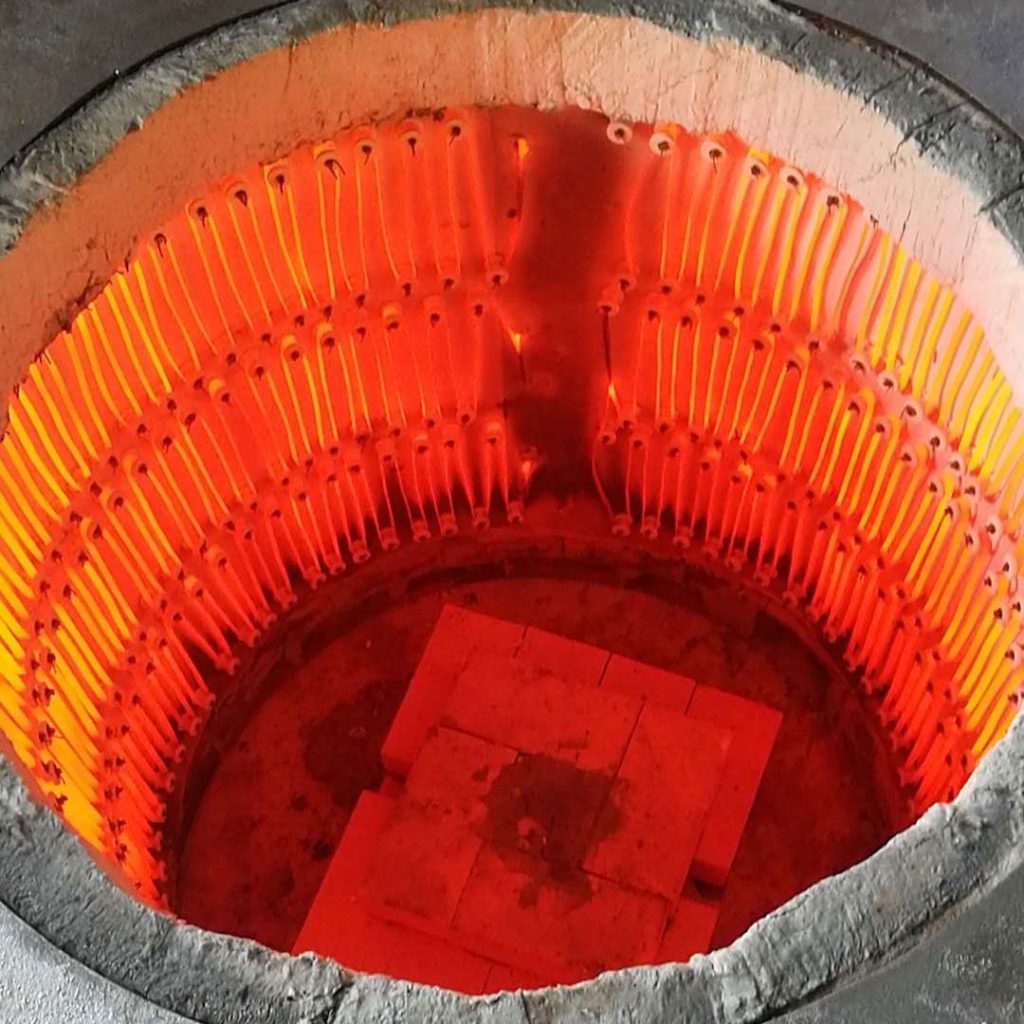
To meet higher surface quality requirements, some pit-type annealing furnace models can be configured for inert gas heating.
This option further reduces oxidation risk during annealing and is suitable for applications where surface integrity and metallurgical cleanliness are critical.
| System Component | Description |
|---|---|
| Furnace Body | Welded steel section and steel plate structure |
| Furnace Lining | High-alumina refractory bricks + aluminum silicate fiber |
| Furnace Cover | Manual operation, circular welded steel structure |
| Insulation Core | Extruded refractory aluminum silicate fiber blankets |
| Heating Elements | High-temperature resistance bands |
| Control System | Temperature-controlled cabinet |
The pit-type annealing furnace is widely used for annealing:
Its structural design and heating characteristics make it especially suitable for workpieces that demand uniform heating, minimal deformation, and clean surface quality.
From a process perspective, this furnace design delivers clear value to the user:
These advantages help manufacturers improve product consistency while controlling operating costs.
Whether used in batch annealing or continuous production environments, the pit-type annealing furnace provides a reliable and technically mature solution for demanding heat treatment tasks.
Its combination of structural strength, thermal efficiency, and process reliability makes it a valuable asset for companies seeking long-term, stable annealing performance.
Each heat treatment application has its own requirements for workpiece size, heating cycle, and atmosphere control.
Our pit-type annealing furnaces can be configured to match specific production needs.
If you are evaluating a pit-type annealing solution for your facility, we welcome you to contact us for technical details, configuration options, or a customized quotation.
Our team is ready to assist you in selecting the most suitable furnace solution for your application.
In the stainless steel manufacturing industry, the melting stage is a core process that directly determines material purity, alloy homogeneity,…
Introduction Small-scale steel rolling lines play a critical role in modern steel processing, especially for manufacturers seeking flexibility, efficiency, and…
1. Introduction In aluminum production, the performance of the aluminum melting furnace directly determines product quality, energy consumption, and overall…
1. Introduction In modern rolling mills, the billet reheating furnace plays a critical role in ensuring stable production and consistent…