In modern rolling mills, the billet reheating furnace plays a critical role in ensuring stable production and consistent product quality. Before billets enter the rolling process, they must be heated to a precise temperature range to achieve optimal plasticity and reduce deformation resistance.
A well-designed billet reheating furnace not only improves rolling efficiency but also significantly affects energy consumption, oxidation loss, and final product quality.
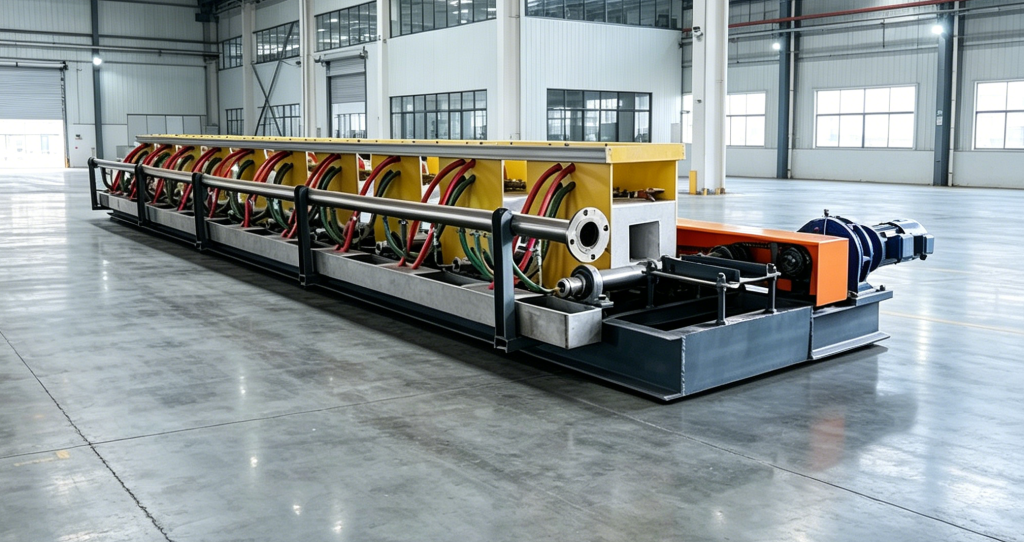
A billet reheating furnace is an industrial heating system used to uniformly heat steel or aluminum billets to rolling temperatures, typically between 1100°C and 1250°C for steel.
It is widely used in:
Unlike melting furnaces, which change metal from solid to liquid, a billet reheating furnace maintains the material in solid form while increasing its temperature for deformation.
The working principle of a billet reheating furnace depends on the heating method:
Fuel-fired furnaces use natural gas or oil combustion to generate heat, which is transferred to billets through radiation and convection.
Induction furnaces use electromagnetic fields to directly heat the billet internally, offering faster heating and higher efficiency.
Key control factors include:
Precise control ensures minimal scale formation and consistent metallurgical properties.
Different production requirements lead to different furnace designs.
| Type | Features | Advantages | Disadvantages |
|---|---|---|---|
| Walking Beam Furnace | Billets move step by step | Uniform heating, high automation | Higher investment |
| Pusher Furnace | Billets pushed through furnace | Simple structure | Surface damage risk |
| Rotary Hearth Furnace | Circular movement | Compact design | Limited capacity |
| Induction Heating Furnace | Electromagnetic heating | Fast, energy-efficient | Higher electricity cost |
Among these, the walking beam billet reheating furnace is widely used in modern large-scale rolling mills.
| Parameter | Typical Range |
|---|---|
| Heating Temperature | 1100–1250°C |
| Capacity | Depends on furnace type, billet size, and production line; typically 20–120 T/h |
| Fuel Type | Natural gas, diesel, electricity |
| Heating Efficiency | 60–85% |
| Temperature Uniformity | ±10°C |
The actual capacity of a billet reheating furnace is closely related to billet dimensions, heating temperature, and rolling mill speed.
Selecting the right billet reheating furnace requires balancing performance, cost, and production goals.
Key factors include:
1. Production Capacity
Match furnace capacity with rolling mill throughput.
2. Energy Source
Gas furnaces are cost-effective, while induction systems offer higher efficiency.
3. Automation Level
Advanced control systems improve consistency and reduce labor costs.
4. Investment vs Operating Cost
Initial investment should be evaluated alongside long-term energy consumption.
Energy consumption is one of the most critical factors in furnace operation.
Typical energy consumption ranges:
Energy-saving technologies include:
These technologies can reduce fuel consumption by 15–30%.
| Problem | Cause | Solution |
|---|---|---|
| Uneven heating | Poor temperature control | Optimize burner layout |
| Excessive oxidation | High oxygen levels | Improve atmosphere control |
| High energy consumption | Heat loss | Upgrade insulation |
Q1: What is the ideal temperature for billet reheating?
The typical temperature for steel billets is between 1100°C and 1250°C, depending on material grade.
Q2: Which type of billet reheating furnace is best?
It depends on production scale. Walking beam furnaces are ideal for large plants, while induction systems suit smaller, high-efficiency operations.
Q3: How can energy consumption be reduced?
Using regenerative burners and waste heat recovery systems significantly improves efficiency.
Q4: Is induction heating better than gas heating?
Induction heating offers higher efficiency and faster heating but may have higher electricity costs.
A billet reheating furnace is a key piece of equipment in modern metal processing. Choosing the right type and optimizing its operation can significantly improve production efficiency, reduce energy consumption, and enhance product quality.
For manufacturers, investing in advanced furnace technology is essential to remain competitive in today’s energy-sensitive industrial environment.
Contact Us for a Customized Solution
If you are looking for a reliable billet reheating furnace solution for your production line, our engineering team can provide tailored designs based on your capacity, energy preferences, and plant conditions.
Feel free to contact us for technical consultation, detailed specifications, and a competitive quotation. We are ready to help you improve efficiency and reduce operating costs.
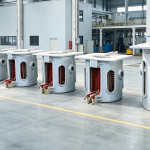
Introduction In modern metal recycling, the scrap aluminum melting furnace plays a critical role in converting waste aluminum into reusable…
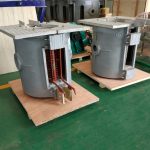
1. Introduction Aluminum melting furnaces are essential equipment in modern metal processing. From automotive parts to beverage cans, aluminum must…
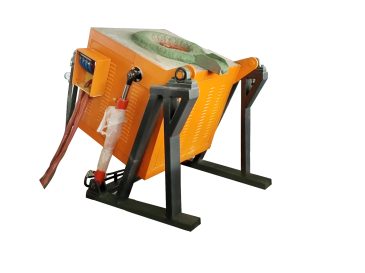
Introduction Selecting the right aluminum melting furnace is one of the most critical decisions for foundry operations. The wrong choice…
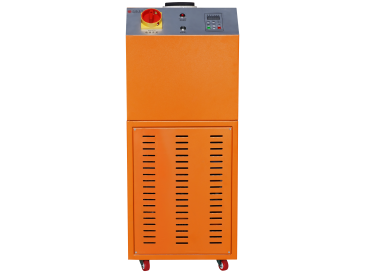
Smelting and purifying metals such as platinum, porpezite, rhodite, gold, etc. Through the Crucible. Can also be used for the…