Small-scale steel rolling lines play a critical role in modern steel processing, especially for manufacturers seeking flexibility, efficiency, and stable product quality without the high investment associated with large continuous rolling mills. However, compared with conventional rolling equipment, small rolling mills impose stricter installation requirements, more complex electrical and transmission coordination, and higher demands on process layout accuracy.
Understanding these characteristics is essential—not only for correct installation and commissioning, but also for fully realizing the technical and economic advantages of advanced rolling mill designs. This article systematically explains the installation logic, mechanical and control requirements, and performance advantages of small-scale steel rolling lines, while highlighting how modern mill technology creates measurable value for customers.
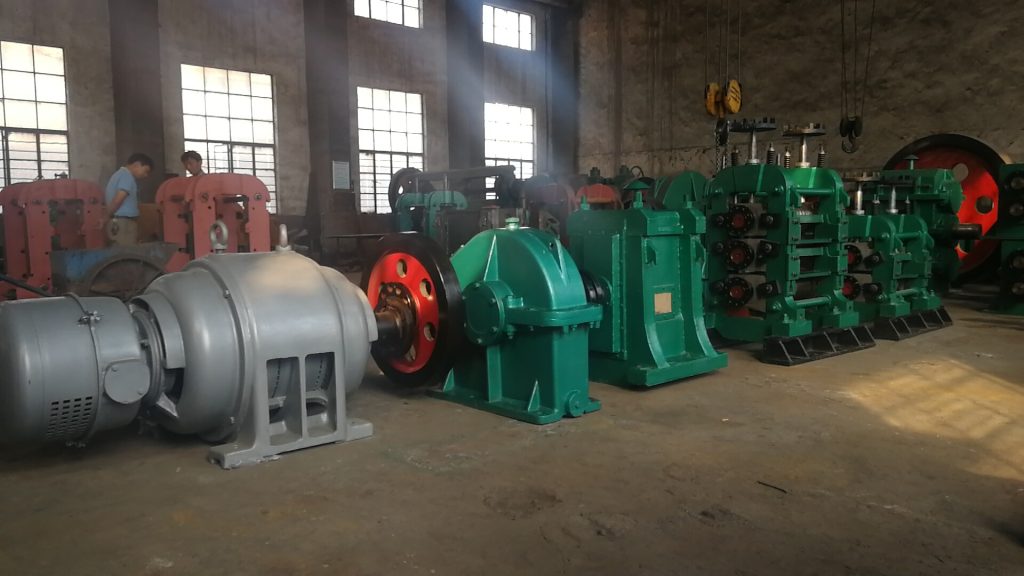
Although small rolling mills share basic principles with other rolling equipment, they differ significantly in structural compactness, process continuity, and control integration. A typical small rolling line may include:
These characteristics make installation accuracy especially critical. Even small deviations in elevation, centerline alignment, or foundation stability can directly affect rolling accuracy, bearing life, and product consistency.
Small rolling lines usually feature a long process layout, with multiple pieces of equipment arranged along a strict rolling centerline. The height difference between equipment and centerline must be precisely controlled to ensure:
Any misalignment may cause uneven loading on rollers and bearings, increasing wear and reducing service life.
When installing a rolling line on a soft soil foundation, uneven settlement and displacement are unavoidable risks. These risks are amplified by:
If not properly managed, foundation instability can lead to misalignment, vibration, and even production downtime.
To address these challenges, settlement observation points must be established in advance, typically based on:
Regular measurements should be carried out before final equipment alignment. Only when settlement and displacement trends become stable should precise adjustment of the rolling mill be performed. This ensures long-term operational accuracy and avoids repeated re-alignment after commissioning.
Roller bearings in small rolling mills operate under extremely heavy working loads. Therefore, bearing systems must meet several critical requirements:
These requirements directly affect rolling stability, energy consumption, and maintenance costs.
In general:
Steel materials used in mill structures and components naturally perform better under hot rolling conditions, which contributes to improved durability and load-bearing capacity.
One of the most attractive features of small rolling mills is their flexible rolling speed adjustment. This flexibility allows the equipment to:
More importantly, adjustable rolling speed forms the technical foundation for automation and continuous operation.
Newly designed small rolling mills integrate modern mechanical structures with advanced electrical control systems, offering:
These improvements significantly enhance the practical value of small rolling lines in modern steel plants.
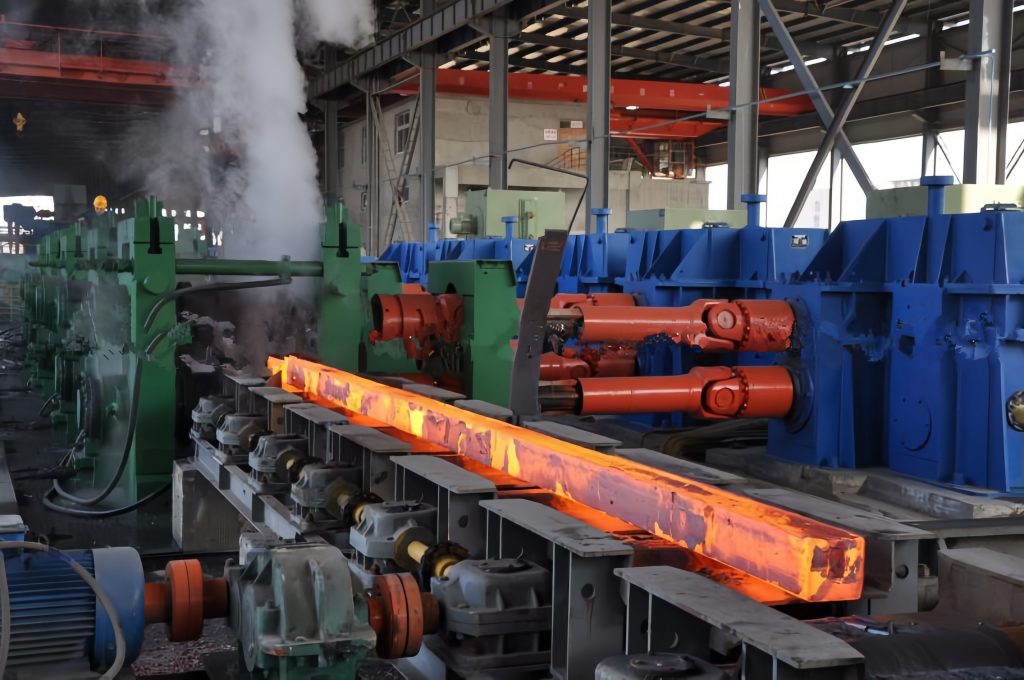
The new steel rolling mill designed and manufactured by Hongteng Machinery demonstrates clear advantages in improving final product performance. It can:
These improvements directly enhance the mechanical properties of the product and effectively overcome the traditional problem of low ductility in cold-rolled steel bars.
The passive one-roll and one-drag rolling mill structure enables secondary rolling, which brings several important benefits:
This structural innovation simplifies the rolling process while maintaining precise control over deformation behavior.
Through advanced automatic control calculations, the rolling line ensures:
Automation not only reduces operator dependency but also improves repeatability and process stability. This proves that modern industrial technology has successfully upgraded traditional rolling mills, delivering both quality stability and efficiency gains.
The following table summarizes how technical features translate into real customer benefits:
| Technical Feature | Engineering Advantage | Customer Value |
|---|---|---|
| Precise installation control | Stable alignment and reduced vibration | Longer equipment life |
| Settlement observation system | Accurate long-term positioning | Reduced maintenance costs |
| Heavy-load bearing design | Low friction, high durability | Lower energy consumption |
| Flexible rolling speed | Adaptive process control | Higher production flexibility |
| Secondary rolling capability | Improved deformation efficiency | Increased output |
| Automatic control system | Stable dimensions and surface quality | Higher product acceptance |
By combining advanced mechanical design, reliable installation methodology, and intelligent control systems, modern small-scale steel rolling lines achieve a true technology–value closed loop:
For customers, this means higher yield, better product performance, and faster return on investment.
If you are planning to upgrade an existing rolling line or invest in a new small-scale steel rolling mill, our engineering team is ready to support you with professional technical solutions and customized equipment designs.
Contact us today to discuss your production requirements and discover how our rolling mill technology can create lasting value for your business.
A Vertical Heat Treatment Solution Combining Structural Stability, Thermal Efficiency, and Process Reliability In industrial heat treatment, annealing is not…
I. Introduction 1.1 Industrial Positioning of Aluminum Ingot Production Lines Within the non-ferrous metal processing industry system, aluminum ingot production…
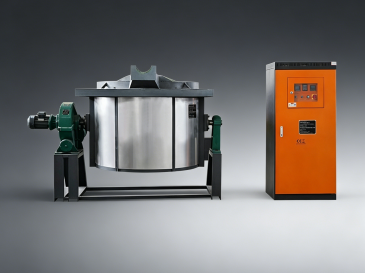
1. Introduction In aluminum production, the performance of the aluminum melting furnace directly determines product quality, energy consumption, and overall…
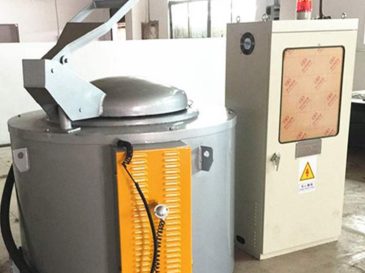
Energy-Saving and Environmentally Friendly Solution New type energy-saving and environmentally friendly zinc melting furnace, no cooling equipment required. High productivity,…