Within the non-ferrous metal processing industry system, aluminum ingot production lines serve as a critical hub for aluminum resource recycling and deep processing, connecting the entire workflow from scrap aluminum recovery, melting treatment, to finished ingot output. Whether recycling industrial scrap aluminum or casting primary aluminum, these lines undertake the core task of transforming fragmented aluminum raw materials into standardized aluminum ingots. They supply qualified billets for subsequent deep processing stages like rolling and extrusion, serving as vital support for the green circular development of the non-ferrous metals industry.
As the non-ferrous metals industry transitions toward large-scale, green, and intelligent manufacturing, traditional manual or semi-automated casting models can no longer meet industrial upgrading demands. High-efficiency automated aluminum ingot casting systems not only significantly boost casting productivity and ensure dimensional accuracy and quality consistency, but also mitigate safety risks associated with manual intervention. They reduce energy consumption and material wastage, aligning with modern manufacturing principles of cost reduction, efficiency enhancement, and low-carbon development. These systems have become critical equipment for aluminum processors seeking to elevate their core competitiveness.
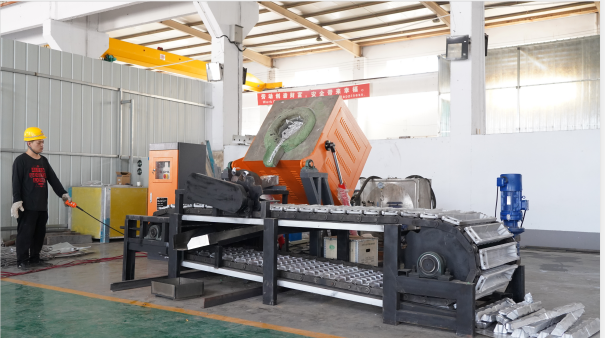
The core function of an aluminum ingot production line is to achieve the melting, quantitative pouring, forming, cooling, and finished product output of aluminum and other non-ferrous metals. Through standardized processes, it transforms liquid aluminum into uniformly sized aluminum ingots. Its core advantage lies in simultaneously supporting primary aluminum casting and recycled aluminum recovery. It processes various aluminum scrap materials (such as scrap aluminum profiles, scrap aluminum products, aluminum chips, etc.), refining them through melting before casting into ingots, thereby enabling the circular utilization of aluminum resources.
This production line is widely applied in the non-ferrous metal processing industry, serving scenarios such as aluminum smelters, scrap aluminum recycling enterprises, and aluminum deep-processing bases. It produces various industrial aluminum ingots and casting billets, meeting the processing requirements for subsequent products like aluminum plates, tubes, and profiles. It also supports small-scale ingot production for other non-ferrous metals like copper and zinc, demonstrating strong versatility.
The aluminum ingot production line adopts a linear layout structure, forming an elongated configuration that aligns with workshop assembly line planning. Installation positions can be flexibly adjusted based on workshop space dimensions, balancing production continuity with spatial utilization. The core advantage of linear layout is achieving unidirectional material flow from pouring to forming and output, minimizing material handling between processes and enhancing production efficiency.
The production line's core components include the head frame, tail frame, intermediate frame, pouring frame, and guide rails. These components collaborate to complete the entire ingot casting process:
All components are fabricated from heavy-duty welded steel structures formed through precision welding processes. They exhibit high strength and stability, capable of withstanding high-temperature impacts during liquid aluminum pouring and vibrations during equipment operation. This effectively prevents structural deformation and extends equipment service life. Additionally, the steel surfaces undergo anti-corrosion and high-temperature resistant treatments, adapting to workshop environments characterized by high temperatures and high dust levels.
The aluminum ingot production line demonstrates robust large-scale manufacturing capability, achieving a maximum ingot output of 8 tons per hour. Production capacity can be flexibly adjusted to meet diverse scenarios, from small-batch trial runs to high-volume mass production. For standardized aluminum ingot manufacturing, the line enables continuous, uninterrupted operation with stable, controllable daily output, fulfilling enterprises' large-scale production requirements.
Compared to traditional casting equipment, this production line significantly improves operational stability through optimized structural design and automated control. This effectively reduces equipment downtime for maintenance, boosting overall output efficiency by 20%–30%. Additionally, automated pouring and forming processes eliminate redundant manual operations, shortening the production cycle per aluminum ingot and further enhancing overall production efficiency.
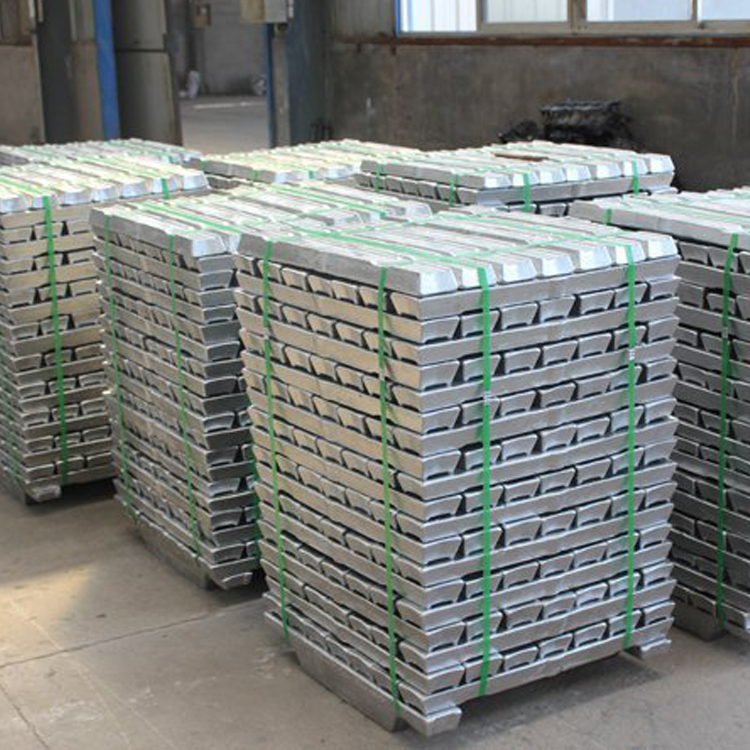
The production line employs AC variable-speed drive motors as its power source. These motors feature high power output, low energy consumption, and stable operation, meeting the demands of high-load continuous operation. They also provide excellent speed regulation performance, forming the foundation for precise speed control.
Two mainstream methods—electromagnetic speed regulation and variable frequency speed regulation—are employed, adaptable to production scenarios and precision requirements:
Stepless speed control enables precise synchronization between mold conveying speed and pouring speed. By dynamically adjusting operational parameters based on liquid aluminum flow characteristics and ingot specifications, it prevents issues like pouring overflow and uneven solidification, ensuring dimensional accuracy and surface quality of aluminum ingots.
The production line possesses full-process automation capabilities, primarily achieving:
These functions ensure consistent ingot formation, reduce defects, and improve product yield rates.
The automated operation mode significantly reduces manual intervention, lowering operator workload intensity. Processes previously requiring multiple workers now need only minimal personnel for equipment monitoring and routine maintenance. Meanwhile, automation eliminates direct contact with molten aluminum, mitigating risks such as burns and material splashes, greatly enhancing production safety.
The production line integrates seamlessly with robotic aluminum ingot stackers, enabling automated stacking and palletizing. It also adapts to various conveying equipment such as belt conveyors and chain conveyors, ensuring smooth transfer to storage or downstream processing.
A modular structural design allows flexible extension of line length and capacity. The automated control system can be upgraded with online inspection and data monitoring, supporting smart manufacturing upgrades.
With a maximum width of 1.3 meters, the production line significantly reduces space requirements compared to traditional casting equipment, making it ideal for small and medium-sized workshops.
The production line length is adjustable from 4 meters to 30 meters, supporting customized installation. The simple installation process requires no complex foundation modifications, enabling rapid commissioning and flexible deployment.
With its strengths in efficiency, automation, and structural reliability, the aluminum ingot production line is an ideal solution for modern aluminum ingot manufacturing and aluminum resource recycling. Its linear structure, automated control, 8 tons per hour capacity, and 20%–30% efficiency improvement help enterprises reduce costs and enhance competitiveness.
Looking ahead, as smart manufacturing technologies continue to evolve, aluminum ingot production lines will further integrate digital and intelligent technologies, supporting the green, circular, and high-quality development of the non-ferrous metals industry. Contact us today for a customized quote and detailed equipment specifications tailored to your production requirements.
Introduction Small-scale steel rolling lines play a critical role in modern steel processing, especially for manufacturers seeking flexibility, efficiency, and…
Transformers are essential equipment in modern power transmission and distribution systems. In AC circuits, transformers are used to step up…
When selecting an induction melting furnace, one of the most critical decisions is choosing between a steel shell induction furnace…
I. Introduction 1.1 Importance of Induction Heating Frequency In induction heating technology, frequency is one of the most critical parameters…