Transformers are essential equipment in modern power transmission and distribution systems. In AC circuits, transformers are used to step up or step down voltage while maintaining the same frequency. This allows electrical energy to be transmitted efficiently over long distances and delivered at the required voltage level for safe and stable use. Learn more about our power transformer solutions.
Depending on their application, transformers can be categorized as power transformers, instrument transformers, test transformers, and special transformers. Among them, power transformers play a critical role in industrial environments such as factories, steel mills, power plants, and substations, where stable voltage regulation and reliable operation are required.
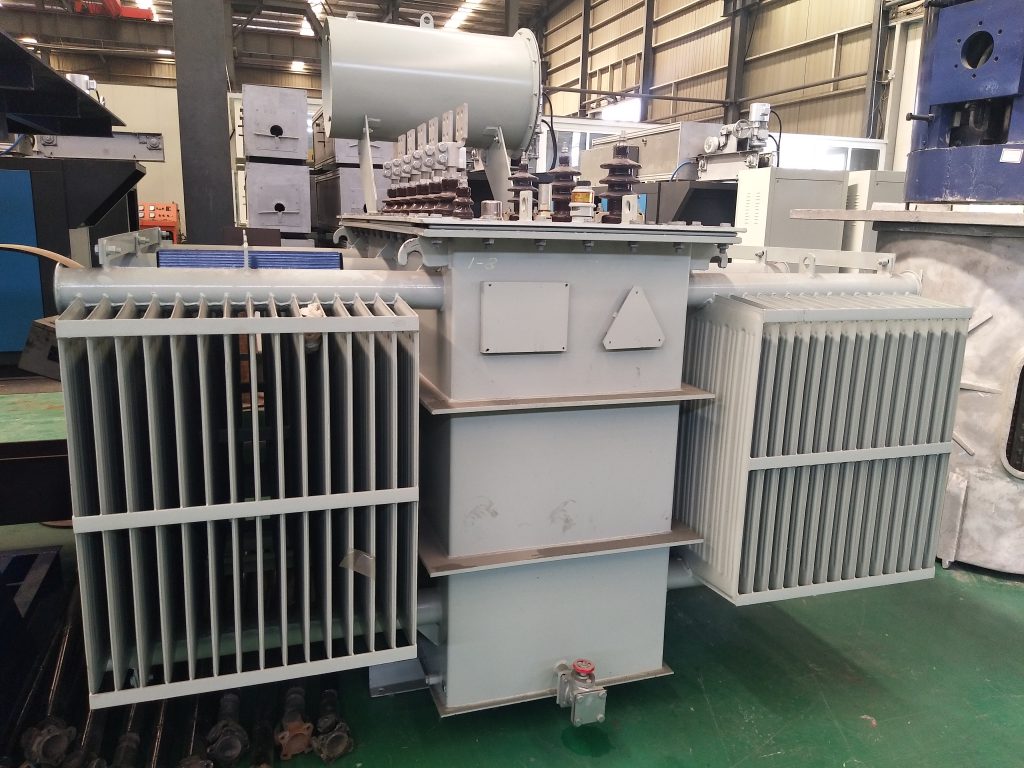
The transformer core is manufactured using high-permeability cold-rolled silicon steel sheets. This material significantly reduces magnetic losses and improves overall efficiency during operation.
To further enhance durability and insulation performance, the core surface is coated with a protective resin and vacuum-dried using a process that complies with international standards. This advanced manufacturing process improves moisture resistance and long-term operational stability, even in demanding industrial environments.
The finished transformer adopts a non-hanging core structure, which enhances mechanical strength and ensures that the internal components remain stable during transportation. This structure allows the transformer to withstand strong vibrations without compromising performance or structural integrity.
Industrial environments often expose electrical equipment to moisture, dust, heat, and mechanical stress. For this reason, the finished transformer is designed with multiple protective characteristics.
It is flame-retardant and self-extinguishing, which enhances operational safety in case of unexpected electrical faults. In addition, the transformer is moisture-proof and rust-resistant, ensuring reliable performance even in humid or corrosive environments.
Thanks to its optimized heat dissipation performance, the transformer can be installed deep within the load center. This reduces transmission distance, improves voltage stability, and enhances overall system efficiency in integrated power distribution systems.
Space utilization is an important consideration in industrial facilities. The transformer features a compact structure that occupies a small installation area. This design simplifies site planning and allows flexible placement in various power distribution layouts, including complete substations.
The installation process is straightforward, requiring no complex structural adjustments. As a result, commissioning time can be reduced, helping projects move into operation more efficiently.
Reliability and maintenance cost are key factors for industrial users. The transformer is designed with few wearing parts, which contributes to a low failure rate during long-term operation.
With proper maintenance, the equipment can operate for more than ten years. Its durable structure and stable performance make it suitable for continuous operation in demanding industrial settings.
For detailed technical specifications or application consultation, please visit our transformer product page or contact us.
I. Introduction 1.1 Industrial Positioning of Aluminum Ingot Production Lines Within the non-ferrous metal processing industry system, aluminum ingot production…
In today’s metal casting industry, speed, energy efficiency, and process stability aren’t optional anymore—they’re survival tools. That’s exactly why the…
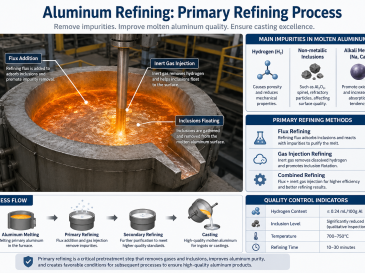
Why is primary refining necessary? Primary refining of molten aluminum is a technical measure taken in response to the characteristics…
1. Introduction In today’s highly competitive metal processing industry, the stainless steel melting furnace stands at the core of efficient…