In modern metallurgical production, efficiency, consistency, and automation have become critical factors for competitiveness. Among the technologies that support high-volume metal production, the continuous rolling mill plays a central role. It allows metal billets to be rolled through multiple stands in a synchronized and uninterrupted process, significantly improving productivity and product quality.
Continuous rolling technology has become a standard solution in large steel plants and non-ferrous metal processing facilities because it shortens production cycles, reduces energy consumption, and improves dimensional accuracy.
The development of metal rolling has progressed through several stages.
Early rolling mills relied on batch rolling, where metal was processed through one stand at a time. This method required repeated handling and reheating, which increased production time and energy consumption.
With growing demand for mass production, semi-continuous rolling systems and continuous rolling mills were introduced. These systems allow the metal to pass through several rolling stands in sequence without interruption. As a result, rolling speed increased significantly while production costs decreased.
Today, continuous rolling technology is widely used in modern steel and aluminum production lines due to its high efficiency and stable process control.
A continuous rolling mill is a metal forming system in which the rolled material passes through multiple rolling stands arranged in sequence. The metal is simultaneously engaged by several stands and rolled in the same direction while gradually reducing its cross-section.
Key characteristics of continuous rolling mills include:
Unlike reversing rolling mills, where the material moves back and forth through a single stand, continuous rolling mills process the metal in one direction through a series of stands. Compared with semi-continuous rolling mills, continuous mills offer higher productivity and better dimensional control.
Modern steel plants require production systems capable of delivering large volumes of high-quality steel products with stable performance.
Continuous rolling mills help achieve these goals by:
As a result, continuous rolling systems are now widely used in the production of steel bars, wire rods, structural steel, and various non-ferrous metal products.
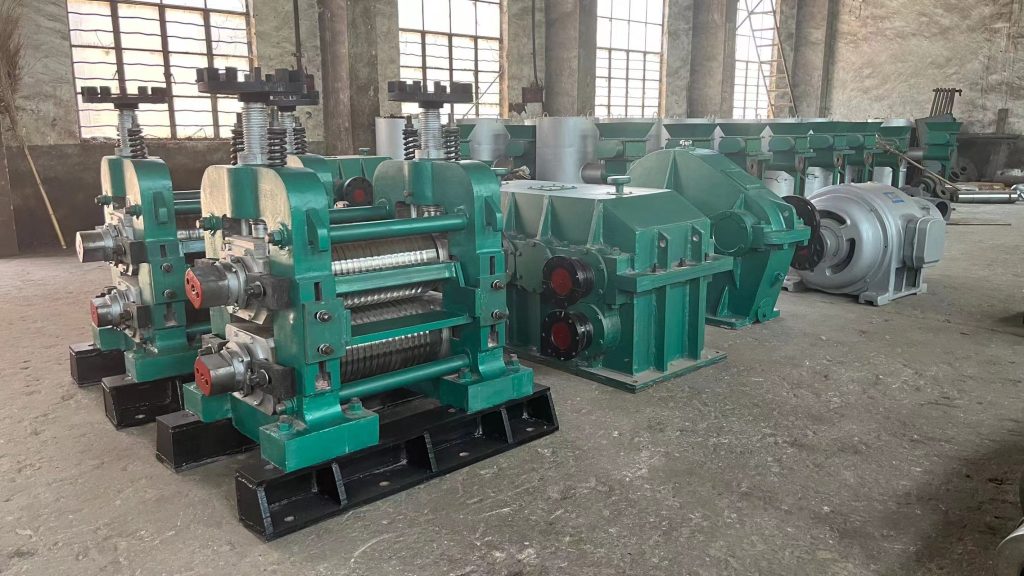
Metal rolling is a plastic deformation process in which a metal workpiece passes between rotating rolling rolls that apply compressive forces. This process reduces the cross-sectional area of the material while increasing its length.
During rolling, several parameters must be carefully controlled, including:
Proper control of these parameters ensures that the final product achieves the required thickness, shape, and mechanical properties.
In a continuous rolling mill, rolling stands are arranged in a sequential layout, forming a rolling production line.
Each stand performs a small reduction in the material's cross-section. As the steel billet passes through successive stands, the metal gradually reaches the desired shape and size.
This gradual deformation provides several advantages:
Because the metal simultaneously passes through multiple rolling stands, speed synchronization is critical.
If the rolling speeds of adjacent stands are not properly matched, excessive tension or compression can occur in the material. This may lead to problems such as:
Modern rolling mills therefore use automatic tension control systems and high-precision speed regulation systems to maintain stable rolling conditions.
A continuous rolling mill production line consists of several key mechanical and control systems.
Rolling stands are the core units where metal deformation occurs.
Depending on production requirements, rolling mills may use different configurations:
Rolling stands can also be arranged as horizontal rolling stands or vertical rolling stands to control the shape of the rolled product.
Rolling rolls are subjected to extremely high mechanical and thermal loads.
Common roll materials include:
High wear resistance and thermal stability are essential to ensure long service life and stable rolling performance.
The rolling mill drive system provides the power required for rolling.
Typical components include:
Modern rolling mills often use variable-frequency drive systems (VFD) or advanced motor speed control systems to regulate rolling speed accurately.
Automation is a key feature of modern continuous rolling mills.
Typical control systems include:
These technologies allow operators to monitor production conditions in real time and maintain stable rolling performance.
Industrial cooling systems play an important role in maintaining both roll life and product quality.
Water cooling systems are commonly used to control the temperature of rolls and finished products. Industrial lubrication systems also reduce friction and wear, improving operational stability.
The production process of a continuous rolling mill production line typically includes several stages.
The process begins with raw materials such as:
Before rolling, billets undergo quality inspection to ensure they meet production requirements.
Billets are heated in a billet reheating furnace to reach the required rolling temperature.
For steel production, rolling temperatures generally range between 1100°C and 1250°C, depending on the material grade.
Uniform heating is critical to avoid internal stress and uneven deformation during rolling.
In the rough rolling stage, the billet undergoes its first major deformation.
This step:
Intermediate rolling stands continue the reduction process while correcting shape deviations.
At this stage, the material gradually approaches its final dimensions.
The finishing rolling stands perform the final shaping process.
Here, the product achieves:
After rolling, the product undergoes controlled cooling to stabilize its metal microstructure.
Straightening machines are then used to correct any deformation caused during rolling.
Finally, the rolled product is cut into specified lengths using flying shear cutting systems.
The finished materials are then transferred for packaging, storage, or further processing.
Different industries use specialized continuous rolling mills depending on product requirements.
These mills are commonly used to produce steel bars and reinforcement bars (rebar) used in construction.
Wire rod rolling mills produce long metal rods used for wire drawing, fasteners, and springs.
Section rolling mills manufacture structural steel products such as:
Continuous rolling technology is also widely used in aluminum processing and copper processing industries.
Continuous rolling mills provide several important benefits for industrial metal production.
Because the rolling process is continuous, production capacity is significantly increased compared with batch rolling systems.
Continuous rolling improves product consistency by maintaining stable rolling parameters throughout the production process.
Using continuous casting billets directly in rolling production can reduce reheating energy consumption and improve overall energy efficiency.
Continuous rolling production lines simplify the production process, reduce plant area requirements, and minimize material handling between processes.
Continuous rolling technology is widely used in many industrial manufacturing sectors.
Production of reinforcement bars and structural steel for buildings and infrastructure.
Production of high-strength steel components used in vehicle structures.
Manufacturing of industrial metal parts and mechanical components.
Production of materials used in pipelines, railway systems, and large engineering structures.
Selecting the right continuous rolling mill system requires evaluating several technical and economic factors.
Annual output targets determine the scale and configuration of the rolling production line.
Different materials such as carbon steel, alloy steel, or aluminum require different rolling parameters and equipment designs.
Highly automated rolling mill systems reduce labor requirements and improve production stability.
Energy consumption, maintenance costs, and equipment reliability all influence long-term operating expenses.
Modern rolling mills increasingly integrate digital monitoring systems and predictive maintenance technologies to improve operational efficiency.
New technologies aim to reduce energy consumption and support green manufacturing.
Continuous rolling mills are increasingly integrated with continuous casting production lines, forming fully automated steel production systems with minimal manual intervention.
Continuous rolling mills are a key technology in modern metal production. By enabling uninterrupted rolling through multiple synchronized stands, they significantly improve production efficiency, product quality, and energy utilization.
Their ability to shorten production cycles, reduce metal consumption, and simplify manufacturing processes makes them an essential component of large-scale industrial manufacturing.
For steel plants and metal processing facilities seeking higher productivity and long-term operational efficiency, selecting the right continuous rolling mill configuration is a crucial step toward achieving sustainable growth.
If you are planning to build or upgrade a continuous rolling mill production line and would like technical guidance on equipment configuration, production capacity, or process integration with billet reheating and continuous casting systems, feel free to contact our engineering team for professional support and project consultation.
I. Why Heating Efficiency Matters in Modern Industry Industrial heating is at the heart of modern manufacturing. From steelmaking to…
I. Introduction: The Role of Aluminum Shell Melting Furnaces in Modern Metal Processing 1.1 Growing Demand for Efficient Metal Melting…
I. Intro: Why Intermediate Frequency Heating Matters Now Induction heating is a great way to heat things up in factories…
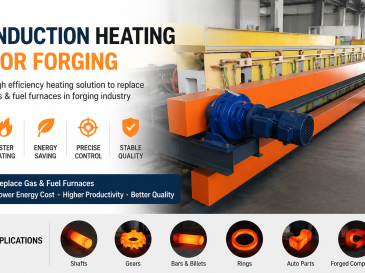
Introduction In modern forging production, heating quality directly determines material plasticity, forging accuracy, and defect rate. Traditional combustion-based heating methods…