In modern forging production, heating quality directly determines material plasticity, forging accuracy, and defect rate. Traditional combustion-based heating methods are increasingly challenged by energy inefficiency, inconsistent temperature control, and environmental restrictions. As a result, induction heating technology has become a mainstream alternative in many forging applications.
This article provides a structured, engineering-based analysis of induction heating for forging, focusing on replacement feasibility, heating performance, energy consumption, material compatibility, and return on investment (ROI).
Yes—in most small to mid-scale forging applications, induction heating systems can fully replace gas-fired and fuel-fired furnaces, especially in batch heating and billet preparation processes.
However, replacement feasibility depends on production type:
Induction heating works through electromagnetic induction, generating heat directly inside the metal. This eliminates the need for combustion chambers and reduces thermal losses significantly compared with traditional systems such as billet reheating furnace.
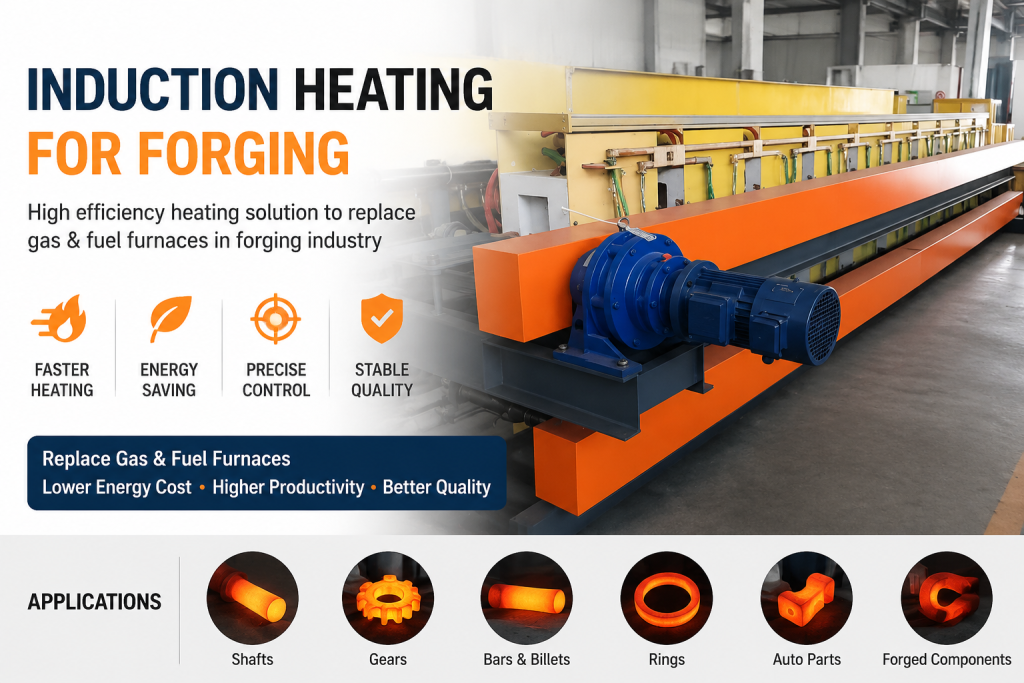
Heating speed is one of the most significant advantages of induction systems.
Typical industrial reference values:
| Heating Method | Time to Forge Temperature (Steel ~1200°C) |
|---|---|
| Gas Furnace | 30–90 minutes |
| Fuel Oil Furnace | 25–80 minutes |
| Induction Heating System | 30 seconds – 5 minutes (depending on diameter) |
This makes induction heating especially valuable for high-throughput forging lines where cycle time is critical.
Energy efficiency is one of the main reasons industries shift toward induction heating.
| System Type | Thermal Efficiency |
|---|---|
| Gas Furnace | 35% – 55% |
| Fuel Oil Furnace | 30% – 50% |
| Induction Heating System | 80% – 92% |
In real production environments, energy cost reduction can reach 20%–60% depending on production cycle and material type.
Modern systems integrated with induction heating system controls further optimize power usage based on load and temperature feedback.
Heating uniformity is critical in forging because temperature gradients directly affect:
Compared to traditional furnaces:
| Factor | Induction Heating | Gas Furnace |
|---|---|---|
| Temperature control accuracy | ±5°C to ±10°C | ±20°C to ±50°C |
| Temperature uniformity | High | Medium |
| Oxidation loss | Low | Higher |
Lower oxidation also reduces material waste and improves yield rate, especially in alloy and stainless steel forging.
Induction heating is widely applicable in forging due to its compatibility with conductive metals.
For continuous production systems, induction heating can be integrated into steel rolling mill equipment or pre-forging heating lines.
One of the most overlooked advantages of induction heating is defect reduction.
Traditional furnaces often suffer from:
Induction heating eliminates these issues by shortening exposure time and improving temperature precision.
Although induction heating systems typically have higher initial equipment costs, ROI is driven by operational savings.
| Cost Factor | Traditional Furnace | Induction System |
|---|---|---|
| Fuel cost | High | Low |
| Maintenance | Medium–High | Low |
| Downtime loss | Higher | Lower |
| Labor requirement | Higher | Lower |
In most industrial forging applications:
Modern forging plants rarely use induction heating as a standalone system. Instead, it is integrated into:
It is often paired with:
This integration improves overall production efficiency and reduces manual intervention.
Induction heating for forging is not just a heating method upgrade—it is a structural improvement in production efficiency, energy consumption, and metallurgical quality control.
In most forging applications, it can effectively replace traditional gas and fuel furnaces while delivering:
For manufacturers aiming to improve competitiveness in modern forging markets, induction heating has become a core technology rather than an optional upgrade.
Yes, in most small to mid-scale forging applications, it can fully replace gas furnaces, especially for batch heating processes.
Yes. It can reduce heating time from tens of minutes to just a few minutes depending on material size.
The main advantages are energy efficiency, precise temperature control, and significantly faster heating cycles.
Steel, alloy steel, stainless steel, copper alloys, and aluminum (with optimized system design).
Yes. Most systems achieve ROI within 1.5–3.5 years depending on production volume and energy cost savings.
If you are evaluating induction heating for forging for your production line upgrade, or comparing it with traditional gas or fuel furnaces, our technical team can help you analyze the most suitable solution based on your real production requirements.
We provide customized engineering support for:
Whether you are planning a new forging line or upgrading an existing system, we can help you improve heating efficiency, reduce energy consumption, and increase overall production output.
Introduction A Furnace Atmosphere is the gaseous environment inside an industrial furnace during heating. It plays a critical role in…
Why Is a Second Refining Step Necessary? In electrolytic aluminum plants, primary aluminum is used directly as the main raw…
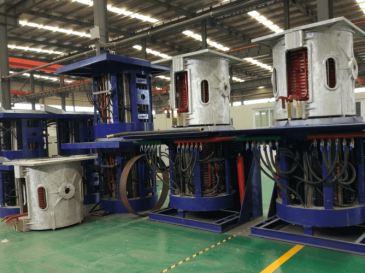
The Advantages of the Intermediate Frequency Melting Furnace In the modern metallurgical and metal casting industries, choosing the right furnace…
1. Introduction Steel melting is a critical process in foundries, requiring precise temperature control, consistent power, and reliable equipment. Modern…