A Furnace Atmosphere is the gaseous environment inside an industrial furnace during heating. It plays a critical role in determining oxidation, decarburization, carburization, scale formation, and the final surface quality of metals. Proper atmosphere control is essential in forging, rolling, heat treatment, and other thermal processes because it directly affects product quality, material loss, and energy efficiency.
To understand why furnace atmosphere is so important, it is first necessary to examine how gases interact with metals during heating.
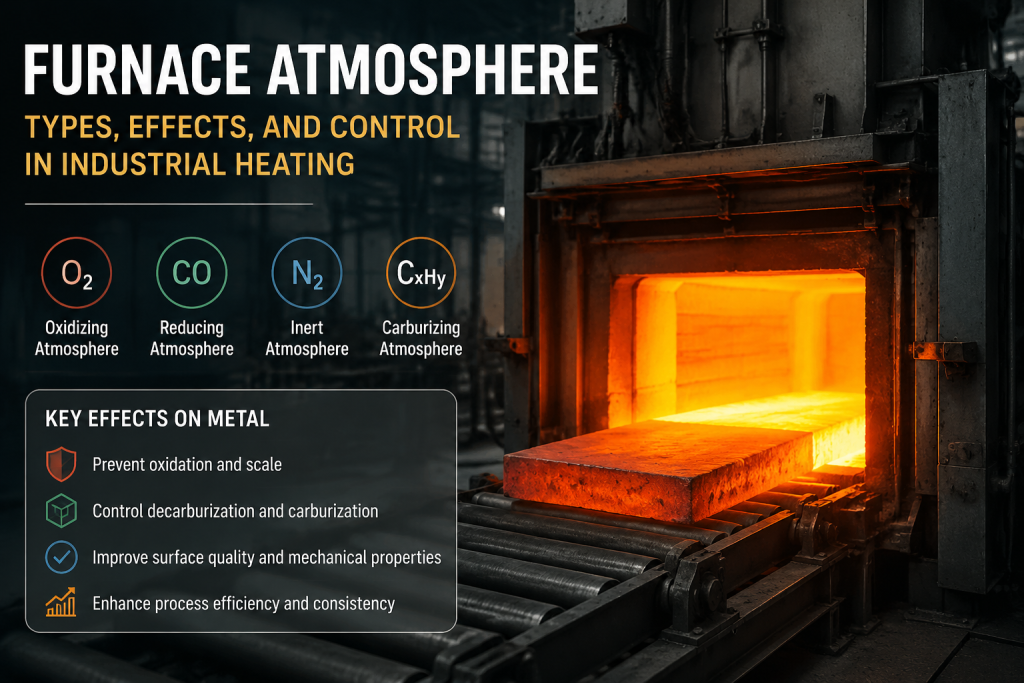
Apart from vacuum heating, which has limited industrial application in conventional thermal processing, heating operations must always consider the chemical reactions between the metal and the surrounding gaseous medium. Depending on the process, these reactions may either be desirable or must be strictly controlled.
In some metallurgical operations, gas–metal reactions are fundamental to the production process. For example, ironmaking relies on the reducing action of carbon monoxide and other reducing gases to convert iron oxides into metallic iron. In oxidation roasting, controlled oxidation reactions are intentionally promoted to prepare ores for subsequent processing. In these cases, the furnace atmosphere is designed to maximize the efficiency of either reduction or oxidation reactions.
However, many thermal processing operations have entirely different requirements. During steelmaking, the oxidizing potential of furnace gases is carefully controlled to prevent excessive oxidation of the molten steel. In electric furnace steelmaking, oxidizing gases are introduced only during the oxidation stage, while oxidation is minimized throughout the remaining stages of the melting process.
For forging, rolling, and heat treatment, the objective is different. These processes are intended to raise the temperature of the workpiece without changing its chemical composition or causing melting. Therefore, the ideal heating condition is one in which the interaction between the metal surface and the furnace gases is minimized.
The metallurgical principles governing reduction in blast furnaces and oxidation during steelmaking are well established and are discussed extensively in ironmaking and steelmaking theory. Rather than repeating these principles, this article focuses on the interactions between the heating medium and the workpiece during industrial heating—interactions that are generally undesirable because they can lead to oxidation, decarburization, carburization, and other surface defects.
Understanding these reactions provides the foundation for selecting and controlling the appropriate Furnace Atmosphere in modern industrial heating equipment.
A Furnace Atmosphere refers to the composition of gases inside a furnace during heating. It is one of the most important process parameters in industrial thermal processing because it directly influences the chemical reactions occurring at the metal surface.
The atmosphere inside a furnace is typically composed of combustion products, air, moisture, and intentionally introduced protective gases. Depending on their composition, these gases may promote oxidation, reduction, carburization, decarburization, or remain relatively inert.
For industrial heating applications, the objective is generally to create an atmosphere that minimizes unwanted chemical reactions while ensuring efficient heat transfer.
The most common gases found in industrial furnace atmospheres include:
| Gas | Primary Effect |
|---|---|
| Oxygen (O₂) | Promotes oxidation and scale formation |
| Carbon dioxide (CO₂) | Oxidizing gas; participates in carbon transfer reactions |
| Water vapor (H₂O) | Accelerates oxidation and decarburization |
| Carbon monoxide (CO) | Reducing gas; can also influence carbon potential |
| Hydrogen (H₂) | Strong reducing gas for bright heating and annealing |
| Nitrogen (N₂) | Generally acts as a protective carrier gas |
| Argon (Ar) | Inert shielding gas for high-value alloys |
| Hydrocarbon gases | Used to generate controlled carburizing atmospheres |
The balance among these gases determines whether the furnace atmosphere is oxidizing, reducing, neutral, protective, or carburizing.
Even when the furnace temperature is precisely controlled, an unsuitable atmosphere can significantly reduce product quality. Excess oxygen or water vapor may cause severe oxidation and scale formation, while an improper carbon potential may result in carburization or decarburization. These reactions increase material loss, impair surface finish, and may adversely affect mechanical properties.
Proper Furnace Atmosphere control provides several important benefits:
For manufacturers producing gears, bearings, springs, billets, stainless steel products, and precision forgings, atmosphere control is often just as important as temperature control.
Steel deoxidation is one of the most critical steps in the steelmaking process. During melting and refining, oxygen inevitably dissolves…
Introduction In modern forging production, heating quality directly determines material plasticity, forging accuracy, and defect rate. Traditional combustion-based heating methods…
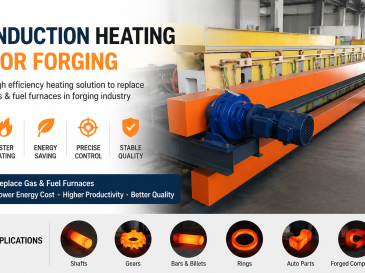
Introduction In modern forging production, heating quality directly determines material plasticity, forging accuracy, and defect rate. Traditional combustion-based heating methods…
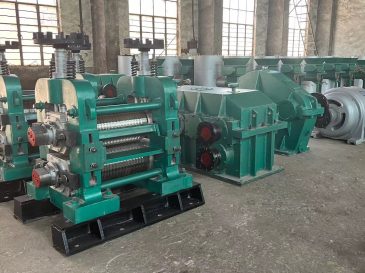
I. Introduction: The Role of Continuous Rolling in Modern Metal Processing In modern metallurgical production, efficiency, consistency, and automation have…