Steel deoxidation is one of the most critical steps in the steelmaking process. During melting and refining, oxygen inevitably dissolves into molten steel. If this oxygen is not effectively removed before continuous casting or pouring, it can react with alloying elements, form non-metallic inclusions, and cause casting defects that reduce the mechanical properties and service life of steel products.
Whether producing carbon steel, alloy steel, or stainless steel, selecting the appropriate deoxidation method is essential for achieving high-quality steel with low inclusion content and consistent performance. This article explains why steel deoxidation is necessary, the forms of oxygen in molten steel, common deoxidizers, and best practices for improving steel cleanliness.
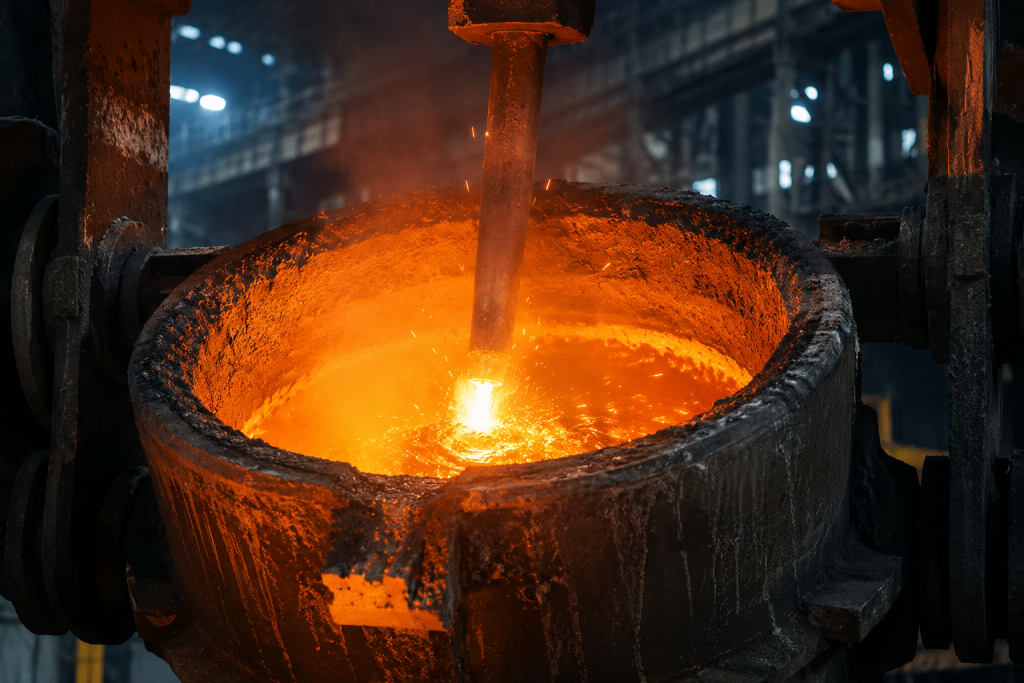
During the induction smelting process, oxygen enters the steel through raw materials, the atmosphere, slag, crucible materials, and other sources. Oxygen in steel has a highly detrimental effect on both its workability and service performance. Therefore, reducing the oxygen content in steel has become one of the primary objectives of the refining stage. To produce steel with low oxygen content, necessary process measures must be taken at various stages of the smelting process to minimize the oxygen content in the steel.
Excess oxygen can lead to oxide inclusions, gas porosity, poor weldability, reduced toughness, and surface defects. Effective steel deoxidation helps improve steel cleanliness, enhances mechanical properties, and ensures stable casting performance during the subsequent continuous casting process.
Oxygen exists in molten steel in two forms. One form is dissolved in the molten steel as oxygen atoms; this dissolved oxygen is sometimes referred to as active oxygen. This portion of oxygen is most readily involved in oxidation reactions and is the primary form of oxygen present in molten steel prior to deoxidation. The other form is oxygen present as inclusions, known as combined oxygen. Since this portion of oxygen exists as stable oxides or sulfides, most of it cannot participate in oxidation reactions. The total oxygen content in steel consists of these two major components: dissolved oxygen and combined oxygen.
Understanding these two forms of oxygen is essential because different deoxidation strategies target different stages of the refining process. Dissolved oxygen is removed through chemical reactions with deoxidizing elements, while inclusion control focuses on modifying and removing oxide particles before casting.
Depending on steel grade and production requirements, several deoxidation methods are commonly used.
Aluminum is one of the strongest deoxidizers used in steelmaking. It reacts rapidly with dissolved oxygen to form aluminum oxide (Al₂O₃), making it suitable for producing fully killed steel. However, excessive aluminum additions may generate hard alumina inclusions, requiring effective inclusion removal during ladle refining.
Silicon is widely used either alone or together with manganese. Compared with aluminum, silicon produces more fluid oxide products and is commonly applied to structural steels and medium-carbon steels.
Manganese is generally used as an auxiliary deoxidizer. It combines with sulfur to reduce the harmful effects of iron sulfide while contributing to oxygen removal.
Modern steel plants frequently adopt composite deoxidation using combinations of aluminum, silicon, manganese, calcium, or rare earth elements. Composite deoxidation improves inclusion morphology, enhances steel cleanliness, and minimizes nozzle clogging during casting.
The effectiveness of steel deoxidation depends on several process parameters, including:
Maintaining stable process control throughout the steelmaking process is essential for obtaining consistent deoxidation results.
To achieve high-quality steel, manufacturers generally combine multiple refining measures rather than relying solely on deoxidizer additions.
Recommended practices include:
These measures help reduce total oxygen content while improving product consistency and mechanical performance.
Steel deoxidation is a fundamental process that directly affects steel cleanliness, casting quality, and final mechanical properties. By understanding the forms of oxygen in molten steel and selecting appropriate deoxidation methods, steel producers can effectively reduce inclusions, improve process stability, and produce higher-quality steel products.
Modern induction furnaces, refining equipment, and continuous casting technologies provide better temperature control and process stability, allowing manufacturers to achieve more efficient deoxidation and consistently produce clean steel for demanding industrial applications.
Why is primary refining necessary? Primary refining of molten aluminum is a technical measure taken in response to the characteristics…
Introduction A Furnace Atmosphere is the gaseous environment inside an industrial furnace during heating. It plays a critical role in…
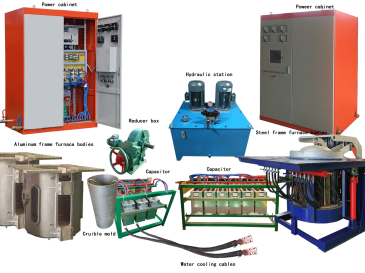
In today’s metal casting industry, speed, energy efficiency, and process stability aren’t optional anymore—they’re survival tools. That’s exactly why the…
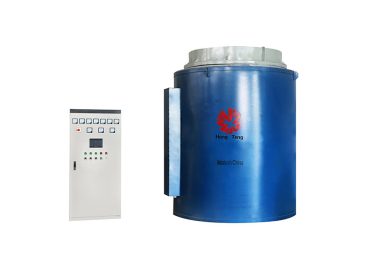
A Vertical Heat Treatment Solution Combining Structural Stability, Thermal Efficiency, and Process Reliability In industrial heat treatment, annealing is not…