In electrolytic aluminum plants, primary aluminum is used directly as the main raw material for producing aluminum and aluminum alloy products.
The hydrogen content and levels of non-metallic inclusions in primary aluminum are higher than those found when aluminum ingots are remelted. For example, after primary aluminum undergoes a first refining step using flux in an open-top ladle, a sample is taken to test the hydrogen content in the molten primary aluminum.
The results often show that although flux refining can effectively remove a large amount of non-metallic inclusions, it has limited ability to remove dissolved hydrogen from molten aluminum.
This is because hydrogen exists in molten aluminum mainly in an atomic dissolved form. Unlike solid impurities that can be absorbed by fluxes, dissolved hydrogen requires gas diffusion and bubble flotation processes to escape from the melt.
Therefore, a second refining step is required before casting or alloy production to further reduce hydrogen content and improve melt cleanliness.
In modern aluminum production, secondary refining is not simply a repeated refining process. Instead, it is a targeted treatment process designed to achieve higher melt quality after the initial purification stage.
The purpose is to ensure that molten aluminum meets strict requirements for:
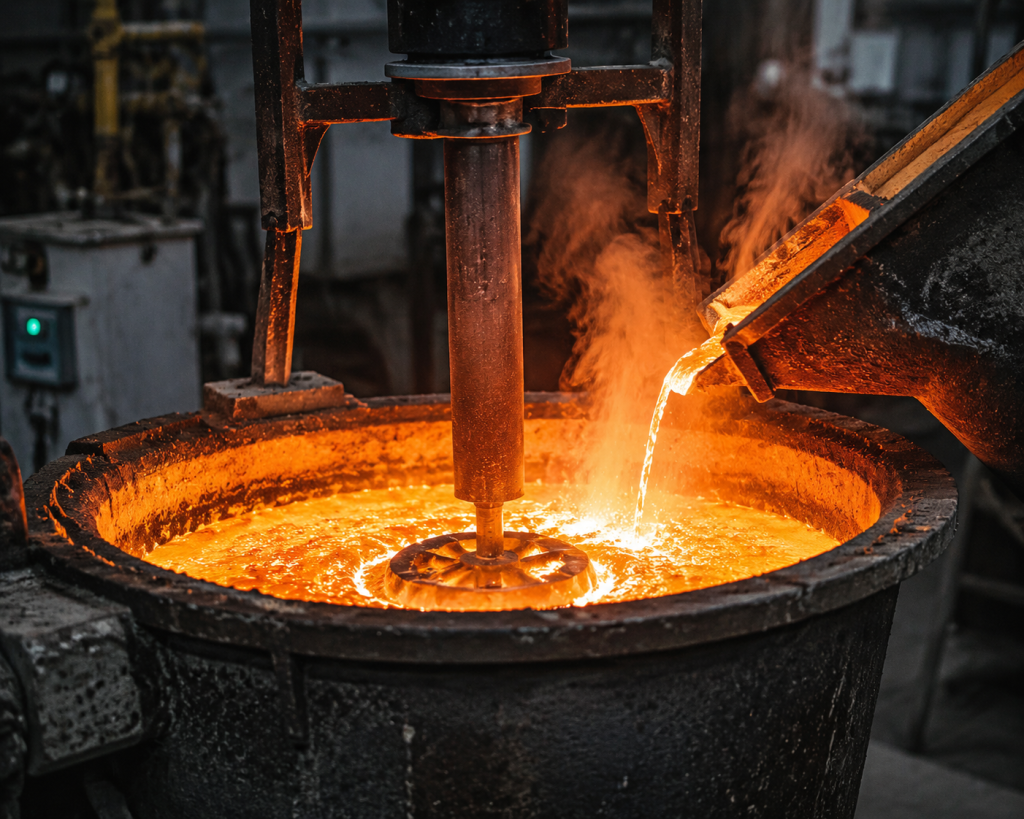
In terms of refining principles, secondary refining is identical to primary refining.
The purpose of refining is also the same: to improve the purity of the metal.
However, the focus in actual operation should differ.
Primary refining should focus on removing non-metallic inclusions—particularly large particles—while secondary refining should focus on removing gases such as hydrogen and fine-particle non-metallic inclusions.
The first refining creates favorable conditions for the second refining by reducing the initial concentration of impurities.
Fluxes are highly effective at removing nonmetallic inclusions from molten aluminum.
Therefore, fluxes should be used as the primary refining agent during the first refining process; combining fluxes with gas refining agents can yield even better refining results.
Gas refining agents are highly effective at removing gases such as hydrogen from molten aluminum.
During the second refining process, gas refining agents should be used as the primary refining agent; combining gas refining agents with melt filtration yields better refining results.
Melt filtration is highly effective at removing fine non-metallic inclusions.
Secondary refining refers to the additional purification treatment performed after the initial refining stage of molten aluminum.
It is commonly used in aluminum foundries, aluminum alloy production plants, and recycling facilities where high-quality molten metal is required.
After aluminum is melted in an aluminum melting furnace, impurities are introduced or generated through several mechanisms:
Among these impurities, hydrogen and oxide inclusions are considered two of the most harmful factors affecting aluminum casting quality.
Hydrogen has relatively high solubility in liquid aluminum but very low solubility in solid aluminum.
During solidification, the excess hydrogen cannot remain dissolved and forms gas pores inside the casting.
These pores can lead to:
For this reason, secondary refining has become an essential step in producing high-quality aluminum alloys.
The main goal of secondary refining is not simply to increase aluminum purity. Instead, it aims to improve the metallurgical quality of molten aluminum by controlling dissolved gases and inclusions.
Hydrogen removal is usually the primary objective of secondary refining.
The hydrogen content in molten aluminum is commonly measured using methods such as:
During secondary refining, inert gases such as argon or nitrogen are introduced into molten aluminum through rotating impellers or porous plugs.
The process works based on the principle of partial pressure reduction.
When fine gas bubbles are dispersed into molten aluminum:
The efficiency of hydrogen removal depends on several factors:
Smaller bubbles provide a larger gas-metal contact area, improving hydrogen removal efficiency.
Therefore, modern rotary degassing systems are widely used in aluminum production because they generate a large number of fine bubbles and provide stable refining performance.
Gas refining is one of the most common secondary refining methods in aluminum processing.
The process introduces inert gas into molten aluminum to remove dissolved hydrogen and some fine inclusions.
Common refining gases include:
Argon is widely used because it is chemically inert and does not react with molten aluminum.
Advantages:
Nitrogen is also used in some applications due to its lower operating cost.
However, its application depends on alloy composition and production requirements because nitrogen may have different effects under certain conditions.
In industrial production, argon is generally preferred for high-quality aluminum alloy production where strict hydrogen control is required.
Among various secondary refining technologies, rotary degassing is currently one of the most widely used methods for removing hydrogen from molten aluminum.
Compared with traditional gas blowing methods, rotary degassing systems can significantly improve refining efficiency by creating smaller and more evenly distributed gas bubbles.
During the process, an impeller rotates at high speed while injecting inert gas into the molten aluminum.
The rotating impeller performs two important functions:
The smaller the bubbles, the greater the total contact area between gas and molten aluminum.
This increases the probability of hydrogen atoms diffusing into the bubbles and being removed from the melt.
The efficiency of rotary degassing depends mainly on several operating parameters:
The gas flow rate must be optimized according to furnace capacity and melt volume.
An excessively high gas flow rate does not necessarily improve refining efficiency. Large bubbles may form, reducing the gas-metal contact area and causing unnecessary turbulence.
An optimized flow rate produces stable fine bubbles, improving hydrogen removal efficiency while minimizing oxidation.
The rotation speed of the impeller directly affects bubble size distribution and melt circulation.
A properly designed impeller creates sufficient turbulence to mix the melt but avoids excessive surface disturbance.
Excessive turbulence can increase oxidation and generate additional aluminum oxide inclusions.
The refining time depends on:
In industrial aluminum production, degassing times commonly range from several minutes to more than 20 minutes depending on equipment design and production requirements.
Longer treatment does not always mean better results because excessive holding time can increase oxidation losses and energy consumption.
Although gas refining is highly effective for removing dissolved hydrogen, it has limited ability to eliminate very small non-metallic inclusions.
For this reason, melt filtration is often combined with secondary refining to further improve molten aluminum cleanliness.
Non-metallic inclusions in aluminum mainly include:
Large inclusions can often be removed during flux refining because they can be captured by slag.
However, fine inclusions with particle sizes of only several micrometers are difficult to remove without filtration.
Melt filtration works by passing molten aluminum through porous ceramic filters.
The filter captures inclusions through several mechanisms:
Common filtration technologies include:
Ceramic foam filters are widely used in aluminum casting industries.
They are made from porous ceramic materials and provide a three-dimensional filtration structure.
Advantages include:
Deep bed filtration uses a thicker filter media layer to capture inclusions during metal flow.
Compared with simple surface filtration, deep bed filtration can provide higher filtration capacity and is suitable for large-scale aluminum production.
The quality of molten aluminum directly determines the performance of final aluminum products.
Without effective secondary refining, several casting defects may occur.
Hydrogen-related porosity is one of the most common defects in aluminum castings.
During solidification, hydrogen solubility decreases significantly.
The excess hydrogen forms internal pores, which reduce:
By reducing hydrogen concentration before casting, secondary refining helps minimize internal porosity.
Non-metallic inclusions act as stress concentration points inside aluminum alloys.
During loading conditions, cracks can initiate around these inclusions.
Therefore, removing fine inclusions improves:
This is especially important for aluminum alloys used in automotive, aerospace, and high-performance applications.
Oxide inclusions and hydrogen defects can cause:
Secondary refining helps produce cleaner molten aluminum, resulting in better surface appearance and processing performance.
Different aluminum alloys have different requirements for melt treatment.
Al-Si alloys are commonly used for automotive components and casting applications.
Because silicon-containing alloys are often produced through casting processes, hydrogen control is especially important.
Secondary refining helps reduce:
Al-Mg alloys require strict control of oxidation because magnesium has a strong affinity for oxygen.
During melting, magnesium oxidation can generate additional oxide inclusions.
Therefore, secondary refining should focus on:
Al-Cu alloys are widely used where high strength is required.
For these alloys, controlling inclusions is important because defects can significantly reduce fatigue performance.
Effective secondary refining improves metallurgical cleanliness and helps maintain consistent mechanical properties.
Industrial aluminum producers usually evaluate refining effectiveness through several indicators.
Hydrogen concentration is one of the most important parameters.
Lower hydrogen levels generally indicate better melt quality and reduced porosity risk.
Density index testing compares the density difference between normally solidified samples and reduced-pressure solidified samples.
A lower density difference indicates fewer gas pores in the aluminum melt.
Inclusion content can be evaluated using methods such as:
These methods help manufacturers monitor melt cleanliness and optimize refining processes.
The effectiveness of secondary refining is closely related to the performance of the upstream melting process.
A well-designed aluminum melting furnace can reduce oxidation and contamination before refining begins.
Important furnace factors include:
For example, excessive overheating increases aluminum oxidation and generates more aluminum oxide inclusions.
Poor furnace operation may increase the burden on secondary refining and reduce metal recovery rate.
Therefore, modern aluminum production usually combines:
efficient melting → primary refining → secondary refining → filtration → casting
to achieve stable aluminum quality.
To achieve better refining results, manufacturers should optimize both equipment and operating procedures.
Higher temperatures accelerate oxidation and hydrogen absorption.
Maintaining the correct melting temperature range helps reduce impurity formation.
Water and moisture are major sources of hydrogen in molten aluminum.
Raw materials, tools, ladles, and furnace linings must be properly dried before contact with molten metal.
Operators should adjust:
according to alloy composition and production requirements.
No single refining method can remove all impurities.
The best results are usually achieved through a combination of:
Secondary refining is an essential process for producing high-quality aluminum and aluminum alloys.
While primary refining mainly removes larger non-metallic inclusions, secondary refining focuses on controlling dissolved hydrogen and fine inclusions that directly affect casting quality.
Through technologies such as gas refining, rotary degassing, and melt filtration, manufacturers can significantly improve molten aluminum cleanliness, reduce casting defects, and produce aluminum products with better mechanical performance.
In modern aluminum processing, secondary refining is not only a purification step but also a key technology for improving production stability, reducing scrap rates, and meeting increasingly strict quality requirements in industries such as automotive, aerospace, and precision manufacturing.
For companies looking to improve aluminum melting efficiency and molten metal quality, selecting suitable aluminum melting equipment and optimizing refining processes are critical steps toward achieving reliable and economical production.
Choosing the right refining process and equipment is essential for improving molten aluminum quality, reducing casting defects, and increasing production efficiency.
With extensive experience in aluminum melting equipment and metal heat treatment solutions, we provide professional solutions for aluminum foundries, recycling plants, and aluminum alloy manufacturers, including:
Whether you are upgrading an existing production line or planning a new aluminum processing project, our technical team can help you select suitable equipment and optimize your melting and refining process according to your production requirements.
Introduction In modern forging production, heating quality directly determines material plasticity, forging accuracy, and defect rate. Traditional combustion-based heating methods…

Introduction Aluminum melting loss is one of the key factors affecting production efficiency and profitability in aluminum processing industries. During…
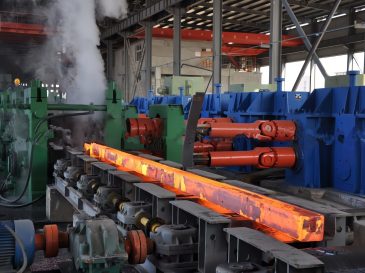
Introduction Small-scale steel rolling lines play a critical role in modern steel processing, especially for manufacturers seeking flexibility, efficiency, and…
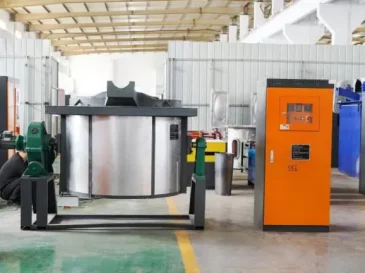
Introduction to Induction Furnaces Induction furnaces are advanced, intermediate-frequency heating systems widely used in the metallurgical industry for metal heating…