Aluminum melting loss is one of the key factors affecting production efficiency and profitability in aluminum processing industries. During melting operations, a certain amount of aluminum is inevitably lost due to oxidation, dross formation, impurities, and improper process control.
For aluminum foundries and recycling plants, excessive melting loss means:
Although aluminum melting loss cannot be completely eliminated, it can be significantly reduced through proper temperature control, optimized furnace operation, improved scrap preparation, and effective melt management.
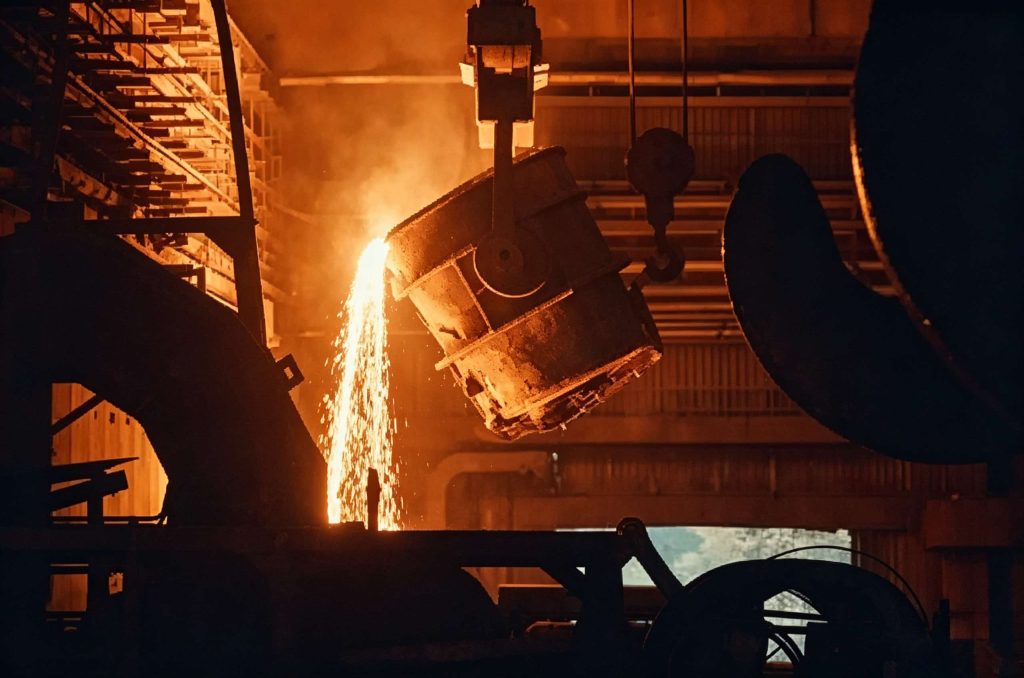
Aluminum melting loss refers to the reduction in usable aluminum after the melting process compared with the initial amount of charged material.
The main losses usually come from:
A simple calculation method is:
Aluminum melting loss rate (%) = (Weight of charged aluminum - Weight of recovered molten aluminum) / Weight of charged aluminum × 100%
For example, if a furnace charges 1,000 kg of aluminum scrap and obtains 920 kg of usable molten aluminum:
Melting loss rate = (1000 - 920) / 1000 × 100% = 8%
However, the actual loss rate varies significantly depending on:
| Factor | Influence on Melting Loss |
|---|---|
| Scrap quality | Dirty or coated scrap increases oxidation and dross |
| Melting temperature | Excessive temperature accelerates metal oxidation |
| Holding time | Longer exposure increases aluminum loss |
| Furnace type | Heating method affects oxidation environment |
| Operating method | Improper charging and stirring increase losses |
For companies processing recycled aluminum, improving aluminum recovery rate is often one of the most direct ways to reduce production costs.
Oxidation is the primary cause of aluminum melting loss.
When molten aluminum contacts oxygen, an oxidation reaction occurs:
4Al + 3O₂ → 2Al₂O₃
The reaction produces aluminum oxide (Al₂O₃), which becomes part of the dross layer.
Although the oxide film can protect solid aluminum from corrosion at room temperature, this protection becomes unstable during melting because of:
Excessive oxidation leads to:
To reduce oxidation-related losses, manufacturers should control temperature, shorten holding time, and avoid unnecessary turbulence during melting.
Temperature control plays a critical role in reducing aluminum melting loss.
Pure aluminum melts at approximately 660°C, while most aluminum alloys are melted within a range of approximately 680–780°C, depending on alloy composition and production requirements.
When aluminum is overheated:
Maintaining a higher temperature than required does not necessarily improve product quality. In many cases, it only increases oxidation losses.
Recommended practices include:
A properly controlled aluminum melting furnace helps maintain stable thermal conditions and reduce unnecessary metal loss.
Many manufacturers focus on melting efficiency but overlook losses that occur during the holding stage.
After aluminum becomes liquid, oxidation continues as long as the molten metal remains exposed to air.
Long holding periods commonly occur because of:
The relationship between holding time and oxidation risk can be summarized as:
| Holding Time | Effect |
|---|---|
| Short holding time | Lower oxidation and less dross |
| Extended holding time | Increased oxide formation |
| Excessive holding time | Higher metal loss and quality risks |
Optimizing the complete aluminum melting process helps reduce unnecessary holding and improves production efficiency.
For aluminum recycling operations, scrap quality has a major impact on melting loss.
Aluminum scrap may contain:
These impurities increase oxidation and may reduce aluminum recovery.
Moisture is especially harmful because water vapor can react with molten aluminum:
2Al + 3H₂O → Al₂O₃ + 3H₂
This reaction produces aluminum oxide and hydrogen, which can contribute to:
Proper scrap preparation, including cleaning and drying, is an effective way to reduce melting loss.
Even with suitable equipment, improper operation can increase aluminum losses.
Common operational problems include:
When the oxide layer on molten aluminum is repeatedly broken, fresh aluminum is exposed to oxygen, increasing oxidation.
Proper operating procedures should focus on:
Reducing aluminum melting loss requires a combination of process optimization, proper equipment selection, and effective melt management. Since oxidation and dross formation are unavoidable during aluminum melting, the goal is to minimize unnecessary losses while maintaining molten metal quality.
Maintaining an appropriate melting temperature is one of the most effective ways to reduce aluminum loss.
Manufacturers should avoid two common problems:
Effective temperature management includes:
A stable thermal environment reduces oxidation reactions and helps improve aluminum recovery rate.
Dross is one of the main forms of aluminum melting loss. It contains not only aluminum oxide but also metallic aluminum trapped inside the oxide structure.
Reducing dross formation requires controlling the factors that accelerate oxidation:
| Improvement Method | Expected Benefit |
|---|---|
| Reduce overheating | Slows oxidation reaction |
| Shorten holding time | Reduces air exposure |
| Minimize turbulence | Protects oxide film stability |
| Improve scrap quality | Reduces impurities and contamination |
Proper dross management is also important. During dross removal, excessive metallic aluminum may be removed together with oxide materials, causing additional losses.
For plants with high scrap processing volumes, optimizing aluminum scrap recycling processes can significantly improve material utilization.
The condition of raw materials directly affects melting efficiency.
Before charging aluminum scrap into the furnace, manufacturers should remove:
Clean and dry scrap provides several advantages:
For recycled aluminum production, scrap preparation is often as important as furnace performance.
The furnace type and operating conditions have a significant influence on aluminum melting loss.
Different heating methods create different melting environments.
| Furnace Type | Influence on Aluminum Loss |
|---|---|
| Gas-fired furnace | Combustion gases and longer heating cycles may increase oxidation risk |
| Resistance furnace | Provides clean heating but may have slower thermal response |
| Induction furnace | Fast heating and accurate control help reduce oxidation exposure |
When selecting a furnace, manufacturers should consider:
A suitable aluminum melting furnace should match the actual production requirements rather than simply focusing on maximum capacity.
Induction melting technology is widely used in aluminum processing because it provides precise heating control and efficient energy transfer.
Compared with traditional combustion heating methods, an induction melting furnace offers several advantages related to reducing aluminum melting loss.
| Feature | Effect on Aluminum Melting |
|---|---|
| No direct flame contact | Reduces oxidation caused by combustion gases |
| Fast heating speed | Shortens time at high temperature |
| Accurate temperature control | Helps prevent overheating |
| Electromagnetic stirring | Improves temperature and composition uniformity |
The electromagnetic stirring effect generated during induction melting can help achieve more uniform molten metal conditions. However, excessive turbulence should still be avoided because unnecessary melt movement can increase oxidation.
It is important to understand that furnace technology alone cannot completely eliminate aluminum loss. The best results come from combining:
Improving aluminum recovery requires a systematic approach rather than focusing on a single factor.
Key strategies include:
Reduce unnecessary exposure between molten aluminum and oxygen by controlling:
A well-designed production process should minimize:
Using proper aluminum refining methods can help remove:
Better melt quality reduces defects and improves final product consistency.
Aluminum melting loss is mainly caused by oxidation, dross formation, excessive temperature, long holding time, impurities, and improper furnace operation.
Although some loss is unavoidable during aluminum melting, manufacturers can significantly reduce it through:
For aluminum processing companies, reducing melting loss is not only about saving raw materials but also about improving production efficiency and lowering operating costs.
Choosing the right melting technology and optimizing the complete aluminum melting process are essential steps toward achieving higher aluminum recovery and more stable production performance.
Why Is a Second Refining Step Necessary? In electrolytic aluminum plants, primary aluminum is used directly as the main raw…
Aluminum ingots are widely used as the primary raw material for aluminum casting, extrusion, and other downstream manufacturing processes. The…
A Vertical Heat Treatment Solution Combining Structural Stability, Thermal Efficiency, and Process Reliability In industrial heat treatment, annealing is not…
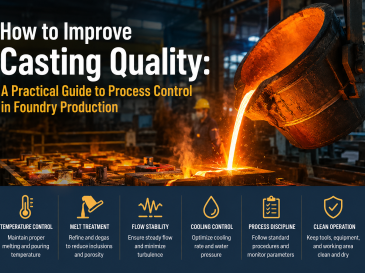
Improving casting quality is one of the most common challenges in metal casting and aluminum casting production. Whether you are…