Aluminum ingots are widely used as the primary raw material for aluminum casting, extrusion, and other downstream manufacturing processes. The quality of aluminum ingots directly affects the performance, surface quality, and mechanical properties of final aluminum products.
A reliable aluminum ingot production process involves several critical stages, including aluminum melting, alloying, refining, degassing, temperature control, and casting. Each step requires precise control to minimize defects such as porosity, oxidation loss, and uneven chemical composition.
For industrial production, an integrated aluminum ingot production line helps manufacturers improve melting efficiency, stabilize product quality, and achieve higher metal recovery rates.
The production of aluminum ingots generally includes the following stages:
Each stage plays an important role in determining the final quality of aluminum ingots.
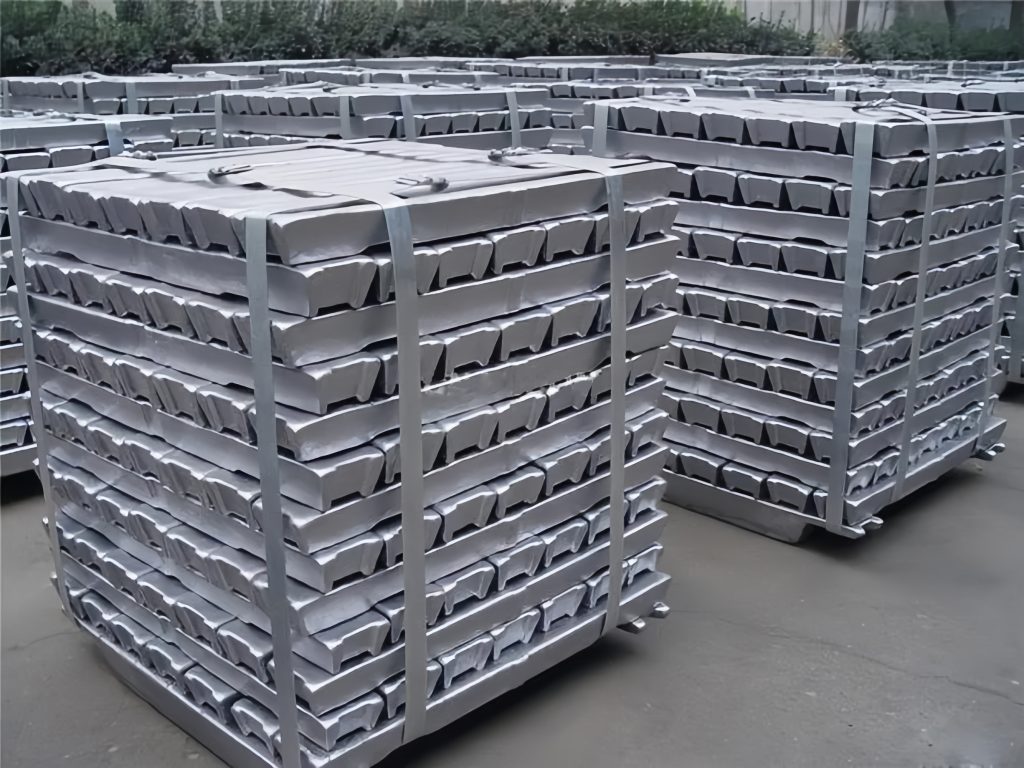
The raw materials used for aluminum ingot production can include primary aluminum, aluminum alloy materials, and recycled aluminum scrap.
Before melting, raw materials need to be sorted and prepared according to the required alloy composition. Impurities such as iron, oil, moisture, and other contaminants should be removed as much as possible because they may affect the chemical composition and casting quality.
For recycled aluminum production, proper scrap preparation is especially important. Contaminated scrap can increase oxidation losses and generate more aluminum dross during melting.
Melting is the most critical stage in the aluminum ingot production process because it directly affects the chemical composition, cleanliness, and final quality of aluminum ingots.
During this stage, aluminum raw materials are heated to the required temperature, and alloying elements are added according to the target alloy composition. The molten aluminum must achieve sufficient fluidity and chemical uniformity before entering the refining and casting stages.
During the smelting of aluminum alloys, the higher the smelting temperature, the more complete the alloying process. However, excessively high temperatures of molten aluminum can have numerous adverse effects, primarily on the quality of ingots or castings. Excessively high molten aluminum temperatures increase the tendency for grain coarsening and cracking in ingots or castings. Since molten aluminum readily absorbs gases—particularly hydrogen—and the rate of gas absorption increases with rising temperature, this complicates the refining and degassing process during smelting, leading to an increased number of gas pores in ingots or castings. Typically, the melting temperature of wrought aluminum alloys is controlled within a range of 50–100°C above the alloy’s liquidus temperature. Both grain coarsening and an increase in porosity in ingots or castings reduce their mechanical properties.
Therefore, precise temperature control is essential in industrial aluminum melting operations. An efficient aluminum melting furnace should provide stable temperature management to minimize oxidation loss, reduce hydrogen absorption, and ensure consistent molten metal quality before refining and casting.
After melting, molten aluminum usually contains dissolved hydrogen and non-metallic inclusions that can negatively affect the final ingot quality.
The refining process removes impurities and improves melt cleanliness. Degassing is commonly performed by introducing inert gases such as argon or nitrogen into the molten aluminum to reduce dissolved hydrogen content.
Effective degassing helps minimize:
Proper refining and degassing are especially important for applications requiring high-quality aluminum alloys.
Before casting, the temperature of molten aluminum must be carefully controlled.
If the temperature is too high, oxidation increases and hydrogen absorption becomes more severe. If the temperature is too low, poor fluidity may occur, making casting more difficult and causing incomplete filling or structural defects.
Stable temperature management ensures that molten aluminum has suitable fluidity and solidifies with a uniform structure.
After refining, the molten aluminum is transferred to the casting system.
During casting, molten aluminum is poured into molds or continuous casting equipment, where it gradually solidifies into ingots with specific dimensions and shapes.
The casting process must control:
Improper casting parameters can lead to defects such as cracks, shrinkage cavities, and uneven grain structures.
For large-scale production, automated casting systems integrated into an aluminum ingot production line can significantly improve production efficiency and consistency.
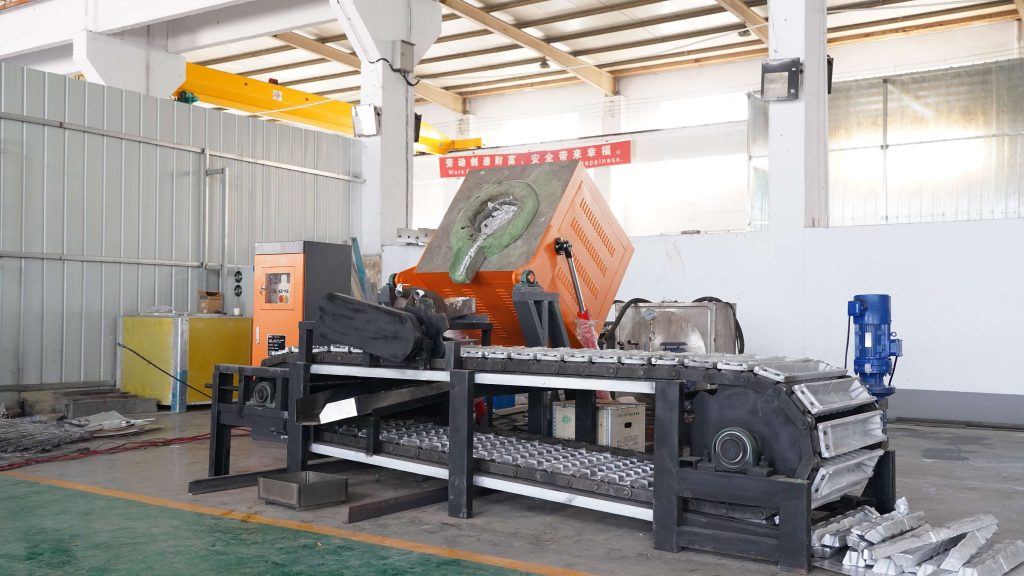
After casting, aluminum ingots are cooled and inspected to ensure they meet quality requirements.
Quality inspection usually includes:
Qualified aluminum ingots can then be transported for further processing, including extrusion, rolling, and other aluminum manufacturing processes.
A complete aluminum ingot production line integrates multiple processes, including melting, refining, temperature holding, casting, and material handling.
For aluminum producers, selecting a suitable production line can help:
The core of the production line is the aluminum melting system, which directly affects energy consumption, melting speed, and final product quality.
A properly designed aluminum ingot production line should be selected according to factors such as:
The aluminum ingot production process is a complex operation that requires precise control from melting to casting. Among all production stages, melting temperature control, refining, and degassing have a direct impact on ingot quality and production efficiency.
By combining efficient melting equipment with a complete aluminum ingot production line, manufacturers can achieve better metal recovery, lower production costs, and more consistent aluminum ingot quality.
For companies planning to upgrade their aluminum ingot manufacturing capabilities, selecting reliable melting and casting equipment is a key step toward improving overall production performance.
A reliable aluminum ingot production line requires precise control of melting, refining, and casting processes to achieve stable ingot quality and efficient production.
If you are looking for an efficient solution for aluminum melting and ingot production, our team can provide customized aluminum ingot production lines according to your production capacity, raw material conditions, and process requirements.

Introduction Aluminum melting loss is one of the key factors affecting production efficiency and profitability in aluminum processing industries. During…
For a foundry, choosing the right melting equipment is not only about purchasing a furnace with higher power or larger…
I. Introduction 1.1 Importance of Induction Heating Frequency In induction heating technology, frequency is one of the most critical parameters…
I. Overview of Iron Melting Furnaces Definition of Iron Melting Furnaces An iron melting furnace is industrial equipment that heats…