Industrial heating is at the heart of modern manufacturing. From steelmaking to precision forging, heating processes directly influence product quality, production speed, and operating cost. In energy-intensive sectors such as metallurgy and metal processing, thermal processes can account for 30–70% of total plant energy consumption, making heating efficiency a decisive factor in profitability.
At the same time, manufacturers face rising electricity and fuel prices, stricter environmental regulations, and increasing pressure to reduce carbon emissions. Against this backdrop, comparing induction heating and gas heating is not merely a technical discussion—it is a strategic decision affecting long-term competitiveness.
Both technologies are widely used in steel plants, foundries, and rolling mills. However, as global industry moves toward electrification and decarbonization, induction systems are gaining increasing attention.
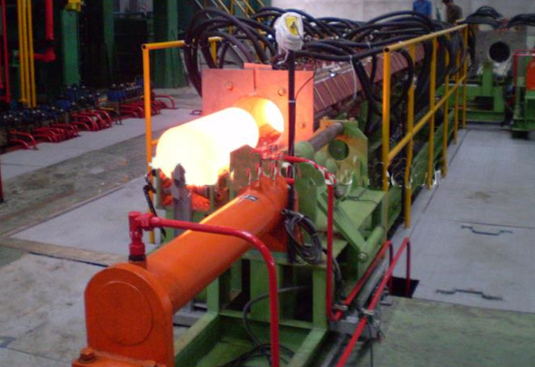
Induction heating is based on the principle of electromagnetic induction. When alternating current flows through an induction coil, it generates a rapidly changing magnetic field.
When a conductive metal workpiece is placed within this field:
This internal heating mechanism eliminates the need for flame or external heat transfer surfaces.
Core components typically include:
Because heat is produced directly in the workpiece, energy transfer is highly efficient and controllable.
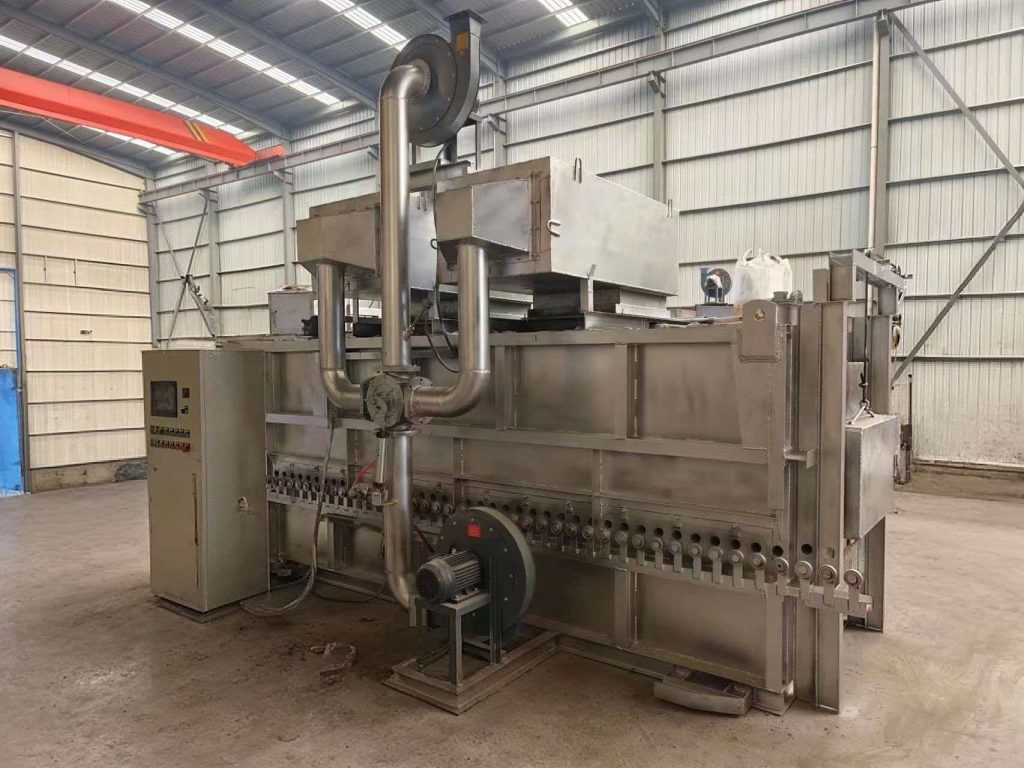
Gas heating relies on the combustion of fuels such as natural gas or LPG.
The process involves:
Main components include:
Unlike induction heating, gas systems heat the surrounding environment first, and then the workpiece absorbs the heat. This indirect method inherently leads to higher energy losses.
Thermal efficiency is the ratio of useful heat delivered to the workpiece relative to the total energy consumed. It directly impacts fuel consumption, electricity demand, and overall operating cost.
Industrial induction systems typically achieve:
Since heat is generated directly inside the metal, there is no intermediate heat transfer stage. Standby losses are also very low, as power is only consumed during active heating.
Traditional gas-fired furnaces generally achieve:
Even with regenerative burners and waste heat recovery systems, overall efficiency rarely approaches the levels achievable by direct induction heating.
| Parameter | Induction Heating | Gas Heating |
|---|---|---|
| Energy Conversion Efficiency | 85–95% | 30–60% |
| Heat Transfer Loss | Very Low | High |
| Start-up Time | Seconds to minutes | Tens of minutes to hours |
| Standby Loss | Minimal | Significant |
From a purely energy-conversion perspective, induction heating offers substantially higher efficiency.
Energy cost depends heavily on regional pricing:
Although electricity may have a higher unit price than natural gas in some regions, higher conversion efficiency often offsets this difference.
For example:
If gas heating operates at 40% efficiency and induction at 90%, induction may require less than half the primary energy input to achieve the same thermal result.
Beyond energy consumption, operating costs include:
Gas Heating:
Induction Heating:
Induction systems typically have fewer mechanical components exposed to high temperatures, which can reduce long-term maintenance costs.
When evaluating lifecycle cost:
In many medium-to-high utilization operations, induction systems can achieve payback periods of 1–3 years, depending on energy prices and production volume.
Induction heating provides rapid temperature rise because energy is concentrated directly within the workpiece.
Gas furnaces require:
This difference can significantly affect cycle time in high-volume production.
Induction systems allow:
Gas furnaces, relying on flame and chamber temperature, typically show larger temperature gradients and variability.
Higher heating speed and precision translate into:
For modern smart factories, induction technology aligns well with Industry 4.0 requirements.
Gas heating produces direct CO₂ emissions from combustion.
Induction heating produces no on-site emissions; however, indirect emissions depend on the electricity generation mix. In regions with renewable or low-carbon power, induction systems significantly reduce overall carbon footprint.
Gas systems generate:
Induction systems operate cleanly, with lower noise and improved operator safety.
Global environmental policies are tightening:
These trends increasingly favor electrically powered heating technologies.
Induction systems generally require higher upfront investment due to power electronics and control systems.
Gas systems often have lower initial equipment costs but may require additional investment in:
Induction heating may require:
Gas heating requires:
Induction equipment is typically compact and modular.
Gas furnaces often occupy larger floor space due to combustion chambers and refractory insulation.
Industrial heating is undergoing rapid transformation:
As renewable energy penetration increases, electrically driven heating systems are expected to expand further.
From a technical standpoint, induction heating clearly provides higher energy efficiency, faster heating rates, better temperature control, and cleaner operation.
Gas heating remains viable in specific economic and infrastructure conditions, particularly where fuel prices are low or electrical capacity is limited.
However, for manufacturers evaluating long-term operational efficiency, environmental impact, and production performance, the decision should be based on total lifecycle cost rather than initial investment alone.
In most medium- and high-throughput industrial applications, induction heating offers superior overall efficiency and strategic advantages in an increasingly electrified industrial landscape.
If you are evaluating industrial heating systems for your plant and require a detailed energy efficiency assessment, operating cost comparison, or project feasibility study based on your actual production parameters, our technical team can provide data-driven analysis and customized recommendations.
Contact us to discuss your specific application and receive a tailored industrial heating solution designed to optimize efficiency, productivity, and lifecycle cost performance.
A Technical Guide for Stress Relief Heat Treatment of Thick-Section Steel Parts 1. Why Large Steel Components Require Specialized Annealing…
I. Introduction: The Role of Continuous Rolling in Modern Metal Processing In modern metallurgical production, efficiency, consistency, and automation have…
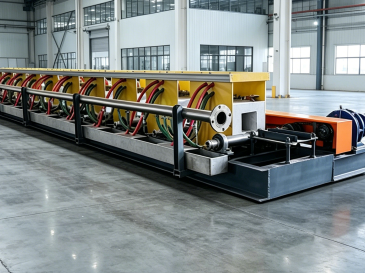
1. Introduction In modern rolling mills, the billet reheating furnace plays a critical role in ensuring stable production and consistent…
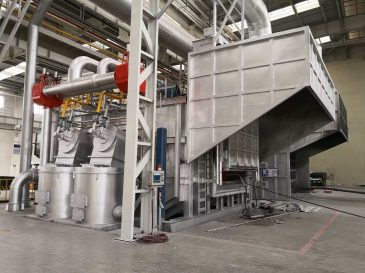
1. Industry Background 1.1 Industry Pain Points Driven by strict global environmental regulations and rising energy costs, the aluminum foundry…