In heavy industry, large forgings, pressure vessel shells, thick steel plates, wind turbine shafts, and welded structural assemblies often contain significant residual stress after casting, forging, or welding.
For components with section thickness exceeding 100 mm—and in some cases 500–800 mm—thermal gradients during heating and cooling can cause distortion, cracking, or dimensional instability.
A car-bottom annealing furnace for large steel components is specifically engineered to manage these challenges. Compared with standard box furnaces or small batch heat treatment systems, this type of industrial furnace offers:
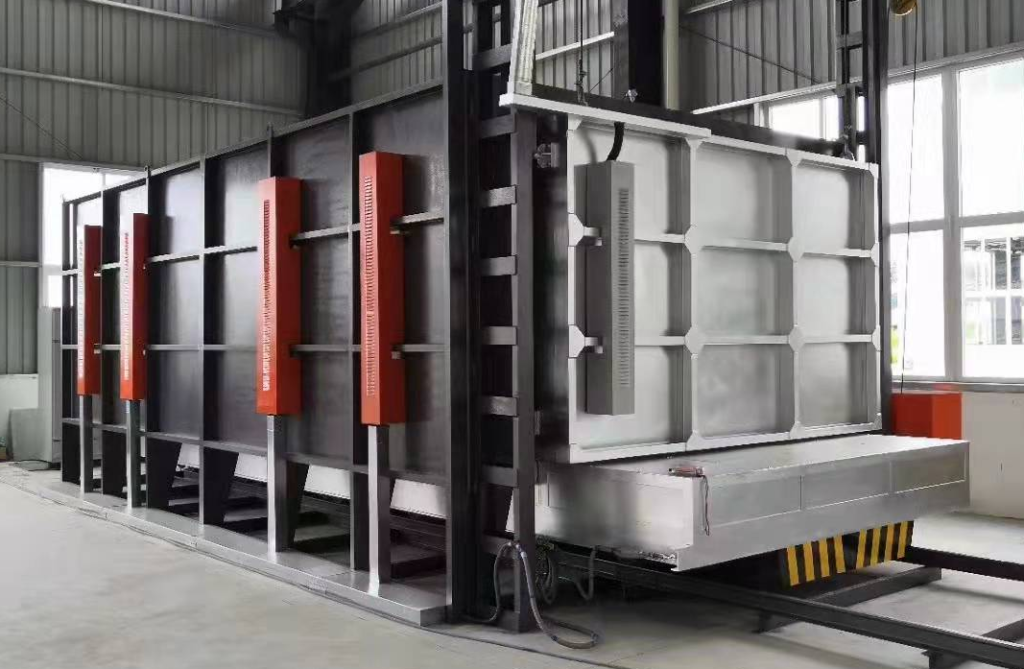
A car-bottom annealing furnace, also known as a trolley-type heat treatment furnace, is a cycle-operated electric resistance furnace designed for annealing and tempering of large and heavy workpieces.
Typical applications include:
The system consists of:
Unlike pit furnaces, this system does not require deep foundation construction. It can be installed directly on a level industrial floor, simplifying plant layout and reducing civil engineering cost.
The furnace chamber lining is constructed using ultra-light, energy-saving refractory fiber modules. Compared to traditional heavy refractory brick linings, fiber insulation offers:
The trolley lining is built using insulating bricks combined with refractory bricks, ensuring both structural strength and thermal insulation under heavy load conditions.
This dual-layer design minimizes bottom heat loss during long annealing cycles.
The heating system uses U-shaped high-resistance alloy strip elements. These are installed on:
This multi-surface heating arrangement promotes more balanced radiant heat distribution and reduces temperature differentials within the working chamber.
For large-scale industrial annealing, temperature uniformity is typically maintained within ±10–15°C across the effective heating zone, depending on load configuration and chamber size.
Modern car-bottom furnaces are equipped with PLC-based programmable control systems featuring:
For thick steel sections, heating rates are generally controlled between 50–150°C per hour depending on material grade and cross-sectional thickness.
Soaking time is commonly calculated using the rule of approximately 1 hour per 25 mm of section thickness for stress-relief annealing, though actual values depend on metallurgical specifications.
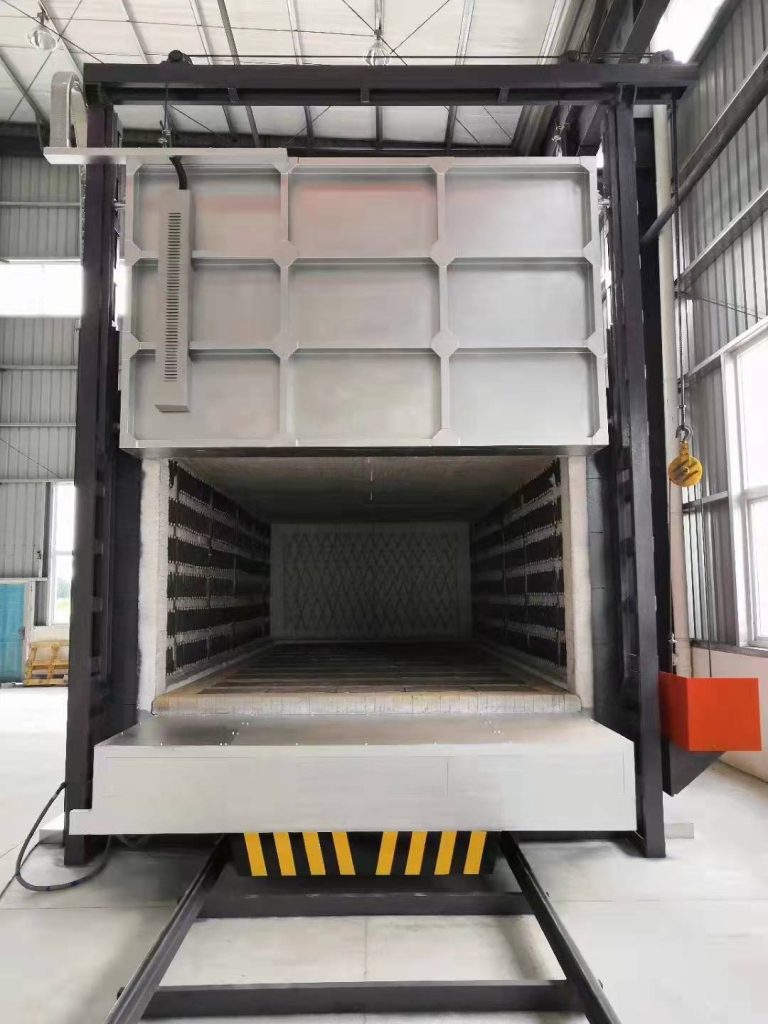
The horizontal loading method significantly improves safety when handling components weighing from several tons to over 100 tons.
Energy consumption for an electric car-bottom annealing furnace depends on:
In heavy industrial applications, energy consumption typically ranges between 300–800 kWh per ton of processed steel.
The use of ultra-light refractory fiber lining reduces heat storage loss and shortens reheating time between cycles, improving overall plant energy efficiency.
Car-bottom furnaces can be designed with load capacities ranging from 5 tons to more than 200 tons.
This makes them suitable for:
Proper stress-relief annealing can reduce residual stress levels by up to 80–90%, depending on material and process control.
Uniform heating minimizes the risk of:
With appropriate maintenance:
Periodic inspection of heating elements and thermocouples ensures long-term reliability.
The payback period for an industrial car-bottom annealing furnace depends on:
In heavy manufacturing facilities, typical payback periods range from 2–4 years when replacing outsourced heat treatment operations.
From a total cost of ownership perspective, factors such as energy efficiency, predictable maintenance cost, and reduced scrap rate significantly influence long-term financial performance.
This furnace type is particularly suitable when:
For manufacturers handling large forgings, pressure vessels, structural steel assemblies, or heavy mechanical components, a properly designed car-bottom annealing furnace provides a technically reliable and economically sustainable heat treatment solution.
A Strategic Solution for Sustainable Industrial Heating I. The Growing Demand for Sustainable Industrial Heating 1.1 Global Pressure for Decarbonization…
I. Why Heating Efficiency Matters in Modern Industry Industrial heating is at the heart of modern manufacturing. From steelmaking to…
I. Overview of Iron Melting Furnaces Definition of Iron Melting Furnaces An iron melting furnace is industrial equipment that heats…
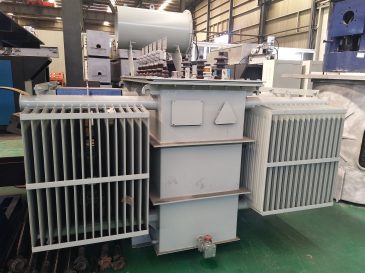
Transformers are essential equipment in modern power transmission and distribution systems. In AC circuits, transformers are used to step up…