Industrial manufacturing is undergoing a profound transformation driven by carbon reduction policies and sustainability targets. Governments across Europe, North America, and Asia are tightening emission standards, while many manufacturers have committed to net-zero carbon goals within the next two to three decades.
Foundries and metal processing plants are now subject to increasingly rigorous environmental audits, carbon disclosure requirements, and energy efficiency evaluations. Under these pressures, industrial heating systems — traditionally among the highest energy consumers — are receiving heightened scrutiny.
Conventional coal-fired and gas-fired furnaces rely on combustion processes that generate significant carbon dioxide (CO₂), nitrogen oxides (NOx), sulfur oxides (SOx), and particulate matter. These emissions contribute directly to air pollution and climate change.
Resistance heating systems, while electrically powered, often suffer from lower energy transfer efficiency and higher thermal losses. Combined with high fuel consumption and flue gas discharge systems, traditional heating solutions create both environmental and operational burdens.
Induction heating furnaces represent a shift toward electrified industrial processes. By eliminating combustion and enabling precise energy control, they align closely with modern green manufacturing strategies.
As electricity grids increasingly incorporate renewable energy sources such as solar, wind, and hydroelectric power, induction systems can operate with dramatically reduced carbon intensity — making them a key technology in sustainable metallurgy.
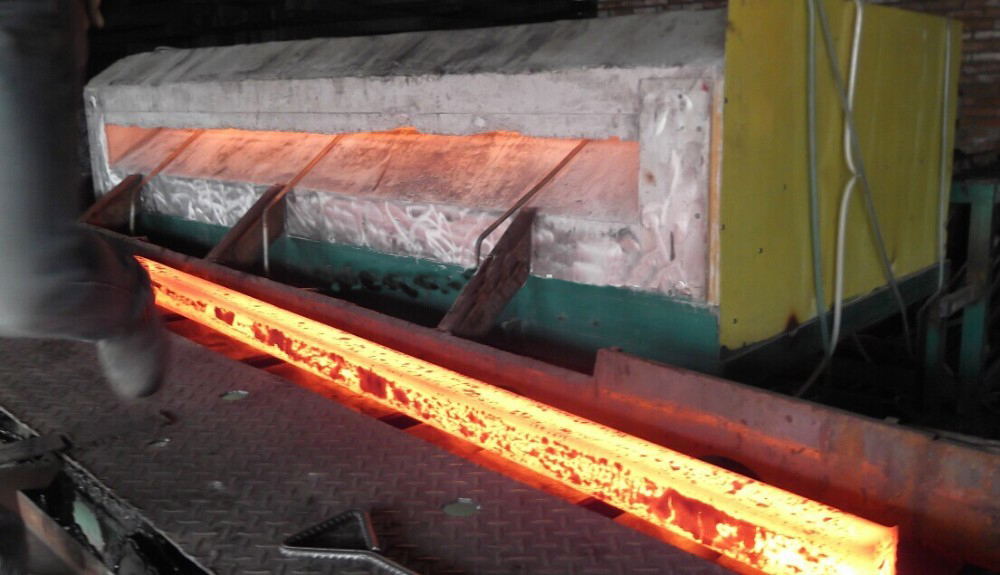
Induction heating furnaces operate based on electromagnetic induction. An alternating current passes through a coil, generating a magnetic field that induces eddy currents within the metal charge. These currents produce heat directly inside the material.
Because heat is generated within the metal itself:
This direct heating mechanism fundamentally changes the environmental profile of the process.
Unlike combustion furnaces that heat surrounding air and refractory materials before transferring energy to the metal, induction systems deliver energy directly to the workpiece.
Key environmental advantages include:
This precision significantly reduces unnecessary energy consumption.
Since induction furnaces do not rely on burning coal, oil, or gas, they generate:
This eliminates a major source of Scope 1 emissions for industrial facilities.
Induction systems operate entirely on electricity, making them compatible with renewable power sources. Facilities connected to green energy grids can substantially lower their carbon footprint without modifying furnace infrastructure.
This flexibility supports long-term corporate carbon neutrality objectives.
For companies subject to carbon accounting frameworks, replacing combustion furnaces with induction systems significantly reduces direct emissions reporting complexity. This simplifies compliance with environmental regulations and carbon disclosure standards.
Induction furnaces can achieve thermal efficiencies between 85% and 95%, considerably higher than many gas or oil-fired furnaces.
Benefits include:
Induction heating provides on-demand operation:
This flexibility minimizes idle energy waste and enhances operational control.
Combustion-based systems require additional infrastructure such as:
Induction furnaces eliminate many of these components, reducing auxiliary energy consumption and associated emissions.
Without combustion, induction furnaces produce:
This significantly improves indoor air quality in workshops and reduces ventilation demands.
Traditional fuel-based systems are major contributors to NOx and SOx emissions, especially in urban industrial zones. Induction furnaces eliminate these direct emissions, supporting compliance in heavily regulated regions.
Environmental performance directly affects workplace safety. Induction heating:
This contributes to both ESG performance and occupational health standards.
Advanced power control systems enable highly accurate temperature management. This reduces:
Because there is no direct flame contact, induction furnaces reduce slag formation and contamination. This improves metal recovery rates and reduces raw material waste.
Higher yield per batch means:
This enhances overall resource efficiency.
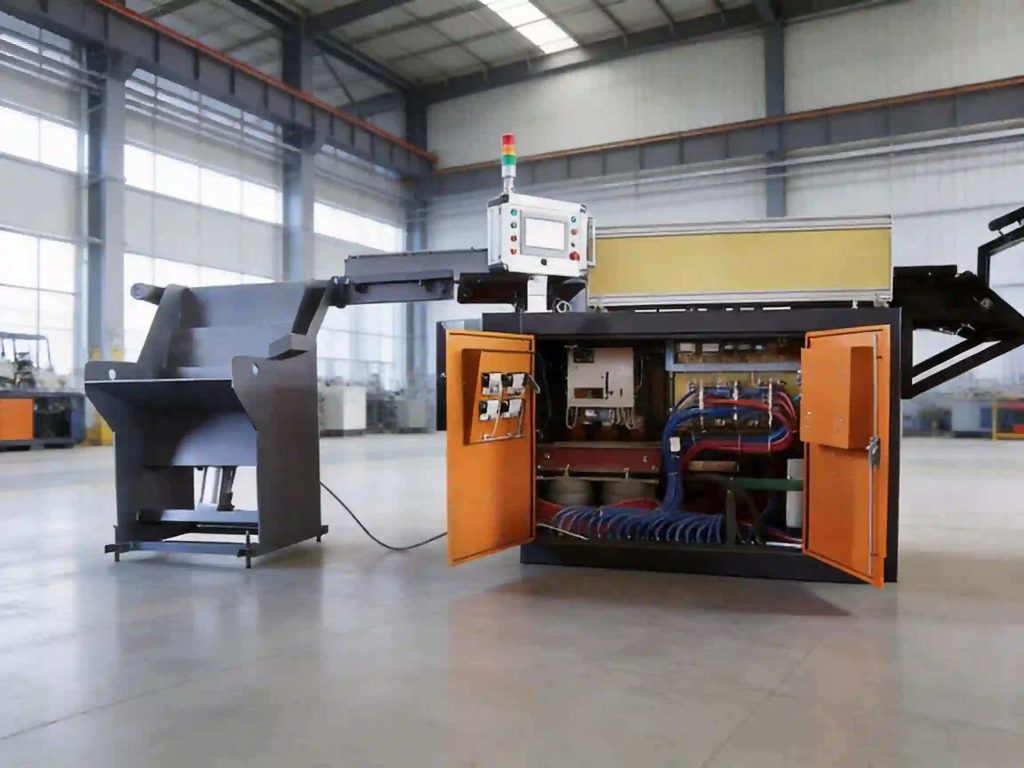
Modern induction systems use closed-loop recirculating water systems. Compared to some traditional high-temperature systems, they:
By controlling cooling temperatures and using recirculated systems, induction furnaces reduce thermal pollution associated with heated wastewater discharge.
Induction furnaces are generally more compact than large combustion furnaces, reducing:
With fewer mechanical combustion components, induction systems typically operate more quietly, contributing to better workplace conditions and lower noise pollution.
Induction furnaces are easily integrated with automated control systems and energy monitoring platforms, enabling:
Induction furnaces are highly suitable for scrap metal melting, including aluminum, copper, and steel recycling. Their rapid heating and controlled process support efficient secondary metal production.
By improving scrap melting efficiency, induction technology reduces reliance on energy-intensive mining and primary smelting operations, lowering upstream environmental impact.
Manufacturers adopting induction melting can demonstrate stronger environmental performance across their supply chains — an increasingly important factor for global customers.
Induction furnaces support alignment with environmental management systems such as ISO 14001 certification by reducing emissions and simplifying monitoring requirements.
Lower carbon intensity and reduced pollutants improve sustainability metrics, enhancing investor confidence and corporate reputation.
Meeting stringent EU and North American environmental standards provides a competitive advantage in export-oriented industries.
Environmental performance and economic performance are no longer separate considerations.
By combining energy efficiency, regulatory compliance, and lower emissions, induction melting furnace technology delivers both financial and environmental returns.
Induction heating furnaces represent a fundamental shift from combustion-based metallurgy toward electrified, precision-controlled processing.
Compared with traditional fuel-fired furnaces, they offer:
As global industry accelerates toward decarbonization, electrification technologies such as induction heating will play a central role in sustainable industrial development.
For manufacturers seeking long-term competitiveness, regulatory compliance, and environmental responsibility, induction heating is not only a technical upgrade — it is a strategic investment in the future of green manufacturing.
In today’s metal casting industry, speed, energy efficiency, and process stability aren’t optional anymore—they’re survival tools. That’s exactly why the…
A Technical Guide for Stress Relief Heat Treatment of Thick-Section Steel Parts 1. Why Large Steel Components Require Specialized Annealing…
In today’s metal casting industry, speed, energy efficiency, and process stability aren’t optional anymore—they’re survival tools. That’s exactly why the…
What Is the Stainless Steel Melting Point? The stainless steel melting point refers to the temperature range at which stainless…