Selecting the right furnace capacity is not just a sizing exercise—it directly affects production efficiency, metal quality, energy consumption, and overall operational stability. In metal melting operations, especially for aluminum and its alloys, improper capacity selection can lead to excessive holding time, temperature loss, increased oxidation, and inconsistent product quality.
This article builds on practical production logic to explain how furnace capacity should be determined, with a focus on molten aluminum processing, residence time control, and refining effectiveness.
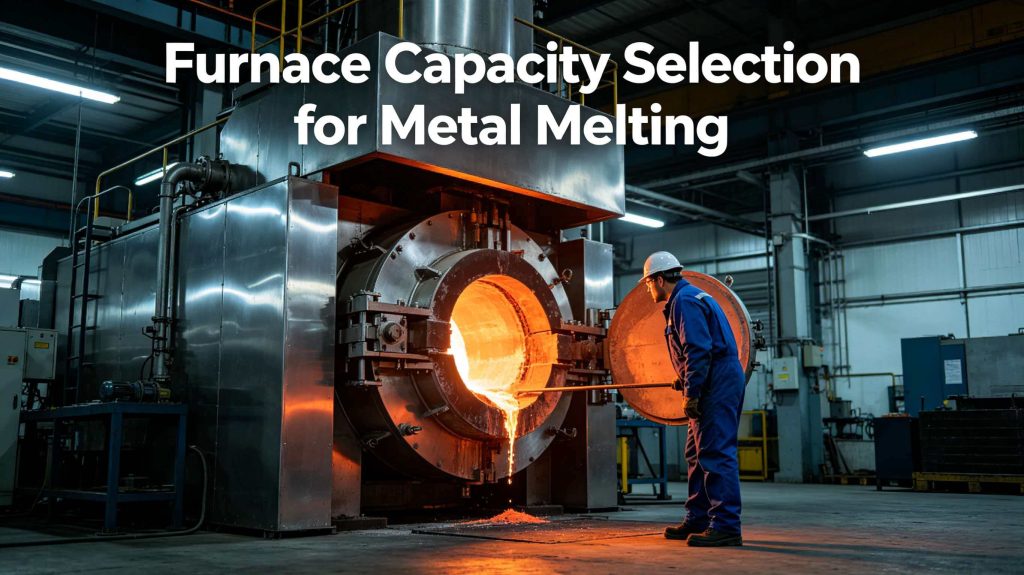
The furnace capacity should be determined based on the production capacity of the casting machine and the residence time of the refined molten aluminum in the furnace. The residence time of the refined molten aluminum in the furnace includes both the holding time and the casting operation time. When performing grain refinement treatment in the furnace, to ensure optimal refinement results, the molten aluminum must be re-stirred if it remains in the furnace for more than 3 hours after the treatment. When grain refinement is performed outside the furnace, the time between the completion of the process and transfer to the casting machine is very short, so the impact on the refinement effect can be disregarded. However, from the perspective of refining effectiveness, if molten aluminum remains in the furnace for more than 3 hours after refining, it should be re-refined. Therefore, the residence time of molten aluminum in the furnace after refining can serve as a reference for determining furnace capacity.
Residence time refers to the total duration that molten metal stays inside the furnace after refining. It consists of:
Excessive residence time introduces several risks:
| Parameter | Recommended Value | Impact on Process |
|---|---|---|
| Optimal residence time | ≤ 3 hours | Maintains refining effectiveness |
| Critical threshold | > 3 hours | Requires re-stirring or re-refining |
| Ideal casting continuity | Continuous operation | Minimizes temperature fluctuation |
The furnace must supply molten metal at a rate that matches the casting machine production capacity. If the furnace capacity is too large or too small, operational imbalance occurs.
| Scenario | Furnace Capacity Issue | Resulting Problem |
|---|---|---|
| Capacity too large | Overdesign | Long holding time, quality degradation |
| Capacity too small | Undersized | Frequent charging, unstable temperature |
| Properly matched capacity | Balanced | Stable production and consistent quality |
A simplified approach to estimate furnace capacity:
This ensures that molten metal is neither held too long nor supplied insufficiently, supporting efficient continuous casting operations.
When grain refinement is conducted inside the furnace:
When refinement is performed externally:
| Refinement Method | Time Sensitivity | Operational Requirement |
|---|---|---|
| In-furnace refinement | High | Re-stirring after 3 hours |
| Out-of-furnace refining | Low | Immediate transfer to casting machine |
Batch production vs continuous casting process will significantly affect capacity selection. Continuous processes require tighter matching.
Different aluminum alloys have varying sensitivity to temperature and holding time, influencing allowable residence duration and aluminum alloy quality control.
Larger furnaces tend to have better thermal inertia but may increase holding time risks if not properly managed. This directly relates to furnace thermal efficiency.
Frequent charging in small furnaces can introduce temperature fluctuations and contamination risks, affecting molten metal cleanliness.
Furnace capacity selection is a critical decision that directly impacts both metallurgical quality and operational efficiency. By using residence time—especially the post-refining holding duration—as a core reference, manufacturers can strike a balance between productivity and quality control.
A well-matched furnace not only minimizes energy waste and metal loss but also ensures consistent refining performance and stable downstream casting operations.
If you are planning a new aluminum melting furnace project or looking to optimize your existing metal melting system, choosing the right furnace capacity is essential for long-term efficiency and product quality.
Our team specializes in induction melting furnace solutions, providing customized capacity design, technical consultation, and full-process support based on your production requirements.
Contact us today to get professional guidance and tailored solutions for your melting and casting operations.
How should smelting furnaces and holding furnaces be properly coordinated in an electrolytic aluminum plant? In an electrolytic aluminum plant,…
1. Introduction In aluminum production, the performance of the aluminum melting furnace directly determines product quality, energy consumption, and overall…
I. Introduction: Why Choosing the Right Aluminum Shell Melting Furnace Matters As demand for aluminum products continues to grow across…
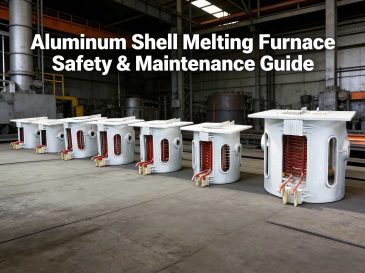
1.Purpose of the Guide In modern metal processing and recycling industries, the aluminum shell melting furnace plays a critical role…