Induction heating is an advanced heating technology that converts electrical energy directly into thermal energy based on the principle of electromagnetic induction. The core mechanism operates as follows: when an alternating current passes through an induction coil, it generates an alternating magnetic field in the surrounding space. When a conductive workpiece is placed within this magnetic field, closed-loop induced currents—commonly referred to as eddy currents—are generated inside the workpiece. Due to the electrical resistance of the material, these eddy currents produce Joule heat, causing the workpiece itself to heat rapidly.
Unlike conventional heating methods, induction heating does not rely on heat conduction or radiation as intermediate processes. Instead, heat is generated directly within the workpiece, forming an internal heat generation mechanism. It is worth noting that heating efficiency is closely related to operating frequency: low-frequency induction heating is suitable for deep heating of large or thick-walled workpieces, while high-frequency induction heating is ideal for rapid surface or thin-section heating. By adjusting the frequency, induction heating can precisely match different industrial heating applications.
In modern industrial manufacturing systems, heating processes form the foundation of numerous operations and are widely used in metal forging, heat treatment, welding, and metal melting. Traditional heating methods—such as flame heating and resistance heating—often suffer from low thermal efficiency, uneven temperature distribution, and high environmental pollution, making them increasingly incompatible with today’s demand for efficient and sustainable manufacturing.
The introduction of induction heating technology has effectively addressed these limitations and accelerated the intelligent upgrade of industrial heating processes. With its outstanding advantages in energy efficiency, precision heating, and clean production, induction heating has become a key technological solution for improving productivity, enhancing product quality, and reducing energy consumption. It plays an essential role in promoting industrial upgrading and green, low-carbon manufacturing, and is now widely adopted in automotive manufacturing, aerospace, mechanical engineering, and electronics production.
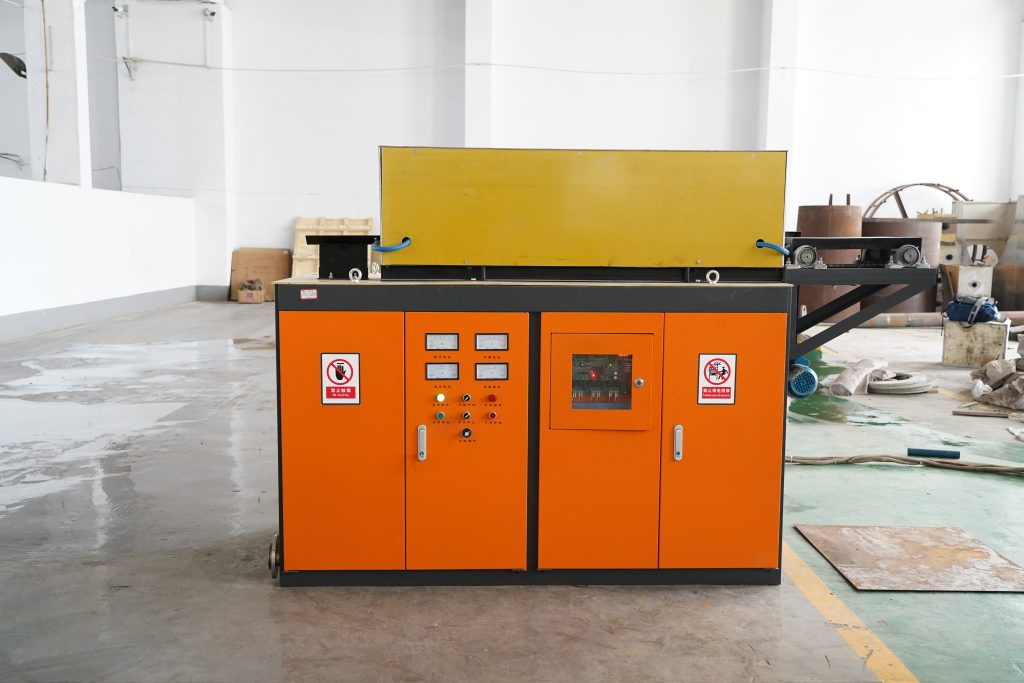
As described above, induction heating systems generate heat directly inside the workpiece through electromagnetic induction, eliminating the need for heat transfer via intermediate media such as combustion gases or resistance heating elements. This direct heating mechanism fundamentally reduces energy loss during heat transfer.
In conventional flame heating furnaces, a significant portion of heat is lost through exhaust gas emissions and furnace wall dissipation, resulting in typical thermal efficiencies of only 30%–50%. In contrast, induction heating delivers heat directly to the material, achieving thermal efficiencies above 85%, with some high-efficiency induction systems exceeding 90%. Moreover, induction coils themselves do not reach high temperatures and serve solely as magnetic field generators, resulting in minimal heat loss and further improving overall energy utilization efficiency.
High energy efficiency translates directly into substantial operational cost advantages. On the one hand, induction heating requires significantly less energy compared with fuel-based heating systems or traditional electric heating, particularly in continuous production lines. On the other hand, induction heating equipment features a relatively simple structure, with long service life for core components such as power supplies and induction coils, and low maintenance requirements.
For example, in the metal forging industry, replacing traditional heavy-oil heating furnaces with induction heating can reduce energy costs by more than 40%, while also eliminating additional expenses related to furnace maintenance, fuel storage, and fuel transportation. The long-term economic benefits are therefore highly significant.
Induction heating systems can be integrated with advanced temperature control instruments and sensors—such as infrared pyrometers and thermocouples—to enable real-time temperature monitoring and closed-loop control systems. By adjusting current frequency, power output, and heating time, operators can precisely control heating rates and final temperatures, achieving temperature accuracy of ±1 °C.
Such high-precision temperature control is critical for heat treatment processes, including quenching and tempering. Accurate temperature regulation effectively prevents quality defects caused by overheating or insufficient heating. For instance, in automotive component heat treatment, precise control ensures uniform hardness distribution, significantly enhancing component durability and reliability.
Induction heating performance is largely unaffected by external environmental factors such as ambient temperature, humidity, or airflow conditions. As long as process parameters—frequency, current, and heating time—remain consistent, the heating results will be identical, ensuring exceptional process repeatability.
This process stability is especially important in mass production environments, where consistent heating quality across batches and individual parts is essential to reducing defect rates. In contrast, traditional flame heating is highly sensitive to fuel quality, combustion conditions, and airflow variations, making it difficult to maintain consistent results in large-scale industrial production.
In traditional heating methods, workpieces are directly exposed to air, making high-temperature oxidation inevitable. Oxide scale formation not only degrades surface appearance but also compromises mechanical properties and dimensional accuracy. With induction heating, workpieces can be heated in protective atmospheres or vacuum environments, effectively isolating them from oxygen and significantly reducing oxidation.
Additionally, rapid heating rates and short high-temperature dwell times result in more uniform thermal stress distribution, reducing the risk of workpiece deformation. For example, in precision mechanical component manufacturing, induction heating can reduce oxidation loss to below 0.5% and control deformation within micrometer-level tolerances.
Precise temperature control and uniform heating enable consistent and complete microstructural transformations, thereby improving mechanical performance. In induction quenching processes, rapid and uniform heating followed by controlled cooling produces fine martensitic structures, enhancing hardness, strength, and wear resistance.
During tempering processes, accurate temperature regulation effectively relieves residual stresses, improving toughness and fatigue resistance. Furthermore, reduced oxidation and deformation minimize the need for post-processing operations, preserving the final mechanical integrity of the components.
Induction heating technology generates heat solely through electromagnetic induction and does not involve fuel combustion or open flames. This fundamentally eliminates safety hazards associated with fire risks and explosions, significantly improving industrial safety standards.
In contrast, traditional fuel-fired furnaces rely on flammable fuels such as heavy oil or natural gas, requiring complex fire prevention systems. Flame-free heating also reduces noise pollution, contributing to a safer and more comfortable working environment.
Because no combustion occurs, induction heating produces virtually no harmful emissions, such as carbon monoxide, carbon dioxide, nitrogen oxides, or sulfur compounds. As a result, it fully complies with environmental regulations and supports green manufacturing policies.
Additionally, induction coils operate at relatively low temperatures and do not directly contact workpieces, minimizing the risk of operator burns. The absence of fuel storage and transportation further reduces industrial safety risks, creating a clean, safe, and environmentally friendly workplace.
| Aspect | Induction Heating Advantages |
|---|---|
| Energy Efficiency | Direct internal heating, efficiency above 85% |
| Temperature Control | High-precision control up to ±1 °C |
| Process Stability | Highly repeatable heating results |
| Product Quality | Reduced oxidation and minimal deformation |
| Safety | No combustion, no open flames |
| Environmental Impact | Near-zero emissions, eco-friendly |
From a long-term perspective, adopting induction heating solutions represents more than a simple process upgrade—it is a strategic investment in manufacturing competitiveness. By supporting intelligent manufacturing and sustainable production, induction heating enables companies to meet increasingly strict environmental standards and quality requirements.
At the economic level, reduced energy consumption, lower maintenance costs, and improved product yield significantly enhance profitability and market competitiveness. As industries continue to evolve toward smart manufacturing and low-carbon development, induction heating will remain a critical technology driving high-quality industrial growth.
I. Introduction 1.1 Importance of Induction Heating Frequency In induction heating technology, frequency is one of the most critical parameters…
1. Overview 1.1 Core Role of Hot Rolling Mills Hot rolling mills are essential equipment in metal processing, widely used…
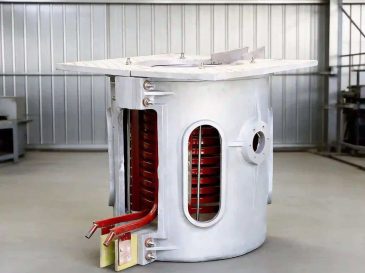
I. Introduction: Why Choosing the Right Aluminum Shell Melting Furnace Matters As demand for aluminum products continues to grow across…
Transformers are essential equipment in modern power transmission and distribution systems. In AC circuits, transformers are used to step up…