Hot rolling mills are essential equipment in metal processing, widely used for steel, aluminum, and non-ferrous metal shaping.
They employ hot rolling technology, applying pressure to metal billets heated above their recrystallization temperature to achieve plastic deformation.
This process efficiently converts raw metal into usable products, bridging the gap between metal smelting and practical applications.
The main function of a hot rolling mill is to transform metal billets—such as steel slabs, aluminum ingots, or plates—into sheets, strips, plates, and structural sections.
Hot rolling takes advantage of the material’s high plasticity and low resistance to deformation at elevated temperatures, enabling high-efficiency mass production.
It also optimizes the internal structure of metals, enhancing mechanical properties and providing high-quality raw materials for downstream industries.
Designed for producing strips and coils, hot strip rolling mills use continuous rolling processes to ensure uniform thickness, width, and surface quality.
Applications include automotive manufacturing, home appliances, and construction. They can serve as final products or raw materials for cold rolling.
Focused on thicker plates, plate rolling mills perform multiple precise passes to control thickness tolerance and flatness.
The resulting plates offer high strength and toughness, suitable for steel structures, bridges, engineering machinery, and shipbuilding.
Engineered for I-beams, channels, and angles, section rolling mills feature customized roll profiles for accurate shaping.
They produce structural steel with precise dimensions and uniform cross-sections, widely used in construction frameworks, machinery, and bridge supports.
For clients with special materials (e.g., high-strength alloy steel, rare non-ferrous metals) or non-standard product requirements, we provide tailored hot rolling mill solutions.
From structural design, roll optimization, control systems, to process planning, we ensure the equipment meets your unique production needs with high efficiency and quality output.
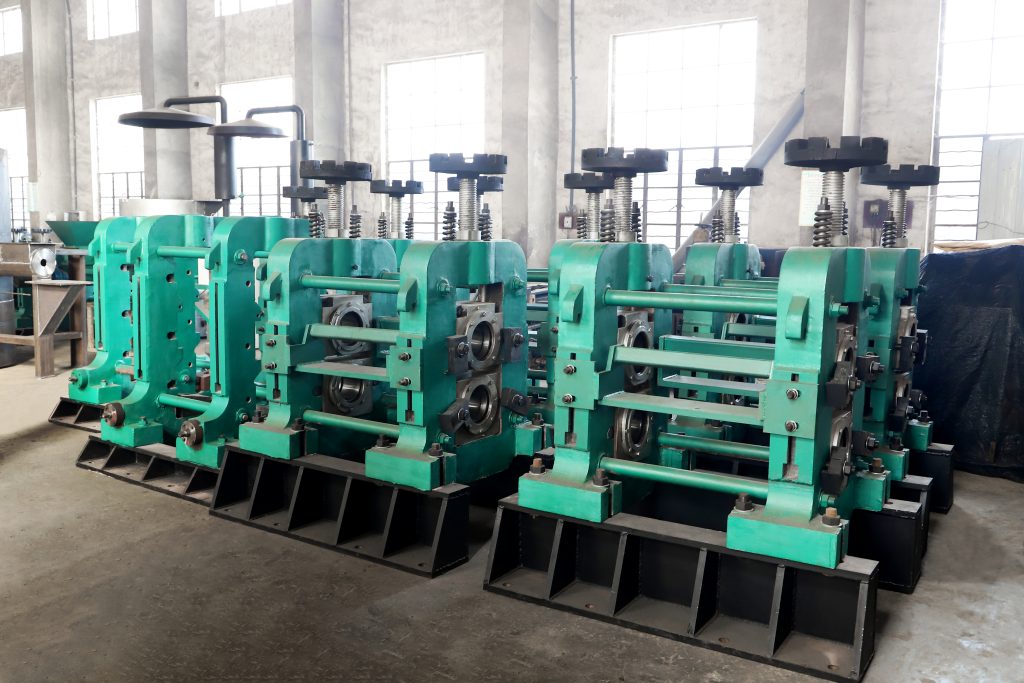
Our hot rolling mills feature optimized mechanical structures and high-strength drive components, capable of long-term, high-intensity operation.
Efficient roll arrangement and power systems increase rolling speed and output.
Equipped with real-time monitoring, potential faults are detected early to ensure continuous production and minimal downtime.
Advanced servo control systems and high-precision measurement devices ensure tight dimensional and shape tolerances.
Roll gap, rolling pressure, and speed are adjusted in real time, producing uniform cross-sections.
Custom roll profiles guarantee precise shaping for both standard and customized products.
Energy-saving motors, optimized hydraulic and transmission systems reduce power consumption.
Core components are made of high-strength wear-resistant materials with heat treatment, extending service life.
Modular design of wear parts enables easy replacement, lowering maintenance costs and downtime.
Equipped with advanced automation systems integrating PLC, HMI, and data analytics, the rolling process is fully automated.
Operators can manage the entire workflow—from billet input to finished product output—through a simple interface, reducing manual effort and errors.
Real-time monitoring and production reports allow managers to control production progress and quality efficiently.
Our hot rolling mills can process steel (carbon, alloy, stainless), aluminum, copper, and other non-ferrous metals.
Process parameters such as heating temperature, rolling pressure, and speed can be adjusted to ensure optimal results and fully exploit material properties.
Products from our hot rolling mills are widely used across industries:
We manufacture all hot rolling mills in our own facilities, from core components to full assembly.
Strict ISO-based quality control ensures every machine meets design standards and performance requirements.
Experienced teams provide full on-site installation and commissioning services.
From unloading, positioning, assembly, piping, and electrical connection to no-load and full-load testing, we ensure stable and efficient operation before delivery.
We offer comprehensive training for operators and maintenance staff, covering operation, maintenance, and troubleshooting.
Our 24-hour support hotline and professional technicians are always ready to respond to technical queries or maintenance needs.
For inquiries about hot rolling mills or customized solutions, contact our expert team.
We provide one-on-one technical consultation and tailored solutions to help you achieve high-efficiency, high-quality metal production.
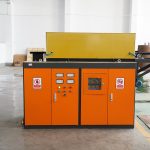
I. Overview of Induction Heating 1.1 Basic Principle of Induction Heating Induction heating is an advanced heating technology that converts…
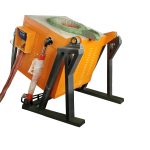
Introduction Selecting the right aluminum melting furnace is one of the most critical decisions for foundry operations. The wrong choice…
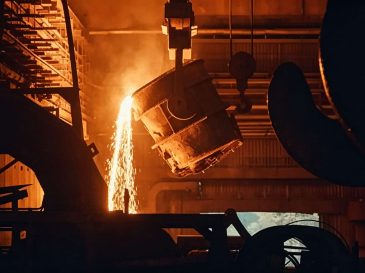
Introduction Aluminum melting loss is one of the key factors affecting production efficiency and profitability in aluminum processing industries. During…
I. Why Routine Maintenance Matters Medium-frequency furnaces are core heating and melting equipment in industries such as metallurgy and machinery…