The aluminum induction melting furnace serves as core equipment for aluminum and aluminum alloy processing. Leveraging electromagnetic induction principles, it achieves highly efficient and precise melting. Compared to traditional flame furnaces, it offers significant advantages: high energy utilization, precise temperature control, and rapid melting speeds. It is widely adopted in industries demanding high-quality aluminum products. This article analyzes their technical characteristics and application value across four dimensions: structural composition, cost recovery, technical specifications, and efficiency alongside casting quality enhancement.
An aluminum induction melting furnace is a complex integrated system combining electromagnetic induction, power electronics, thermal control, cooling systems, and other technologies. Its stable operation relies on the coordinated functioning of core components. Key functionalities and characteristics are as follows:
The induction coil serves as the core component for electromagnetic heating. Constructed from copper tubing with integrated cooling water channels, it generates an alternating magnetic field when high-frequency AC current is applied. This induces eddy currents in the aluminum ingots, causing them to self-heat and melt. Parameters such as the number of windings and diameter must be matched to the furnace capacity and heating requirements, directly impacting heating efficiency and temperature uniformity.
The furnace shell is fabricated from high-strength steel plates welded together. Its interior is lined with high-temperature resistant insulation and thermal barrier layers. Its primary functions include securing the coil, housing the crucible, and isolating the furnace from the external environment. It also protects against high-temperature damage and minimizes heat loss. Its structural design prioritizes ease of transportation, installation, and maintenance. Large furnaces often feature a tilting or hinged structure.
The power supply system serves as the equipment's “power core,” converting industrial frequency AC power into high-frequency AC power. Mainstream IGBT medium-frequency power supplies offer advantages including high energy efficiency, stable output, and a wide power adjustment range. Power supply capacity must match the furnace's capacity and integrate safety protections such as overcurrent and overvoltage protection to ensure stable and secure operation.
The crucible is the core container for melting aluminum raw materials. Its material directly impacts smelting quality and equipment lifespan. Common types include graphite, clay, and ceramic: graphite crucibles suit high temperatures and diverse aluminum alloy smelting; ceramic crucibles offer corrosion resistance and erosion resistance; clay crucibles are cost-effective for small-scale applications. Regular maintenance and replacement are required during use to prevent molten aluminum leakage.
The control system serves as the equipment's “brain,” comprising PLC controllers, sensors, and other components. Core functions include precise temperature control (maintaining temperatures at or above the aluminum melting point), on-demand power adjustment, real-time monitoring of equipment status, and triggering alarms or emergency shutdowns. Advanced systems support remote monitoring and data statistics, enabling intelligent management.
The cooling system serves as a critical auxiliary component, predominantly utilizing water cooling. It comprises a water tank, pump, cooling tower, and other elements. By circulating cooling water, it dissipates heat from the coil and furnace shell, preventing component burnout or degradation. The system must ensure stable water supply and be equipped with water temperature monitoring devices. In case of abnormalities, it should activate backup equipment or initiate shutdown protection.
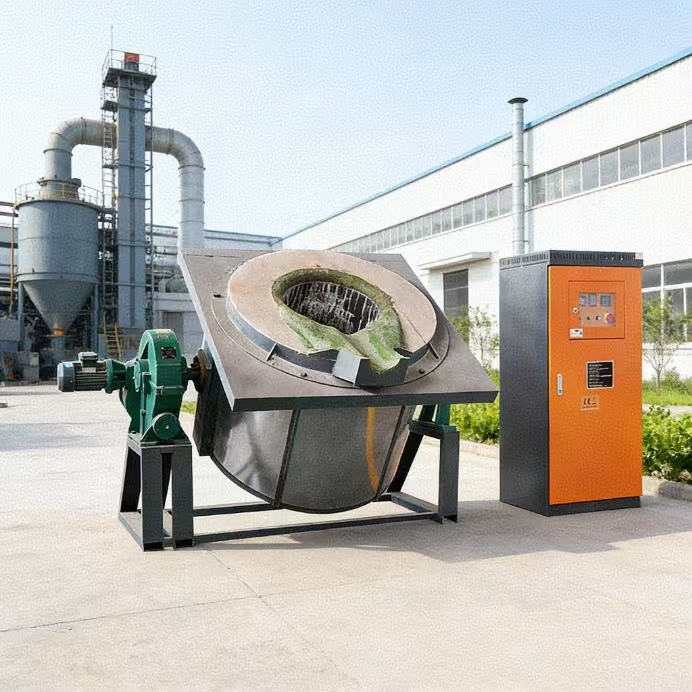
For enterprises, the cost recovery period of equipment investment is a core metric for evaluating its value. Leveraging significant cost-efficiency advantages, aluminum induction melting furnaces typically achieve cost recovery within approximately six months under reasonable production conditions. This advantage makes them the preferred equipment for numerous aluminum processing enterprises. Their cost recovery capability primarily stems from the following aspects:
Compared to traditional flame melting furnaces, aluminum induction melting furnaces achieve substantially higher energy utilization efficiency. Traditional flame furnaces generate heat by burning fuel, resulting in substantial energy loss during heat transfer and typically achieving only 30%-40% energy utilization. In contrast, aluminum induction furnaces directly heat aluminum raw materials through electromagnetic induction. Heat loss primarily occurs through furnace body dissipation, enabling energy utilization rates of 60%-70%, with some high-end equipment achieving even higher efficiency. Taking a 500kg-capacity furnace as an example: a traditional flame furnace consumes substantial heavy oil or natural gas daily to melt aluminum raw materials. An induction furnace, however, uses only 50%-60% of the electricity consumed by traditional equipment. This alone represents significant savings in energy costs for enterprises.
The precise temperature control of aluminum induction furnaces effectively minimizes oxidation losses during melting. Traditional equipment experiences significant temperature fluctuations, leading to severe oxidation of molten aluminum and scrap rates typically ranging from 5% to 8%. In contrast, induction furnaces can control scrap rates below 2% to 3%. For large-scale manufacturers, this alone translates to substantial savings in raw material costs. Additionally, the high automation level of induction furnaces enables semi-automated or fully automated processes for raw material feeding, temperature adjustment, and molten aluminum pouring after melting. This drastically reduces the number of operators required. Unlike traditional equipment demanding multiple operators for continuous monitoring, induction furnaces typically require only 1-2 operators for daily operations, significantly lowering labor costs.
Aluminum induction furnaces heat materials far faster than traditional equipment. For a 100kg capacity furnace, an induction furnace heats raw aluminum from room temperature to its melting point (660°C) in just 30-40 minutes, whereas a traditional flame furnace requires 1.5-2 hours. This accelerated melting cycle substantially increases output per unit time, enabling enterprises to fulfill more orders within the same production period and enhance market competitiveness. Simultaneously, rapid melting reduces molten aluminum's residence time in the furnace, further minimizing oxidation losses and improving product quality.
A small aluminum processing plant previously operated a traditional flame furnace, melting 500kg of aluminum raw material daily. Energy costs (natural gas) amounted to approximately ¥2,000/day, with a scrap loss rate of 7%. Three operators incurred monthly labor costs of roughly ¥15,000. After investing in a 500kg-capacity aluminum induction melting furnace (equipment cost: approximately ¥300,000), daily electricity consumption dropped to ¥800/day, saving ¥36,000 monthly in energy costs. Scrap loss rate decreased to 2%, reducing raw material costs by approximately ¥25,000 monthly. Staffing was reduced to one operator, saving ¥10,000 monthly in labor costs. Comprehensive calculations show total monthly savings of ¥71,000. After deducting equipment depreciation and other expenses, net monthly savings reach approximately ¥60,000, enabling equipment investment recovery within just five months. Similar cases are prevalent across industries such as automotive parts manufacturing and aluminum alloy door/window processing, fully demonstrating the feasibility of achieving cost recovery for aluminum induction melting furnaces within approximately six months.
Technical specifications of aluminum induction melting furnaces must precisely match enterprise production requirements, with melting capacity, temperature control, power requirements, and safety performance being core considerations. Different furnace specifications suit diverse production scenarios. Below are mainstream technical parameters within the industry:
Aluminum induction melting furnaces are categorized into three capacity tiers to accommodate varying production scales:
Small (10-50kg): Suitable for laboratories, small-scale batch production, or sample melting. Features compact size, flexible operation, and low cost. Medium-sized (100-500kg): The most widely used category, suited for medium-sized factories handling medium-batch production. It balances production capacity with flexibility; Large-sized (1000kg+, up to tens of tons): Designed for large enterprises engaged in large-scale continuous production. Advantages include high production capacity, advanced automation, and low unit costs.
Selection should comprehensively consider daily production capacity, order batch sizes, and production rhythms to avoid energy waste or capacity shortages due to improper sizing.
Aluminum has a melting point of 660°C, while aluminum alloy melting temperatures typically require control between 700-750°C based on alloy composition. Temperature control precision in aluminum induction melting furnaces is critical for ensuring alloy quality. Mainstream equipment achieves ±5°C accuracy, with some high-end models reaching ±3°C. Precise temperature control prevents issues such as oxidation and burn-off of alloy components due to excessive heat, or poor fluidity and incomplete casting caused by insufficient temperatures. Additionally, the furnace must maintain stable heat retention during casting intervals to preserve molten aluminum temperature stability, ensuring seamless progression of subsequent casting operations. Temperature control systems typically employ thermocouples as sensors to collect real-time molten aluminum temperature data. This data is transmitted to a PLC controller, which automatically adjusts power output to achieve closed-loop temperature regulation.
The power demand of aluminum induction melting furnaces directly correlates with melting capacity—larger capacities require higher power supplies. Below are reference power ranges for mainstream industry specifications:
Additionally, power supply frequency impacts melting efficiency. Medium-frequency power supplies (typically 1-10kHz) are ideal for aluminum induction melting, balancing heating efficiency with reduced energy loss. When selecting equipment, enterprises must coordinate with power suppliers to ensure on-site capacity meets furnace power requirements.
As high-temperature, high-voltage equipment, safety performance is central to the design and operation of aluminum induction melting furnaces. Mainstream equipment typically incorporates the following safety mechanisms:

Through scientific optimization measures during the operation of aluminum induction melting furnaces, enterprises can further improve equipment melting efficiency while enhancing continuous casting quality, achieving dual improvements in production capacity and product quality. Specific strategies are outlined below:
The design of induction coils directly impacts heating efficiency. Measures such as optimizing coil winding methods, increasing coil fill factor, and using high-conductivity copper materials can enhance magnetic field strength and electrical energy conversion efficiency. Simultaneously, strengthening furnace insulation is crucial for reducing heat loss. Adding high-performance insulation materials (e.g., ceramic fiber wool, rock wool) to the inner furnace shell walls minimizes heat diffusion outward. Some manufacturers also employ double-walled furnace designs, filling the interlayer with insulation to further enhance thermal retention, boosting energy utilization by 5%-10%.
Cooling system performance directly impacts operational stability and efficiency. Enhancing cooling effectiveness through optimized pipe layout, increased cooling water flow, and high-efficiency cooling towers prevents power degradation caused by coil overheating. Simultaneously, regularly cleaning scale and impurities from cooling pipes ensures smooth water flow, effectively boosting the heat exchange efficiency of the cooling system and safeguarding stable operation under high-temperature conditions.
Regular maintenance is crucial for ensuring peak equipment performance. Routine maintenance tasks include: inspecting induction coils for damage or aging and promptly replacing damaged coils; Cleaning residues and scale from the crucible to prevent uneven heating of molten aluminum; inspecting power system wiring for loose connections to ensure circuit reliability; calibrating temperature and pressure sensors to guarantee measurement accuracy. Establishing a comprehensive maintenance protocol effectively reduces equipment downtime due to failures and enhances overall utilization efficiency.
Shortening melting time is a direct pathway to increasing production capacity, achievable through the following strategies:
The performance of aluminum induction melting furnaces directly impacts continuous casting quality, with an optimal melting process forming the foundation for producing high-quality aluminum alloy castings. Key technical measures to improve continuous casting quality include:
Temperature fluctuations are a primary cause of casting defects. Strict control of molten aluminum temperature is essential to ensure stable fluctuations within the specified range. Simultaneously, during melting, alloying elements must be precisely added according to the aluminum alloy's composition requirements. Stirring devices ensure uniformity of the molten aluminum composition. Some advanced equipment features online composition monitoring systems that track molten aluminum composition in real time, enabling timely adjustments to alloying element additions to guarantee compliance with standard specifications.
The stability of the pouring process directly impacts casting quality. Pouring channels must be rationally designed based on the casting's shape and dimensions, controlling the pouring speed and flow rate of molten aluminum to prevent turbulence and impact during pouring. This minimizes defects such as porosity and sand holes. Simultaneously, optimize mold design and material selection by using mold materials with excellent thermal conductivity and high wear resistance. Apply specialized release agents to the inner mold surfaces to ensure smooth casting removal and minimize surface defects.
Uneven heating of molten aluminum can cause localized overheating or underheating, affecting the uniformity of the casting structure. Optimizing the design of induction coils and the method of raw material feeding enables uniform heating of the molten aluminum. Simultaneously, during the melting process, molten aluminum must undergo purification to remove impurities and gases. Common purification methods include: adding refining agents, using argon or nitrogen for gas blowing purification, and employing filtration devices to remove impurities. Purification significantly enhances molten aluminum purity, reduces casting defects, and improves the mechanical properties of castings.
Aluminum induction melting furnaces have become a key enabler for aluminum processing enterprises to transform and enhance efficiency, leveraging core advantages such as energy efficiency, precise temperature control, rapid melting speed, and rapid cost recovery. Their integrated components ensure stable operation, with a payback period of approximately six months reducing investment risk. Diverse specifications accommodate varying demands, and scientific optimization further boosts production capacity and quality.
Amidst the intelligent and green transformation of manufacturing, aluminum induction melting furnaces will evolve toward higher energy efficiency, precise control, and smart operation and maintenance. Selecting the right equipment and implementing proper maintenance can effectively reduce costs, improve quality, and enhance market competitiveness.
If you wish to learn more about the technical details of aluminum induction melting furnaces, equipment selection options, or obtain customized production solutions, please feel free to contact us at any time. We will arrange for our professional technical team to provide you with one-on-one consultation services. We can also arrange on-site equipment demonstrations based on your needs, helping you accurately select aluminum induction melting furnace equipment that suits your production requirements and achieve dual improvements in production efficiency and economic benefits.
Smelting and purifying metals such as platinum, porpezite, rhodite, gold, etc. Through the Crucible. Can also be used for the…
I. Overview of Iron Melting Furnaces Definition of Iron Melting Furnaces An iron melting furnace is industrial equipment that heats…
1. Introduction: Why Small Rolling Lines Matter in 2026 A small-scale steel rolling line refers to a continuous hot rolling…
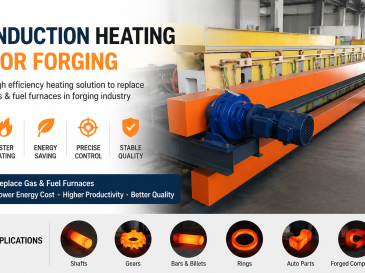
Introduction In modern forging production, heating quality directly determines material plasticity, forging accuracy, and defect rate. Traditional combustion-based heating methods…