If you’ve ever managed a heat-treatment workshop, you know the struggle—balancing temperature precision, energy costs, and material quality can feel like a constant juggling act. I’ve been there, comparing specs across brands, running trial batches, and seeing how one small design difference can change the entire workflow. When I finally began using trolley furnaces in a production setting, it was a turning point. These systems bridge efficiency with consistency, offering a solution built for engineers and plant managers who need results, not just specifications.
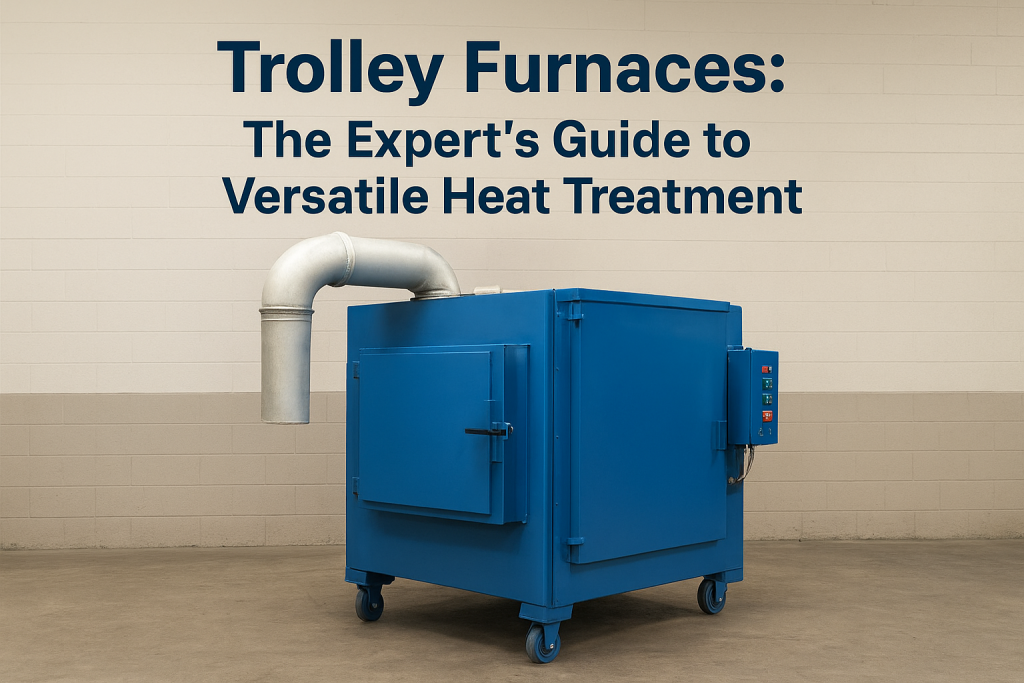
A trolley furnace—also known as a bogie hearth furnace—is designed for loading heavy materials on a movable car or “trolley.” This design allows easy access for charging and discharging large components such as castings, forgings, or metal blocks. Unlike fixed-chamber furnaces, trolley systems prioritize accessibility, even heat distribution, and precise control over processing parameters.
The concept is simple yet powerful: the workpiece is placed on a mobile platform that moves into the heating chamber. The door seals automatically, and advanced temperature control systems maintain uniformity across all zones.
When I first used a 20-ton trolley furnace for steel annealing, I noticed the difference almost immediately.
The loading process was faster—about 40% less time than with a traditional chamber furnace.
The heat curve was steady, with deviation under ±5°C, which made metallurgical consistency much easier to achieve.
And most importantly, maintenance dropped because the hydraulic lifting system was simpler to inspect.
The first full production cycle revealed something even more valuable: predictability.
The furnace did not just heat—it adapted. Once I input the thermal curve for different alloys, the system repeated those results without constant supervision. For any manager dealing with deadlines and quality control, this is what reliability truly looks like.
| Feature | Description | Benefit |
|---|---|---|
| Heating System | Electric or gas-fired, with PID temperature control | Ensures stable and uniform heating |
| Trolley Structure | High-load rails with heat-resistant rollers | Simplifies loading and prevents deformation |
| Temperature Range | Typically 300°C–1200°C | Suitable for annealing, normalizing, stress relieving |
| Control Interface | PLC + touchscreen | User-friendly operation and data recording |
| Insulation Material | High-density ceramic fiber | Reduces energy loss and shortens heating time |
| Optional Add-ons | Atmosphere control, exhaust system, remote monitoring | Customizable for different industrial needs |
While box or pit furnaces have their merits, trolley furnaces outperform them in three critical areas:
Compared to standard batch furnaces, trolley models maintain consistent productivity with fewer interruptions. For industries like forging, aluminum processing, or heat treatment plants, this translates directly into higher throughput and fewer rejects.
When selecting a system, it’s not just about maximum temperature. Here are key criteria that actually impact your operation:
If you’re upgrading from older fixed-chamber furnaces, start with a mid-capacity trolley model (10–15 tons). It offers enough flexibility for different materials without the complexity of large-scale automation.
For alloy steel or aluminum alloy plants, a gas-fired trolley furnace with atmosphere control offers better process flexibility.
And for precision applications like tool steel or aerospace components, consider electric trolley furnaces for their clean operation and precise control.
The evolution of industrial furnaces is moving toward modular design, digital control, and energy recovery. Trolley furnaces already align with these trends. Their ability to integrate with automated loading systems, IoT monitoring, and real-time analytics makes them future-proof for global manufacturers.
In short, these furnaces are not just a piece of equipment—they’re an operational advantage. And once you’ve seen how smoothly a modern trolley furnace runs in daily production, you won’t want to go back.
Choosing a trolley furnace is a long-term investment in precision and performance. It’s about reliability under pressure and the peace of mind that your process will run exactly as planned. After years of working with different heat-treatment systems, I can confidently say: if consistency, safety, and efficiency are what you value most, a well-designed trolley furnace will exceed your expectations.
Let’s be real — if you’ve ever worked in aluminum foundry operations, you know how temperamental melting can be.Sometimes your…
Why Consistent Daily Maintenance Matters When I first started managing medium frequency furnaces, I quickly realized that consistent daily maintenance…
Introduction Selecting the right aluminum melting furnace is one of the most critical decisions for foundry operations. The wrong choice…
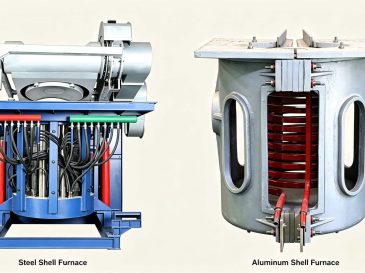
When selecting an induction melting furnace, one of the most critical decisions is choosing between a steel shell induction furnace…