In the metal casting industry, the melting furnace is the starting point of product quality, production efficiency, and cost control.
A metal casting melting furnace is designed to convert solid metal materials—such as ingots, scrap, or returns—into a well-controlled molten state, ensuring stable composition and temperature for subsequent casting processes.
Its core function is to efficiently and safely provide sufficient heat to bring the metal charge above its melting point while maintaining process stability.
Melting furnaces are typically classified based on:
The choice of furnace is a key factor that directly affects:
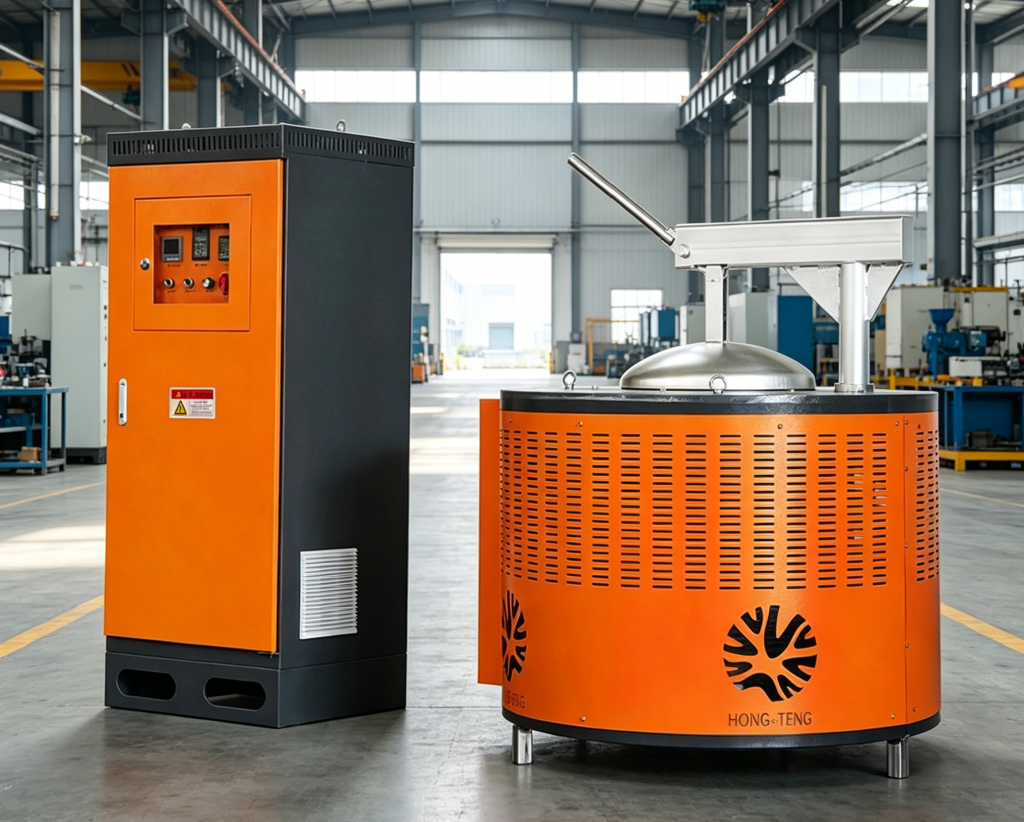
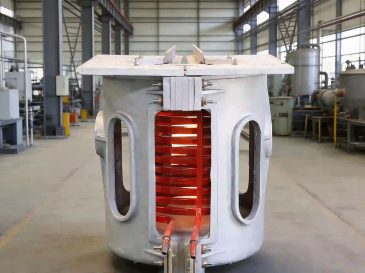
The induction furnace for metal casting is widely regarded as the most advanced and environmentally friendly solution in modern foundries.
Working Principle
An alternating current flows through a copper coil, generating a changing magnetic field. This induces eddy currents in the metal charge, producing heat through electrical resistance (Joule heating).
Key Specifications
Applicable Metals
Steel, iron, aluminum, copper, and various alloys.
Advantages
Limitations
Applications
Modern foundries, precision casting, and environmentally regulated production lines.
The crucible furnace application is ideal for flexible production and non-ferrous metal melting.
Working Principle
Metal is placed inside a crucible, which is externally heated. Heat is transferred through the crucible wall to melt the charge.
Key Specifications
Types
Applicable Metals
Aluminum, copper, brass, bronze, and other non-ferrous metals.
Advantages
Limitations
Applications
Small foundries, laboratory use, and small-batch casting.
The electric arc furnace is a core piece of equipment for large-scale steelmaking and scrap recycling.
Working Principle
Electric arcs generated by graphite electrodes create extremely high temperatures to melt metal rapidly.
Key Specifications
Applicable Metals
Steel and ferrous scrap.
Advantages
Limitations
Applications
Steel plants, large foundries, and recycling facilities.
The cupola furnace is a traditional solution for cast iron melting.
Working Principle
Coke combustion generates heat in a vertical shaft furnace, melting iron through countercurrent heat exchange.
Key Specifications
Applicable Metals
Cast iron.
Advantages
Limitations
Applications
Traditional cast iron foundries and mass production of iron components.
Choosing the right metal casting melting furnace types depends on several practical factors:
The foundry industry is moving toward:
The induction furnace for metal casting is increasingly replacing traditional systems due to its advantages in energy efficiency and environmental performance.
Future development focuses on:
The main metal casting melting furnace types—induction furnace, crucible furnace, electric arc furnace, and cupola furnace—each serve specific production needs.
There is no universal solution. The optimal choice depends on:
For most modern foundries, especially those targeting international markets, the induction furnace for metal casting offers a strong balance between efficiency, quality, and compliance.
If you are selecting a melting furnace or planning a new casting line, feel free to contact us. Our team can provide practical recommendations based on your specific production requirements.
Introduction Induction furnaces are widely used in modern metal processing industries, including metal melting and heat treatment of steel, aluminum,…
Introduction In modern metal recycling, the scrap aluminum melting furnace plays a critical role in converting waste aluminum into reusable…
Introduction In modern metal recycling, the scrap aluminum melting furnace plays a critical role in converting waste aluminum into reusable…
I. Introduction: The Role of Aluminum Shell Melting Furnaces in Modern Metal Processing 1.1 Growing Demand for Efficient Metal Melting…