In modern aluminum processing, the performance of an aluminum furnace directly determines metal recovery rate, energy consumption, and final product quality. For buyers and plant engineers, understanding different melting methods is not just theory—it affects furnace selection, process stability, and long-term operating cost.
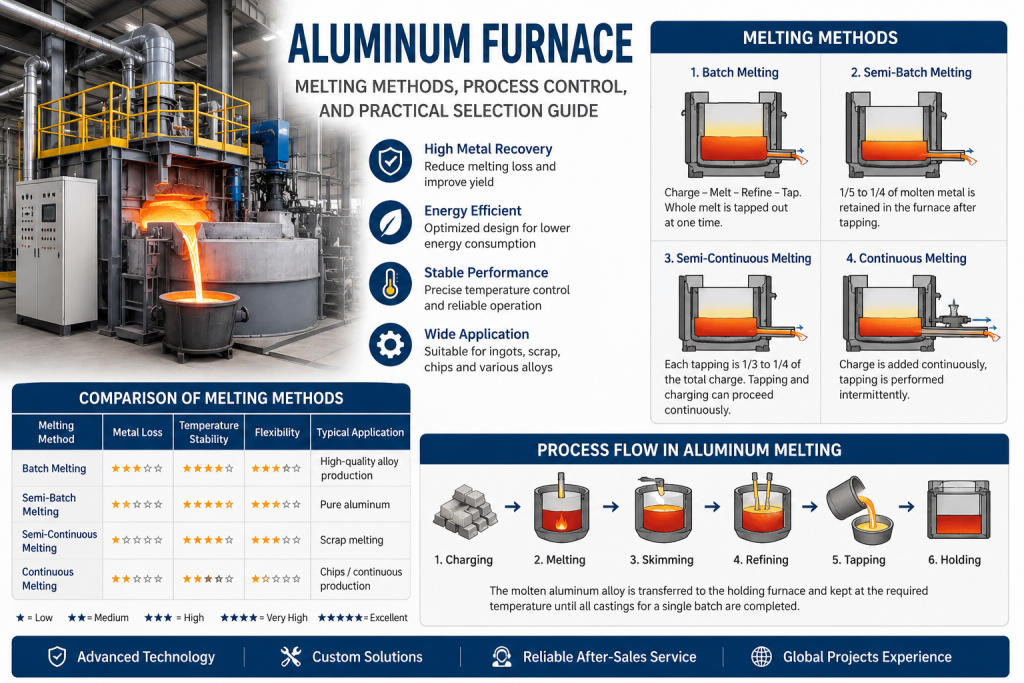
Currently, most aluminum processing plants use solid aluminum ingots that have been remelted to produce billets for pressure processing. There are generally four types of melting methods: batch melting, semi-batch melting, semi-continuous melting, and continuous melting.
In batch melting, the process begins with charging the furnace, followed by melting, skimming, refining, and other steps, after which the metal is completely removed from the furnace in a single batch, leaving no metal behind. This method is primarily used for producing finished aluminum alloys with high quality requirements, as it better ensures the uniformity of the ingot’s chemical composition.
The semi-batch melting method is essentially the same as the batch melting method, with the difference lying in the amount of molten metal retained in the furnace. In the semi-batch method, 1/5 to 1/4 of the molten metal is left in the furnace after tapping, and the charge for the next melt is then loaded for melting. The advantages of this method include: the newly added charge is immersed in the molten metal, reducing metal loss due to burning; during tapping, settled inclusions accumulate at the furnace bottom, preventing them from mixing into the molten metal for casting; furnace temperature fluctuations are minimal, extending the furnace’s service life. This method is suitable for pure aluminum.
The semi-continuous smelting method is similar to the semi-batch smelting method, with each tapping volume being 1/3 to 1/4 of the total charge. After tapping, the charge for the next batch can be added immediately. The difference from the semi-batch smelting method is that in the semi-continuous smelting method, since the volume tapped each time is small and most of the molten metal remains in the furnace, the tapping and charging processes can proceed continuously. This method is suitable for smelting scrap in double chamber aluminum furnace systems. Since the added charge is immersed in the molten metal, not only is there minimal loss due to burning, but the melting rate is also accelerated.
In the continuous smelting method, charge is added continuously, while tapping is performed intermittently. This method offers limited flexibility and has a narrow scope of application; it is suitable only for the smelting of pure aluminum, as well as for smelting scrap aluminum and aluminum chips.
In aluminum processing plants, refining and holding are carried out in aluminum holding furnace systems. The molten aluminum alloy is transferred from the melting furnace to the holding furnace, where it is kept at the required temperature until all castings for a single batch are completed.
| Melting Method | Metal Loss | Temperature Stability | Flexibility | Typical Application |
|---|---|---|---|---|
| Batch Melting | Medium | High | High | High-quality alloy production |
| Semi-Batch Melting | Low | Very High | Medium | Pure aluminum |
| Semi-Continuous | Very Low | Stable | Medium | Scrap melting |
| Continuous Melting | Low | Stable | Low | Chips / continuous production |
If your priority is chemical composition control, batch melting is more suitable.
If your priority is metal recovery rate, semi-continuous melting combined with a scrap aluminum melting furnace is usually the better choice.
A stable industrial aluminum melting furnace is essential to maintain consistent temperature control.
Using a regenerative aluminum furnace or optimized combustion system can reduce oxidation loss.
This is why many plants adopt double chamber furnace designs.
| Raw Material | Recommended Furnace |
| Aluminum ingots | Crucible furnace |
| Scrap aluminum | Double chamber furnace |
| Aluminum chips | Continuous furnace |
Choosing the wrong furnace can increase cost significantly due to metal loss and energy consumption.
Semi-continuous melting systems typically provide better recovery, especially in scrap processing.
Yes, especially where precise temperature control is required. However, for large-scale scrap melting, fuel furnaces may be more economical.
Focus on:
A molten aluminum holding furnace ensures stable temperature, improves casting consistency, and reduces defects.
Selecting the right aluminum furnace is not just about equipment—it is about matching the melting method, raw materials, and production goals.
A well-matched system can significantly improve metal recovery, reduce energy consumption, and stabilize product quality.
If you are evaluating an aluminum furnace for your plant, the key is not just choosing a model—but matching the furnace design with your raw materials, production capacity, and process requirements.
Whether you are dealing with aluminum ingots, scrap, or chips, different melting methods and furnace configurations will directly impact your:
We have extensive experience in designing and manufacturing industrial aluminum melting furnace, double chamber aluminum furnace, and aluminum holding furnace systems for different production scenarios.
Our team can help you:
If you want to discuss your project or get a tailored solution, feel free to contact us.
A Complete Guide to Efficient Aluminum Production Industrial aluminum melting furnaces are essential equipment in modern aluminum casting and recycling…
When selecting an induction melting furnace, one of the most critical decisions is choosing between a steel shell induction furnace…
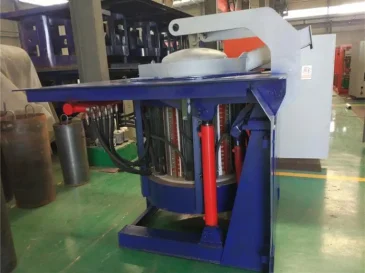
Intermediate frequency (IF) furnaces are vital for efficient metal melting in industries like metallurgy and foundry. Low power output can…
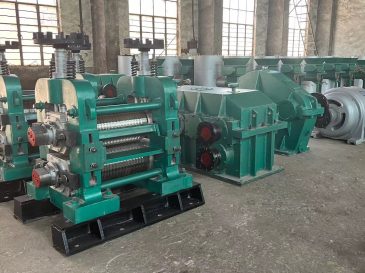
I. Introduction: The Role of Continuous Rolling in Modern Metal Processing In modern metallurgical production, efficiency, consistency, and automation have…