Induction furnaces that operate at frequencies ranging from 150 to 10,000 hertz are referred to as medium-frequency induction furnaces, with their primary operating frequencies falling within the 150 to 2,500 hertz range.
The capacity of medium-frequency induction furnaces ranges from a few kilograms to tens of tons.
Medium-frequency induction furnaces are specialized metallurgical equipment suitable for smelting high-quality steel and alloys. Compared to power-frequency induction furnaces, they offer the following advantages:
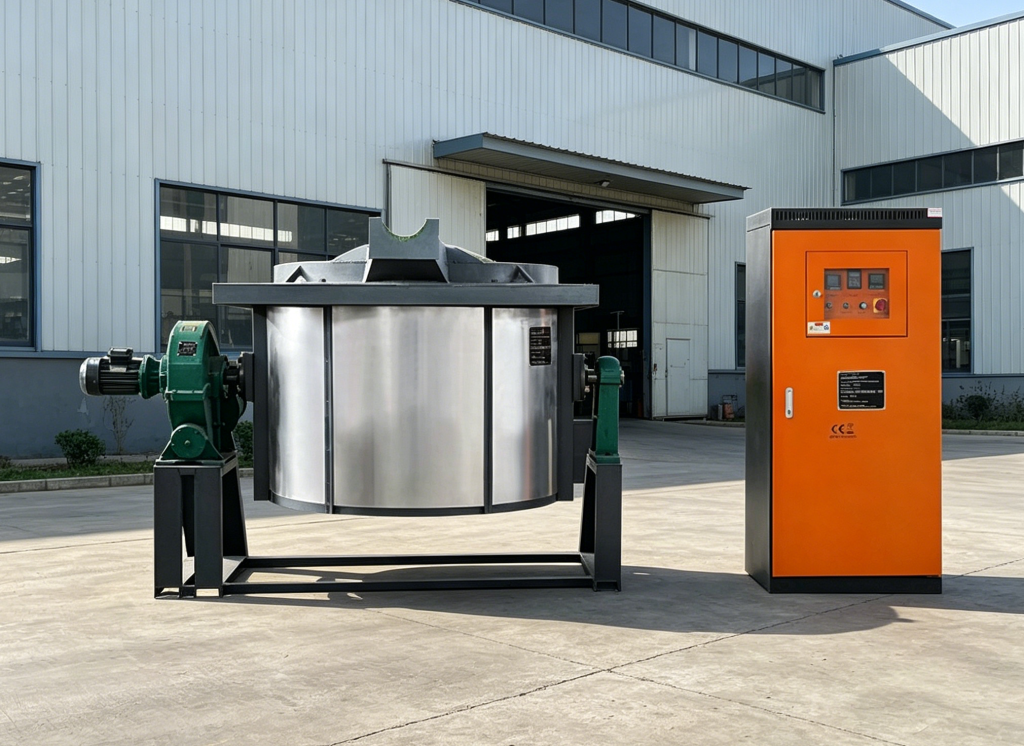
Medium-frequency induction furnaces have a high power density, with a power configuration per ton of molten steel that is approximately 20–30% higher than that of power-frequency induction furnaces. Therefore, under the same conditions, medium-frequency induction furnaces achieve faster melting speeds and higher production efficiency.
In a medium-frequency induction furnace, the entire batch of molten steel can be completely tapped out,
making it convenient to switch steel grades; whereas in a power-frequency induction furnace, the entire batch cannot be tapped out, and a portion of the molten steel must be retained for starting the next batch, making it inconvenient to switch steel grades and suitable only for smelting a single grade.
Since the electromagnetic force acting on the molten steel is inversely proportional to the square root of the power supply frequency, the stirring force of a medium-frequency power supply is smaller than that of a power-frequency power supply. For removing impurities from steel and homogenizing chemical composition and temperature, the stirring effect of a medium-frequency power supply is superior. The excessive stirring force of a power-frequency power supply increases the erosive force of the molten steel on the furnace lining, which not only reduces refining efficiency but also shortens the life of the crucible.
Since the skin effect of medium-frequency current is far greater than that of power-frequency current, medium-frequency induction furnaces have no special requirements for furnace charge during startup and can heat up rapidly after charging; in contrast, power-frequency induction furnaces require specially manufactured startup charge blocks (cast steel or cast iron blocks approximately the size of the crucible, accounting for about one-third of the crucible’s height) to initiate, and the heating rate is very slow. Therefore, medium-frequency induction furnaces are predominantly used in batch operation. Another advantage of the convenient startup is that it saves electricity during batch operation.
Comparative results for casting iron in these furnaces show that when the weekly iron output is 60 tons, the average electricity consumption per ton of molten iron is 577 kWh and 654 kWh, respectively. This demonstrates that medium-frequency induction furnaces are a more suitable choice for batch operation.
Due to the above advantages, medium-frequency induction furnaces have not only been widely used in the production of steel and alloys in recent years, but have also seen rapid development in cast iron production, particularly in batch-operating nickel casting shops.
A medium-frequency induction furnace operates based on the principle of electromagnetic induction. When alternating current passes through the induction coil, it generates a rapidly changing magnetic field. This magnetic field induces eddy currents within the metal charge placed inside the furnace.
These induced currents flow through the conductive material and generate heat due to electrical resistance, causing the metal to melt. At the same time, electromagnetic forces create a stirring effect within the molten metal, which helps to:
Compared with other heating methods, induction heating is a non-contact process, which avoids contamination and ensures higher metal purity.
To better understand the performance of medium-frequency induction furnaces, the following table summarizes typical technical parameters:
| Parameter | Typical Range |
|---|---|
| Capacity | 0.5 ton – 20 tons |
| Power Supply | Customized according to capacity |
| Frequency | 150 Hz – 2,500 Hz |
| Melting Time | 40 – 90 minutes (depending on material) |
| Power Consumption | 520 – 650 kWh/ton |
| Cooling System | Water cooling |
| Operation Mode | Batch operation |
Note: Actual parameters may vary depending on raw materials, furnace design, and production requirements.
Medium-frequency induction furnaces are widely used across various metallurgical sectors due to their flexibility and efficiency. Common applications include:
1) Steel Melting
Suitable for producing carbon steel, alloy steel, and special steel with strict composition requirements.
2) Aluminum Recycling and Melting
Ideal for processing aluminum scrap, ingots, and returns, especially in recycling production lines.
3) Cast Iron Production
Frequently used in foundries for gray iron and ductile iron melting, particularly in batch production environments.
4) Non-Ferrous Metal Processing
Applicable to copper, brass, and other non-ferrous alloys requiring clean and controlled melting conditions.
Energy efficiency is a critical factor in furnace selection. Compared with power-frequency induction furnaces, medium-frequency systems demonstrate clear advantages in batch production.
Based on practical production data:
This indicates an energy saving of approximately 10%–15%, depending on operating conditions.
In addition to lower power consumption, medium-frequency furnaces also offer:
These factors contribute to lower operating costs and improved return on investment.
Selecting the appropriate furnace depends on several key factors:
1) Type of Raw Material
Scrap quality, composition, and size directly affect furnace configuration.
2) Production Capacity Requirements
Daily or hourly output determines furnace capacity and power selection.
3) Energy Availability and Cost
Electricity stability and pricing impact long-term operating costs.
4) Automation Level
Modern systems can integrate automatic feeding, temperature control, and pouring systems.
5) Future Expansion Needs
Scalable designs allow for capacity upgrades as production grows.
A properly selected furnace not only improves efficiency but also ensures long-term operational stability.
Q1: What is the best frequency for an induction furnace?
The optimal frequency depends on furnace capacity and application. Medium-frequency (150–2,500 Hz) is generally ideal for most industrial melting processes.
Q2: Is a medium-frequency induction furnace better than a power-frequency furnace?
For batch production and multi-grade melting, medium-frequency furnaces are more efficient and flexible.
Q3: How much electricity does an induction furnace consume?
Typically between 520–650 kWh per ton, depending on material type and operating conditions.
Q4: Can medium-frequency furnaces be used for aluminum scrap melting?
Yes, they are widely used in aluminum recycling lines due to fast melting speed and clean operation.
If you are looking for a high-efficiency medium-frequency induction furnace for steel, aluminum, or scrap melting applications, our team can provide tailored solutions based on your specific production requirements.
Feel free to contact us for technical consultation, equipment selection, and detailed quotations.
1. Introduction Aluminum melting furnaces are essential equipment in modern metal processing. From automotive parts to beverage cans, aluminum must…
How should smelting furnaces and holding furnaces be properly coordinated in an electrolytic aluminum plant? In an electrolytic aluminum plant,…
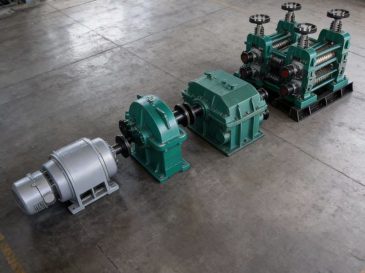
I. Introduction 1.1 Overview of Hongteng Rebar Rolling Mill Hongteng Rebar Rolling Mill specializes in the research, development, production, and…
In today’s industrial and energy-intensive environments, reliable power distribution is critical. Transformers are essential for converting AC voltage levels to…